Author: Jan

  • Best Hostels in Santiago Chile 2026 (Safe Areas from $13)

    Best Hostels in Santiago Chile 2026 (Safe Areas from $13)

    Santiago is one of those cities where choosing the right hostel can completely change your trip.

    The best hostels in Santiago Chile are in Providencia and nearby safe areas, not the cheapest Centro dorm. Prioritize location and night-time walkability.

    Stay connected: Compare Chile eSIM providers (Airalo vs Holafly vs Nomad) before you fly — it takes five minutes and saves airport hassle.

    Do you want rooftop sunsets with Andes views, legendary backpacker bars, cozy home-style hostels, or social spots packed with events and shared dinners? Santiago has all of it, but not every hostel delivers the same experience.

    To save you hours of scrolling and second guessing, I compared the best Santiago hostels for 2026. This list is focused on what actually matters: atmosphere, social life, location, comfort, and value. Especially if you are traveling solo and want to meet people without sacrificing sleep.

    From award winning classics in Bellavista to stylish boutique hostels and relaxed eco friendly stays, these are the 9 hostels in Santiago that truly stand out.

    Also planning to go south to the Lake District? Check out our list of the best hotels in Pucón.

    1. The Hostel Santiago

    If you want a social hostel in Santiago where it is actually easy to meet people, this one should be high on your list. The Hostel Santiago is modern, lively, and clearly built for travelers who want more than just a bed.

    This is a very social hostel. They organize a lot of activities every week like BBQs, walking tours, movie nights, and themed parties. If you are traveling solo and do not want to feel alone, this place makes it almost impossible not to meet people.

    The common areas are a big plus. There are cozy chill spaces, a proper cowork area, and even a free tea station which sounds small but is very appreciated after a long day in the city. You can work, relax, or hang out without feeling cramped.

    The vibe is energetic but not chaotic. It feels like a new generation hostel that understands that travelers want social energy, but also comfort and good design.

    Location wise, it sits just outside the absolute center, about a 15 minute walk. For Santiago, that is totally fine and keeps the area a bit quieter at night while still being close to everything.

    This is a great choice if you want a fun, social base in Santiago without it turning into a full party hostel every night.

    Quick reasons to book The Hostel Santiago

    • Very social atmosphere
    • Lots of weekly activities
    • Modern design and common areas
    • Good for solo travelers
    • Cowork space and free tea
    • Lively but still comfortable

    Book here:
    The Hostel Santiago on Hostelworld

    2. La Chimba Hostel (link)

    La Chimba Hostel is a true Santiago classic. It has been around since 2005 and there is a reason backpackers keep coming back. This place is lively, social, and very much focused on meeting people and having a good time.

    The hostel is set in a beautiful 100 year old house right in Barrio Bellavista. This area is one of the most fun and energetic parts of Santiago, especially if you like nightlife, street art, and good food. Everything you need is within walking distance and the Baquedano metro station nearby makes getting around the city extremely easy.

    La Chimba is known for its bar and yes, it deserves that reputation. Cheap beer, daily drink deals, beer pong, events, and a constant flow of travelers make it very easy to socialize here. The bar also doubles as an art space with rotating artwork from local and international artists, which gives the place extra character.

    This is very much a backpacker hostel. Expect a buzzing atmosphere, lots of conversations, and nights that sometimes turn into stories you will laugh about later. If you are a solo traveler who wants instant social life, this is one of the easiest places in Santiago to make friends.

    Rooms range from mixed dorms and female only dorms to private rooms. Beds are comfortable, linen is included, and each bed has a locker for your valuables. It is not luxury, but it is solid, functional, and exactly what you want in a social hostel.

    The list of extras here is long. Free walking tours, free bike hire, free luggage storage, strong WiFi everywhere, a self catering kitchen, movie room, pool table, hammock garden, and yes, even free shots throughout the day. There is also no curfew and a 24 hour reception, which is perfect if your plans change or you arrive late.

    La Chimba has won multiple Hostelworld awards over the years, including Best Hostel in Latin America. It is loud, fun, social, and unapologetically a backpacker hotspot. If that sounds like your thing, you will love it here.

    Quick reasons to book La Chimba Hostel:

    • Very social backpacker vibe
    • Lively bar with cheap drinks
    • Prime location in Barrio Bellavista
    • Easy to meet other travelers
    • Lots of free extras and activities
    • 24 hour reception and no curfew

    Book here:
    La Chimba Hostel on Hostelworld

    3. Guanako Rooftop Hostel (link)
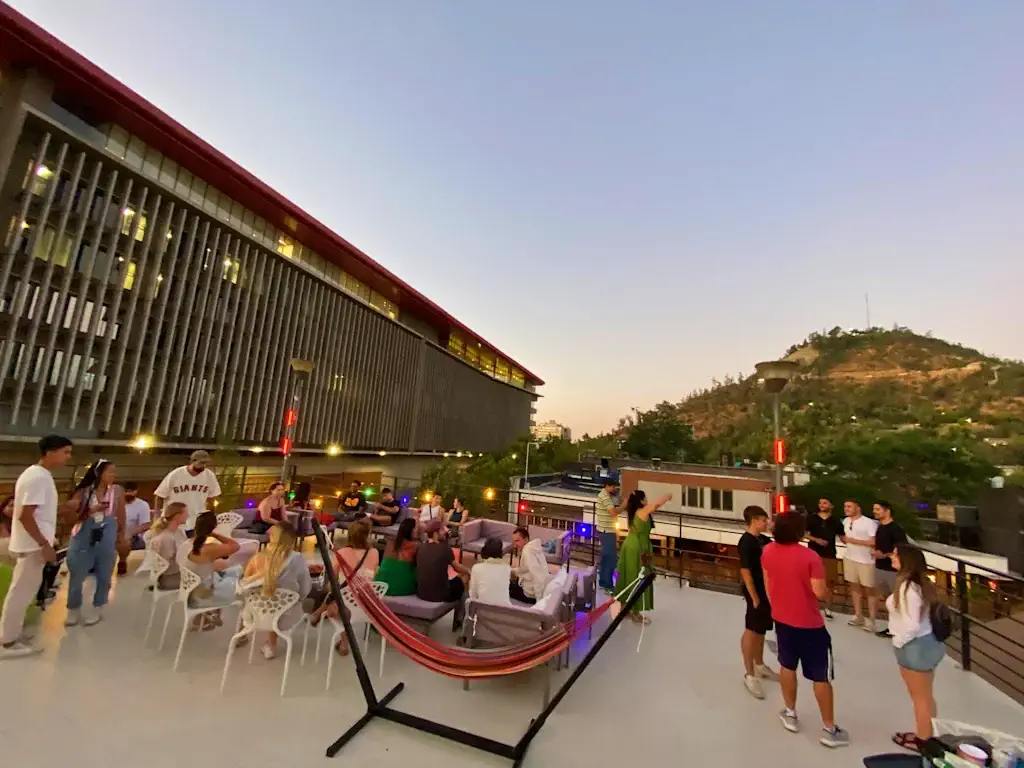
    A rooftop. An actual rooftop. And honestly… a rooftop, A ROOFTOP! Need I say more?

    Guanako Rooftop Hostel sits right in the heart of Santiago, just steps from Patio Bellavista. This is one of the best areas in the city for food, bars, live music, and nightlife. You are also one block away from Baquedano metro station, which makes getting anywhere in Santiago extremely easy.

    This hostel feels like a smart mix between a boutique hotel and a hostel. You get comfort, design, and privacy, without losing the social side. It is more polished than the average backpacker hostel, but still friendly and relaxed.

    Dorms are very well set up. Think memory foam mattresses, personal reading lights, USB and power outlets, big lockers, keycard access, air conditioning, and central heating. Yes, central heating. That alone is a big deal in Santiago, especially during colder months.

    Most rooms have private en suite bathrooms, which is rare for a hostel in this location. Everything feels clean, modern, and well thought out.

    The rooftop is the star of the show. It is the perfect place to watch the sunset, see the Andes in the distance, and meet other travelers without loud party vibes. There is also a lounge area for movie nights or just hanging out, plus a shared kitchen if you want to cook.

    The staff here really stands out. They are multilingual, friendly, and genuinely helpful with local tips. You can tell they care about making your stay smooth and enjoyable.

    Guanako Rooftop Hostel is ideal if you want a stylish, comfortable stay with a social edge. It is perfect for solo travelers who want to meet people, but also sleep well and feel comfortable.

    Quick reasons to book Guanako Rooftop Hostel

    • Rooftop with Andes views
    • Central location near Patio Bellavista
    • Boutique hotel level comfort
    • Memory foam beds and big lockers
    • Central heating and air conditioning
    • Friendly multilingual staff

    Book here:
    Guanako Rooftop Hostel on Hostelworld

    4. Hostal Providencia (link)
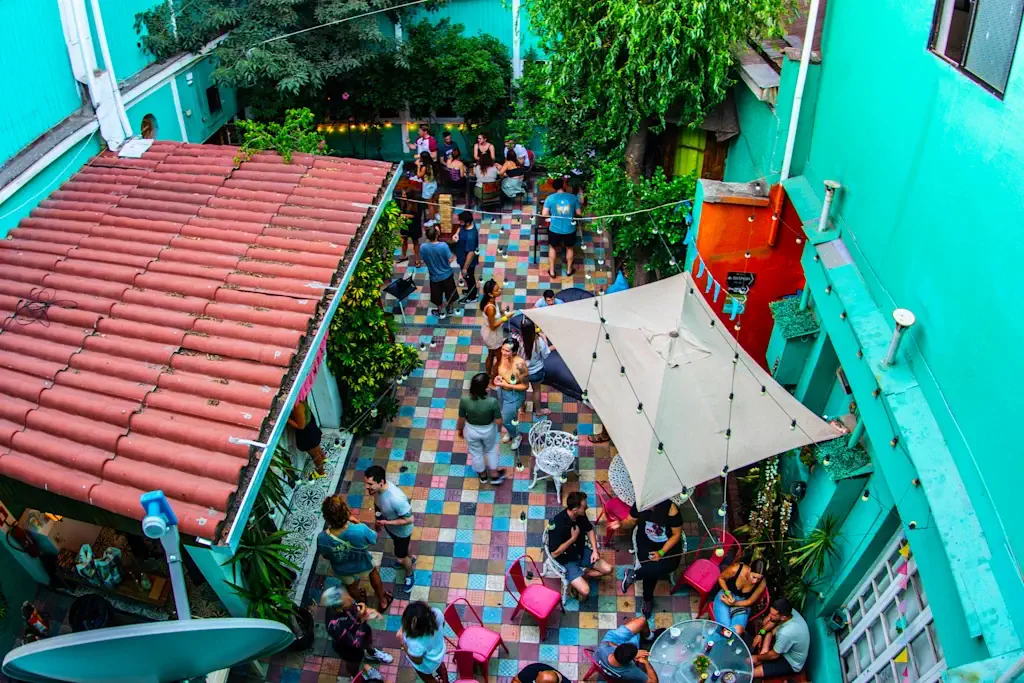
    Hostal Providencia is one of those places that just works for a lot of travelers. Great location, comfortable beds, big common areas, and a relaxed social vibe without going full party hostel.

    The location is excellent. You are right in the heart of Santiago, only a short walk from Plaza Italia, Parque Bustamante metro station, and Barrio Bellavista. That means easy transport during the day and some of the best nightlife in the city just minutes away at night.

    This hostel is known for its variety of room options. There are shared dorms for budget travelers and a wide range of private rooms, from single and double to family rooms for up to six people. Newer dorms even come with personal lights and USB ports, which is always a win.

    The common areas are spacious and nicely decorated. There is a cozy bar for casual drinks, two patios where you can hang out or smoke, and plenty of space to relax or chat with other travelers. It feels social, but never overwhelming.

    Two fully equipped kitchens make cooking easy, and free coffee and tea are available all day. Breakfast is optional and can be bought at reception in the morning if you do not feel like cooking.

    The staff is efficient, multilingual, and available 24 hours a day. Security is taken seriously, daily cleaning is included for longer stays, and WiFi works throughout the hostel.

    Hostal Providencia is a very solid choice if you want comfort, flexibility, and a central location at a good price. It suits solo travelers, groups, and even families who want to stay close to everything without giving up sleep.

    Quick reasons to book Hostal Providencia

    • Excellent central location
    • Wide range of room types
    • Comfortable beds and big common areas
    • Two kitchens plus free coffee and tea
    • 24 hour reception and good security
    • Good value for the price

    Book here:
    Guanako Rooftop Hostel on Hostelworld

    5. Ventana Sur Hostal (link)
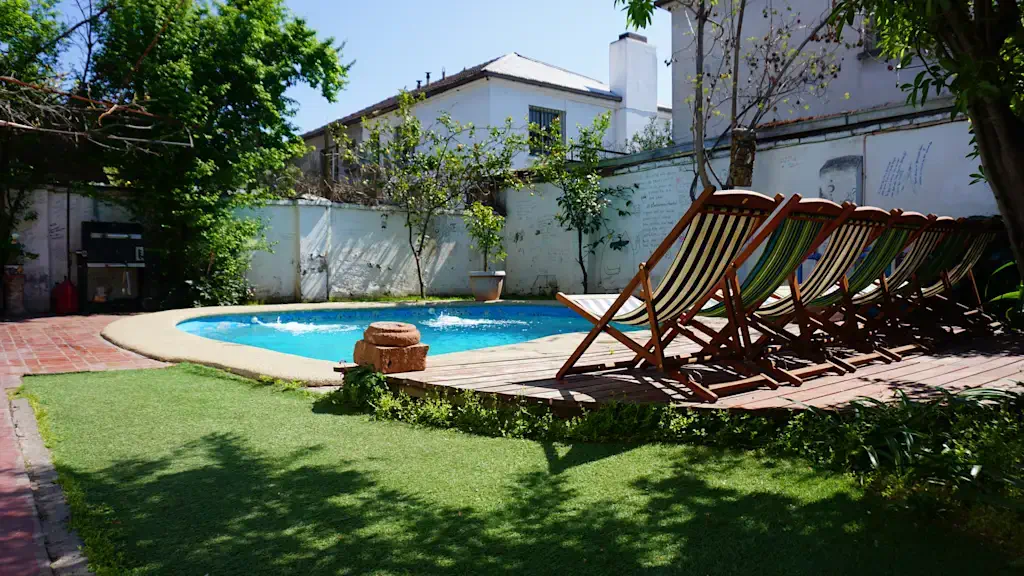
    Ventana Sur Hostal really does feel like a home away from home. This is the kind of place where travelers slow down a bit, actually talk to each other, and end up sharing dinner or a drink without planning to.

    The atmosphere is laid back and social in a very natural way. Some evenings are quiet with people reading or chatting on the terrace, other nights turn into group dinners, barbecues, or long conversations over wine or pisco. It depends on the mood, and that is exactly the charm of this place.

    There is a small pool and a terrace where people naturally gather during the day. It is easy to meet others here, but it never feels forced or loud like a party hostel. This is a place for travelers who respect each other and understand the balance between having fun and letting people sleep.

    The location is excellent. You are just a few blocks from Santa Isabel metro station, right next to Bustamante Park. Bellavista, Cerro San Cristobal, and Cerro Santa Lucia are all within walking distance. The neighborhood is safe and full of restaurants, bars, and supermarkets.

    One of the big advantages of Ventana Sur is the experience behind it. The hostel has been running for over a decade, and the manager Ivan knows Santiago inside out. If you want honest local advice, this is one of the best places to get it.

    Breakfast is simple but solid and starts at 9:00. You get bread, scrambled eggs, peanut butter, jam, butter, plus tea, coffee, and milk. It is more than enough to start your day before exploring the city.

    Ventana Sur Hostal is perfect for travelers who want a social but relaxed environment. If you like meeting people, sharing experiences, and feeling at home while still being in a great location, this is an excellent choice.

    Quick reasons to book Ventana Sur Hostal

    • Home away from home atmosphere
    • Relaxed and respectful social vibe
    • Terrace and small pool
    • Great location near Bustamante Park
    • Very safe neighborhood
    • Experienced local management

    Book here:
    Ventana Sur Hostal on Hostelworld

    6. Merced 88 (link)

    Merced 88 is a newer style hostel that focuses on comfort, design, and location rather than loud parties. If you want to stay somewhere central, stylish, and relaxed, this is a very strong option.

    The location is excellent. You are right in the center of Santiago, close to Lastarria, Bellas Artes, and Bellavista. Cerro San Cristobal and Cerro Santa Lucia are also nearby, which makes this a great base for sightseeing, museums, cafés, and walking around the city.

    The hostel is set in an antique building with a preserved historic exterior, but the inside feels modern and thoughtfully designed. Everything is inspired by Chile, from the colors to the details that reflect local flora and fauna. It feels warm, welcoming, and very well put together.

    One of the highlights here is the terrace. It is a great place to relax after a day in the city, have a drink at the bar, play games, and enjoy views over Santiago. The atmosphere is social but calm, making it easy to meet people without dealing with party chaos.

    Merced 88 feels more like a boutique hostel than a traditional backpacker spot. It attracts travelers who care about aesthetics, comfort, and location, while still wanting a bit of social life in the evenings.

    If you want to feel at home while staying right in the middle of Santiago, Merced 88 is a great pick. It is especially nice for solo travelers who want a relaxed, friendly place to unwind.

    Quick reasons to book Merced 88

    • Very central location
    • Stylish Chile inspired design
    • Historic building with modern interior
    • Great terrace with bar and games
    • Relaxed social atmosphere
    • Close to major sights and neighborhoods

    Book here:
    Merced 88 on Hostelworld

    7. Eco-Hostal Tambo Verde (link)
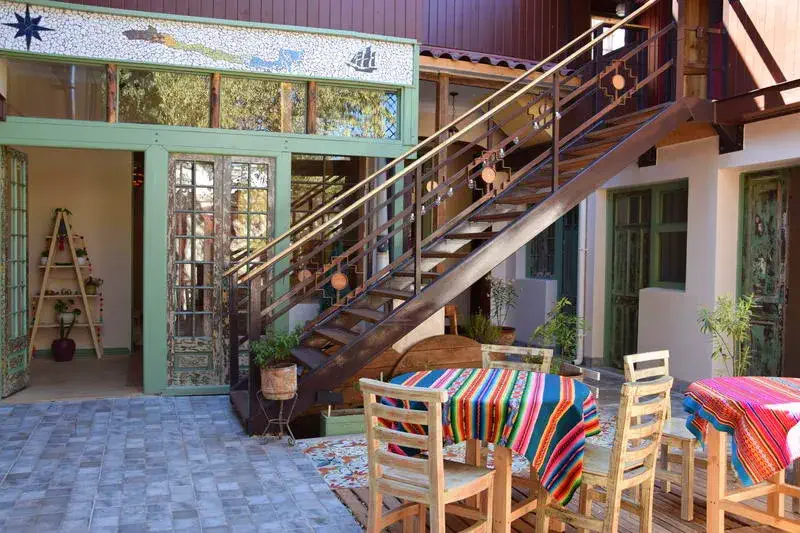
    Eco-Hostal Tambo Verde is a small, charming hostel with a strong focus on comfort, community, and sustainability. It feels personal, calm, and genuinely welcoming, especially if you are looking for something more meaningful than a typical backpacker hostel.

    The hostel is located in the Bellavista neighborhood, right at the foot of Cerro San Cristobal. This area has a bohemian vibe, lots of culture, and some of the best nightlife in Santiago, all within a short walk. Metro stations are nearby, so getting around the city is easy and quick.

    What really sets Tambo Verde apart is its eco friendly approach. The hostel actively promotes responsible tourism and tries to minimize its environmental footprint. If sustainability matters to you, this is one of the better choices in Santiago.

    There are only 10 rooms, and each one has its own style and design. This keeps the atmosphere intimate and quiet, making it easy to connect with other travelers without feeling crowded. It is a place where conversations happen naturally.

    Breakfast is included, which is always a plus in Santiago. Reception is open 24 hours, there is no curfew, and the staff is happy to help with tips and recommendations around the city.

    Eco-Hostal Tambo Verde is ideal for travelers who want a calm, cozy stay in a great location. It suits solo travelers who value sustainability, cultural exchange, and a relaxed social atmosphere.

    Quick reasons to book Eco-Hostal Tambo Verde

    • Eco friendly and sustainable focus
    • Small and cozy atmosphere
    • Located in Bellavista near San Cristobal hill
    • Breakfast included
    • 24 hour reception and no curfew
    • Quiet and community driven vibe

    Book here:
    Eco-Hostal Tambo Verde on Hostelworld

    8. Hostal Forestal (link)
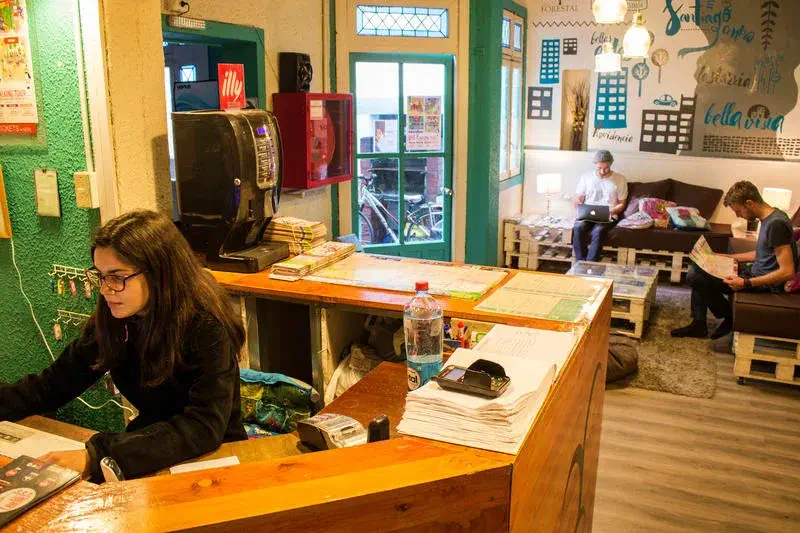
    Hostal Forestal is all about location, connection, and creating a social atmosphere that feels natural rather than forced. It is a good option if you want to stay central, meet people easily, and experience Santiago from a local perspective.

    The location is one of its strongest points. You are close to parks, plazas, public transport, and many of the city’s main sights. Everything you need for exploring Santiago is nearby, whether you are into museums, walking neighborhoods, or nightlife.

    This hostel puts a lot of focus on bringing people together. The vibe is friendly and open, and it attracts travelers from all over the world. It is the kind of place where conversations start easily and plans are made on the go.

    Rather than being a party hostel, Hostal Forestal feels active and social. There is always something happening, whether that is a small project, a group activity, or simply people hanging out and sharing travel stories.

    The hostel also aims to give guests a real sense of Chilean culture. It feels personal and engaged, not just like a place to sleep between activities.

    Hostal Forestal is a solid choice for solo travelers who want to connect with others and stay in a central location. If meeting people and being close to the action matters to you, this hostel is worth considering.

    Quick reasons to book Hostal Forestal

    • Very central location
    • Easy access to parks and transport
    • Social and friendly atmosphere
    • Focus on connection and community
    • Good base for exploring Santiago

    Book here:
    Hostal Forestal on Hostelworld

    9. Aji Hostel (link)
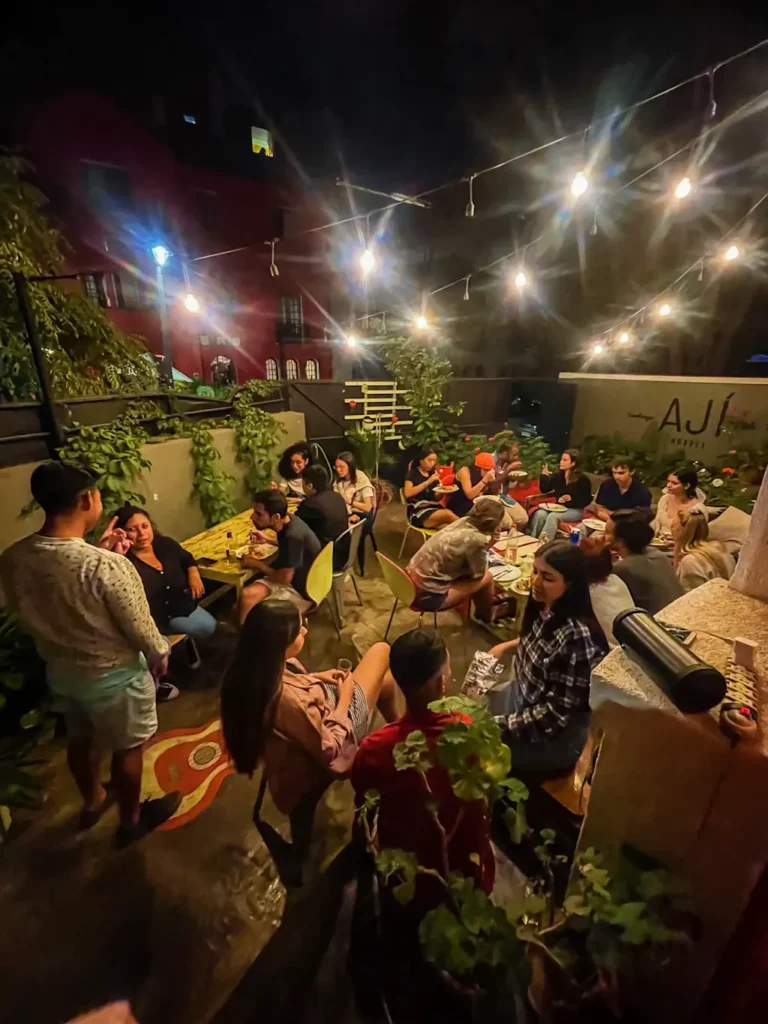
    Aji Hostel is one of the best picks in Santiago if you care about sustainability, community, and actually connecting with people. It is especially popular with solo travelers, and that really shows once you stay here.

    This is a youth focused, welcoming hostel with a strong social calendar. They make it very easy to meet others without forcing a party vibe. Think shared dinners, group activities, and casual nights out rather than chaotic late nights inside the hostel.

    Social events are a big part of the experience. On Mondays there is a free Chilean pisco sour at dinner time. Wednesdays come with a free pasta and pesto dinner plus a glass of wine. On Fridays they organize a traditional Chilean barbecue with meat, salads, and local wine and beer for a small extra cost. It is very easy to make friends here, especially if you are traveling alone.

    Sustainability is taken seriously. Aji Hostel has an official sustainability certification from the Chilean government and actively focuses on reducing energy use, recycling, and respecting both staff and the local community. Inclusivity and zero discrimination are core values here.

    The hostel was founded by two travelers and is now run by a young, international team from countries like Chile, Brazil, Haiti, and the USA. The atmosphere feels open, friendly, and genuinely welcoming.

    Location is another strong point. You are just one block from Metro Salvador in Providencia, one of the safest and most central areas of Santiago. Restaurants, bars, supermarkets, shopping centers, and nightlife areas are all within walking distance.

    Most services are included. WiFi is fast, rooms are cleaned daily, beds are made, there is a fully equipped kitchen, and all private rooms come with an ensuite bathroom. Reception is open 24 hours a day, and there is limited parking available.

    Aji Hostel is perfect for solo travelers who want social interaction, shared experiences, and a hostel that stands for something beyond just a bed. If sustainability and community matter to you, this is an excellent choice.

    Quick reasons to book Aji Hostel

    • Very popular with solo travelers
    • Free weekly dinners and drinks
    • Strong sustainability focus
    • Great central location in Providencia
    • Friendly international staff
    • Social but not chaotic

    Book here:
    Aji Hostel on Hostelworld

    Frequently asked questions

    What should travelers know about Best Hostels in Santiago Chile 2026 (Safe Areas from $13)?

    The best hostels in Santiago Chile are in Providencia and nearby safe areas, not the cheapest Centro dorm. Prioritize location and night-time walkability.
  • Things to Do in Santiago Chile: Best Picks (2026)

    Things to Do in Santiago Chile: Best Picks (2026)

    Planning your trip and wondering which things to do in Santiago are actually worth your time? This guide keeps it simple. From mountain escapes and coastal day trips to cable cars, wine tastings and city walks, these are the experiences that show you the real Santiago without the guesswork. Pick a few, mix and match, and build a trip that’s easy, scenic and surprisingly varied for a single city.

    Before you explore, check is Santiago Chile safe? — includes a safe area map and practical tips.

    The best things to do in Santiago include San Cristobal hill, wine tastings, Lastarria walks, Cajon del Maipo day trips, and coastal escapes to Valparaiso.

    Discover Cajón del Maipo (link)

    Just outside Santiago, Cajon del Maipo is where the city suddenly drops away and the Andes take over. You get bright blue water at Embalse El Yeso, crisp mountain air and those huge silent landscapes that make every photo look like a travel poster. It is perfect if you want a nature break without a long hike, or if you just want to see Chile’s mountains in the easiest possible way. Visiting is simple: most tours last around 10 hours, include hotel pick-up in central areas of Santiago and offer guides in English, Portuguese and Spanish, with stops for viewpoints and a relaxed picnic by the lake.

    Book here – GetYourGuide link

    If you want the same stunning Cajon del Maipo scenery but with a slightly shorter day, this alternative tour is a great fit. It runs for about eight hours, includes hotel pick-up in Santiago Centro and takes you to Embalse El Yeso with a guide who speaks Spanish, English and Portuguese. The route also passes the Tinoco Tunnel and ends with a simple picnic by the water. It is an easy, efficient way to enjoy the Andes if you prefer a quicker trip without losing any of the views.

    Book here – GetYourGuide link

    Explore Valparaíso & Viña del Mar (link)

    A trip to the coast is one of the best escapes from Santiago, and Valparaiso and Vina del Mar give you two completely different vibes in one day. Valparaiso is all color, street art and hillside chaos, with narrow alleys and viewpoints that make every corner feel like a postcard. Then you switch gears in Vina del Mar, a calmer beach city with long promenades, palm trees and a breezy resort feel. This tour keeps things easy: around ten hours total, hotel pick-up in the main districts, a guide in Spanish, English or Portuguese and stops in Casablanca for a quick look at the local wine scene. It is the perfect mix of culture, coast and relaxed seaside atmosphere.

    This alternative tour to Valparaiso and Vina del Mar is ideal if you want the same colorful coast experience but in a smaller group with a more relaxed pace. It covers the classic street art hills of Valparaiso, the seaside promenades of Vina del Mar and a scenic stop in the Casablanca Valley, all in about ten hours. Pickup is available across the main Santiago districts, guides switch easily between English, Portuguese and Spanish, and the small-group setup keeps everything quieter and easier to follow. Perfect if you prefer a more personal coastal day trip without losing any of the highlights.

    This small-group version of the Valparaiso and Vina del Mar trip focuses on a slower, more curated experience. You explore Valparaiso’s UNESCO-listed hills, wander the beaches and gardens of Vina del Mar and stop for a wine tasting in the Casablanca Valley, all within a relaxed ten-hour schedule. Pickup works smoothly across central hotels and Airbnbs, and the guide leads the day in English, Spanish or Portuguese. It is a great choice if you want the coastal highlights without the big-bus feel.

    Book here – GetYourGuide link

    Ride the Santiago Cable Car (link)

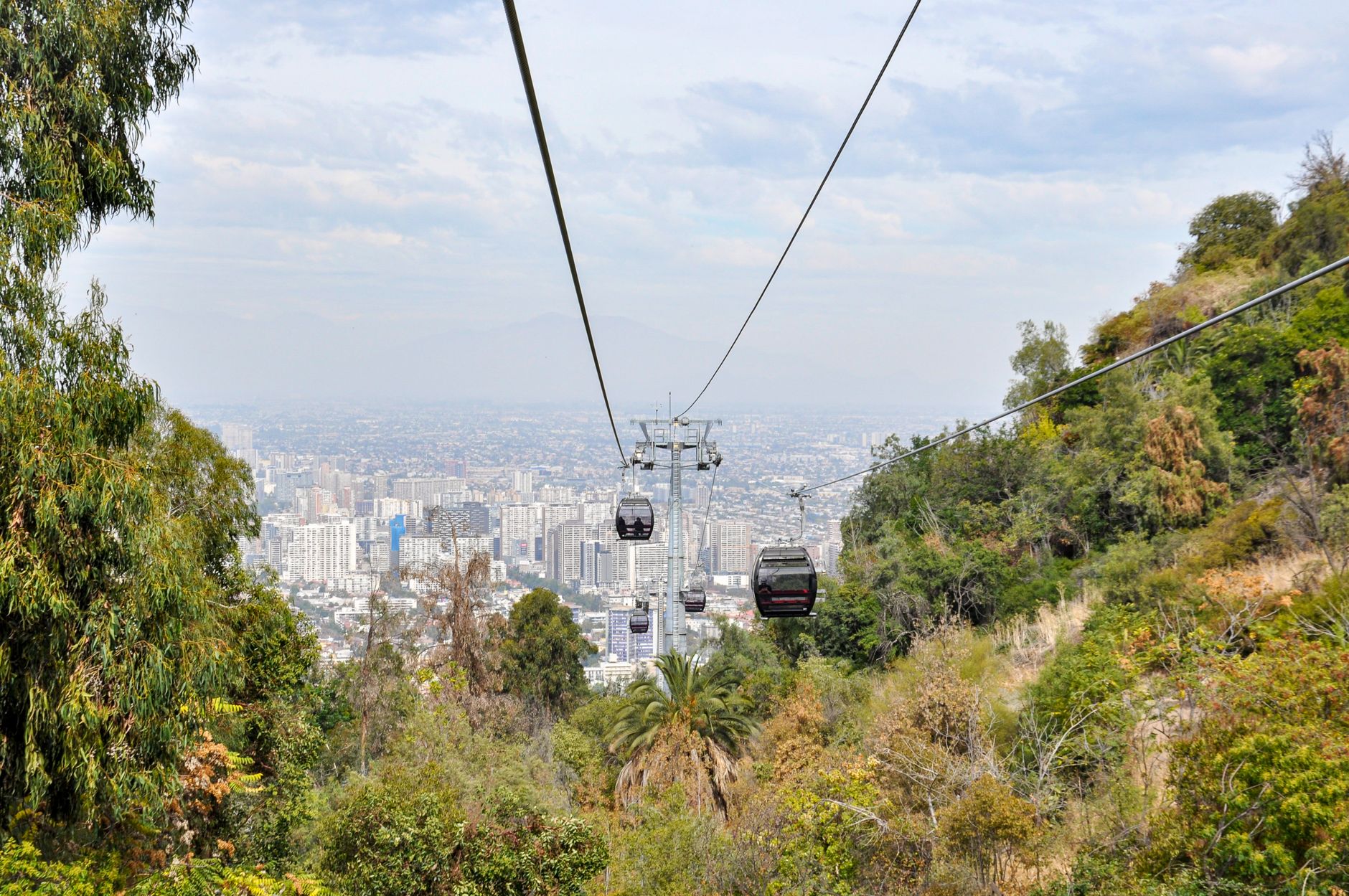
    One of the easiest ways to get a full view of the city is by taking the Santiago Cable Car, gliding above the parks and rooftops with the Andes sitting right behind everything. It is a simple, fun way to explore the city at your own pace, especially when paired with the hop-on hop-off bus that stops at major landmarks, malls and the base stations of both the Teleferico and the Funicular. With a full day to use the ticket, audio guides in multiple languages and the freedom to jump on and off whenever you want, it is perfect if you want a relaxed, scenic overview of Santiago without rushing around.

    Book here – GetYourGuide link

    This guided version of the Santiago Cable Car experience adds a lot more context as you explore Bellavista on foot, ride the historic Funicular up San Cristobal Hill and finish with panoramic views from the Cable Car. It is a shorter, two-and-a-half-hour option that skips ticket lines, keeps the group small and includes a guide who can explain the neighbourhood, the hill and the skyline in English, Portuguese or Spanish. A great choice if you want the classic San Cristobal views but prefer a quicker, more structured visit.

    Book here – GetYourGuide link

    See Portillo & Laguna del Inca (link)

    High in the Andes, Portillo and Laguna del Inca feel like a completely different world from Santiago — quiet mountains, a bright blue lake and wide open spaces with almost no one around. This full-day trip takes you along the famous Los Caracoles road, stops at viewpoints, visits the historic Portillo Hotel and ends at Laguna del Inca, where the reflections on the water look unreal on clear days. The tour runs for about ten hours, includes hotel pick-up in central Santiago and is guided in Spanish or Portuguese. It is perfect if you want dramatic mountain scenery without hiking and love discovering places most visitors to Chile never see.

    Book here – GetYourGuide link

    Taste Wine in Maipo Valley (link)

    The Maipo Valley is Chile’s classic wine region, and this tour gives you a full day of relaxed tastings in beautiful vineyards just outside Santiago. You visit four different wineries, try a mix of reds, whites, cheese and even pisco, all while walking through sunlit vines and quiet countryside. The day runs about ten hours, includes hotel pick-up in the main Santiago districts and is guided in English or Spanish, with small groups that keep everything easy and personal. It is perfect if you love wine, want to learn a bit about Chilean grapes or just want a slow, scenic day surrounded by vineyards.

    Book here – GetYourGuide link

    Walk Historic Santiago (link)

    This tour is top rated at the moment.

    Exploring the historic center of Santiago on foot is one of the best ways to understand the city. This guided walk takes you through landmarks like La Moneda, Plaza de Armas and the surrounding colonial streets, with a small group and a guide who brings the stories to life in English, Spanish or Portuguese. It lasts around three hours, moves at an easy pace and also touches the Bellavista area, giving you a complete mix of history, architecture and everyday city culture. Perfect if you want a simple, informative introduction to Santiago without rushing.

    Book here – GetYourGuide link

    Hike Volcán San José (link)

    If you want a true Andes adventure, the Volcan San Jose hike delivers big views without needing to be a hardcore mountaineer. This full-day trip takes you deep into Cajon del Maipo for an 8-kilometer trek surrounded by waterfalls, rivers, rock formations and a 5,800-meter active volcano towering in front of you. The route is scenic rather than technical, the group is small and the guide leads in English, Spanish or Portuguese. With early hotel pick-up across Santiago and around ten hours total, it is an amazing option if you want a real mountain experience close to the city.

    Book here – GetYourGuide link

    Sip & Explore the Inca Lagoon (link)

    With still, bright-blue water surrounded by snow-covered peaks, the Inca Lagoon is one of the most dramatic landscapes near Santiago. This full-day trip takes you into the Andes for quiet views, easy walking and plenty of photo stops, followed by a relaxed wine tasting at a vineyard in the San Esteban area. It runs about ten hours, includes hotel pick-up across central Santiago and is guided in English, Portuguese or Spanish. A great choice if you want big mountain scenery and a little wine in one simple day trip.

    Book here – GetYourGuide link

    Enjoy Santiago

    Santiago has far more variety than most travelers expect, and these experiences make it easy to see the best parts without overthinking your itinerary. Whether you want mountains, culture, wine, coastline or a relaxed overview of the city, there is always something close by and simple to plan. Choose what fits your style, book a day or two in advance, and you will have no trouble filling your days with unforgettable moments. Enjoy your time in Santiago because it is a city that rewards curiosity.

    Frequently asked questions

    What should travelers know about Things to Do in Santiago Chile?

    The best things to do in Santiago include San Cristobal hill, wine tastings, Lastarria walks, Cajon del Maipo day trips, and coastal escapes to Valparaiso.

  • Pucón Hostels (2026 Guide)

    Pucón Hostels (2026 Guide)

    My personal favorite city in Chile: Pucón! But what about Pucón Hostels?

    Stay connected: Compare Chile eSIM providers (Airalo vs Holafly vs Nomad) before you fly.

    Pucón is my personal favorite city in Chile. Summer here feels perfect, especially a full day swimming and laying on the beach at Lago Villarrica, the Lake District in general is my favorite part of Chile

    No matter what your budget is, there is always good Pucón hostel options. And if you have more to spend, you can also check out the many hotels in Pucón for extra comfort.

    Here are the 7 hostels that are worth booking for your 2026 trip.

    Looking for Hotels instead of Hostels in Pucón? Check out our list of best hotels in Pucón.

    Chili Kiwi Lakefront

    Kiwi Lakefront won #1 Hostel in Latin America at the Hoscars in both 2017 and 2018.

    book here

    Chili Kiwi Lakefront is the clear number one in Pucón.

    If you’re looking for affordable comfort and great quality, this is your best option. It’s the hostel everyone knows, talks about, and books first.

    Chili Kiwi has that perfect mix of chill and social. You can meet people easily, but you can also sleep without being woken up at 3 AM.

    The location is unbeatable. You’re literally right on the lake and at the corner of the main street.

    The value is excellent for Pucón. It’s built by backpackers, for backpackers, and it shows.

    The staff actually helps you plan your activities. There’s even a quiet rule after 23:00, which is a lifesaver.

    They have everything you need: multiple kitchens, lots of bathrooms, and central heating. Plus, the famous treehouse is honestly very cool.

    It’s clean, safe, and well-organized. You can leave your stuff and go explore without stress.

    If you’re visiting in winter, you’ll love it. They’re ski and snowboard friendly, and the atmosphere stays warm and cozy.

    book here

    Quick reasons to book Chili Kiwi

    • Chill + social vibe
    • Right on the lake
    • Great value
    • Helpful staff
    • Multiple kitchens
    • Clean and safe

    Book here:

    2. Lucky’s Hostel

    Lucky’s Hostel has a warm, welcoming vibe and a super central location in Pucón. It’s ideal if you want quality and comfort, but you don’t need shared dorms.

    This hostel focuses on private rooms only, which is rare in Pucón. If you have a slightly bigger budget, you’ll notice the difference immediately.

    The atmosphere is friendly and social, but never loud. It’s the kind of place where you can meet people without dealing with party-hostel chaos.

    The location is great: quiet street, but just steps from the beach and the main avenues. You get the best mix of convenience and peace.

    Facilities are excellent for the price. Private rooms come with WiFi, A/C, TV, and a private bathroom, plus daily cleaning.

    They also have a really nice kitchen and big garden. The two friendly dogs walking around are honestly a bonus.

    Breakfast here is worth mentioning. They bake their own bread, muffins, and jams, and yes, it’s as good as it sounds.

    Lucky’s is perfect for travelers who want a relaxed and respectful atmosphere. If you want nightlife, this is not the hostel for you.

    Quick reasons to book Lucky’s Hostel

    • Only private rooms
    • Central but quiet location
    • Great kitchen + big garden
    • Friendly, calm atmosphere
    • Daily cleaning
    • Fresh homemade breakfast

    3. Hostal Emalafquen

    Hostal Emalafquen feels like staying in a typical Chilean house, the kind you see absolutely everywhere. It’s perfect if you want a more local and authentic experience.

    The location is excellent, right in the city center. You’re also very close to the bus station, which makes arrival and departure super easy.

    They offer both private rooms and shared bathroom options. It’s simple, clean, and comfortable for travelers who want a quieter stay.

    There’s a guest kitchen and free internet access. Free parking is available too, which is a big plus if you’re renting a car.

    The garden is surprisingly big and very relaxing on sunny days. It’s a great place to sit outside with a coffee before heading out to explore.

    The staff keeps the house well-maintained and updated. They’re always improving the place to make it more comfortable.

    The atmosphere is warm and family-style. It’s welcoming, calm, and ideal if you want something more homelike than a typical backpacker hostel.

    Quick reasons to book Hostal Emalafquen

    • Classic Chilean house vibe
    • Central location
    • Near the bus station
    • Private room options
    • Big garden
    • Calm, family atmosphere

    4. Espacio Ecole

    Espacio Ecole is a super cozy spot right in the center of Pucón. It’s perfect if you want comfort with a warm and relaxed atmosphere.

    The location is ideal and makes exploring the town extremely easy. You can walk everywhere, from cafés to the lake, in just a few minutes.

    Breakfast is completely free and honestly one of the best in town. It’s the perfect start before a long day of hiking or exploring the national parks.

    The property has its own restaurant, bar, and a rooftop terrace. It’s a great place to relax after a full day outdoors.

    You get free WiFi throughout the building, and free private parking is available. That alone makes it a strong choice if you’re driving.

    They also offer room service and keep the place very clean. It feels more like a small eco-hotel than a typical hostel.

    Espacio Ecole is perfect for travelers who want a calm, central base with great food. Couples especially tend to love the cozy atmosphere.

    Quick reasons to book Espacio Ecole

    Free private parking

    • Free breakfast
    • Cozy and calm
    • Very central location
    • Rooftop terrace
    • Restaurant and bar

    5. Willhouse

    Willhouse is a well-reviewed, high-quality hostel with both private rooms and dorms of different sizes. It’s a flexible choice if you want comfort without losing the social vibe.

    The atmosphere focuses on cultural exchange and nature. It’s a calm and friendly place where meeting people feels natural.

    The location makes exploring Pucón easy and convenient. You can reach the main streets, restaurants, and tour agencies quickly.

    Rooms are simple, clean, and comfortable. Dorms stay small and quiet, while private rooms offer more privacy.

    They don’t include breakfast, but the shared kitchen is fully equipped. Many guests enjoy making their own meals before heading out.

    Reception is available most of the day, and they’re helpful with local info. If you arrive early in the morning, you can let them know in advance.

    Willhouse is a great pick if you want a peaceful, well-run hostel with flexible room options. It’s ideal for both solo travelers and couples.

    Quick reasons to book Willhouse

    • Great reviews
    • Private rooms and dorms
    • Calm atmosphere
    • Clean and comfortable
    • Helpful reception
    • Good location

    6. Gecko Hostel

    Gecko Hostel is a decent choice with a nice patio, plenty of common areas, and fast WiFi. It’s comfortable enough, but the overall ratings are not as strong as other hostels in Pucón.

    The location is slightly outside the center, about a 10-minute walk. It’s fine for most travelers, but not the most convenient if you want everything right at your doorstep.

    Rooms come in many configurations, from private rooms to dorms up to 10 beds. They’re clean and simple, but not as modern as the higher-rated hostels.

    There’s a shared kitchen, hot showers, and even Netflix in the common room. Facilities are good, but you still need to pay for some things upon arrival, including tax.

    The patio area is one of the highlights, with a fireplace, BBQ, and lots of space to meet other travelers. It has a relaxed social vibe without being a party hostel.

    The tour desk is helpful for planning activities around Pucón. They give solid advice if you’re visiting Lake Villarrica or going toward the volcano.

    Gecko Hostel is a fair budget-friendly option with decent comfort and common areas. It’s good for a few nights, but there are stronger choices in Pucón if quality is your top priority.

    Quick reasons to book Gecko Hostel

    • Big patio + BBQ
    • Many room options
    • Helpful tour desk
    • Shared kitchen
    • Fast WiFi

    7. Hostel French Andes

    Hostel French Andes is a renovated chalet with seven studio apartments, each with its own kitchen and bathroom. It’s a bit outside the very center, but still close enough to reach everything on foot.

    The area is quiet and peaceful, perfect if you want to avoid noise. You’re only a short walk from the beach and main streets.

    The studios are clean, modern, and feel more like small apartments than hostel rooms. They’re ideal for travelers who prefer privacy and their own space.

    You also get a beautiful view of Villarrica Volcano from the property. It’s a nice bonus if you enjoy waking up to nature scenery.

    Breakfast isn’t included and there’s no laundry service. Payment can be made by card, though there’s a small extra fee.

    French Andes is great if you want a more independent, apartment-style stay in Pucón. It’s especially good for couples or long-term travelers who prefer quiet surroundings.

    Quick reasons to book Hostel French Andes

    • Renovated and modern
    • Studio-style rooms with kitchen
    • Quiet location
    • Volcano views
    • Close to the beach and center

  • Hotel Puerta del Sur (2026 Guide)

    Hotel Puerta del Sur (2026 Guide)

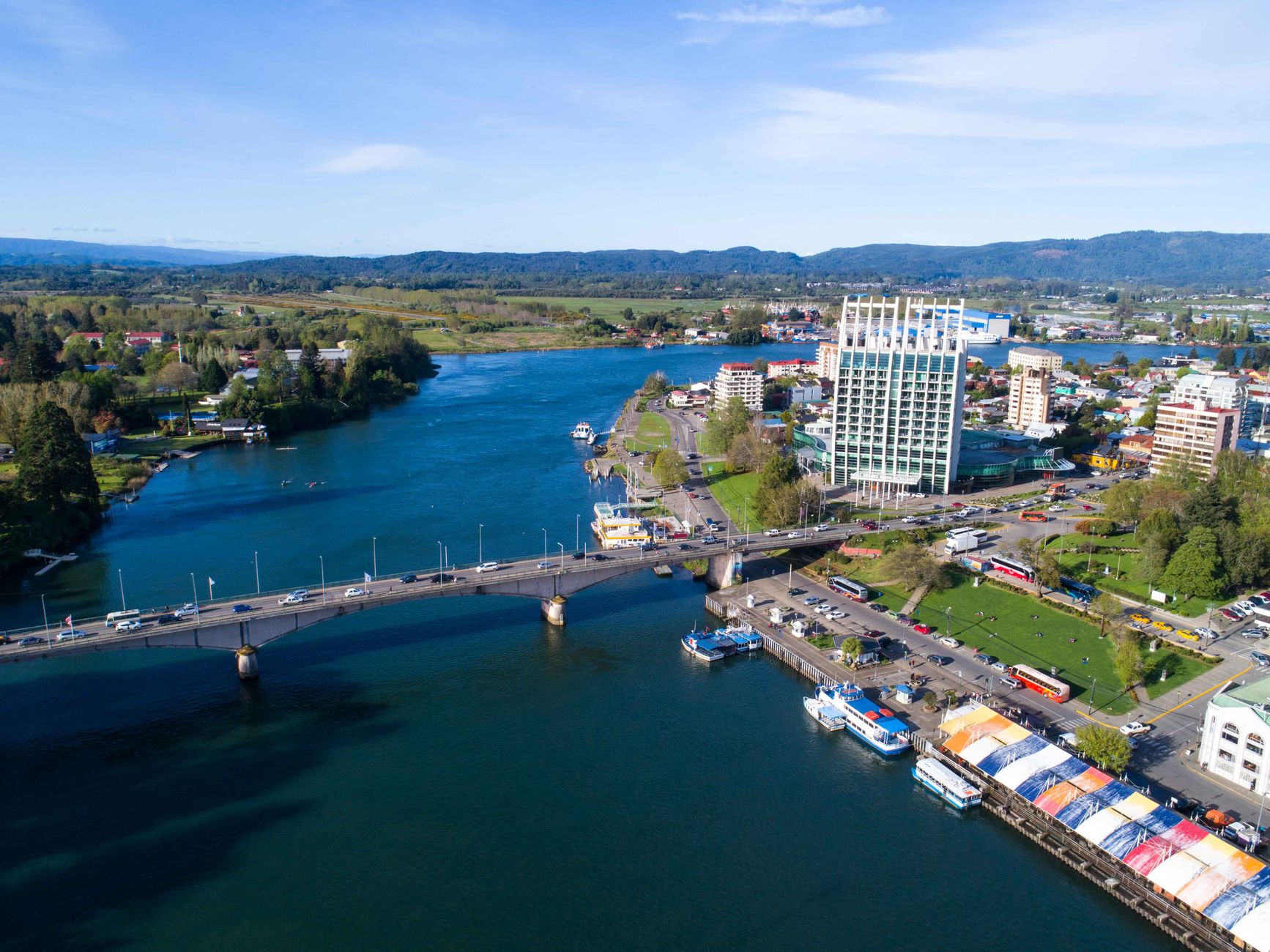
    After hours on the road heading south, we finally reached Valdivia – a city in the eastern part of the Lake District where every corner smells like rain, river, and fresh bread. My stay at Hotel Puerta del Sur felt like the perfect way to experience it: calm, cozy, and right on the riverbank.

    The highlight? Definitely the jacuzzi. Sitting there at sunset, steam rising into the cool March air, I realized how underrated southern Chilean hotels can be. It was quiet, the only sound was the water outside and the distant hum of the city – a rare kind of peace.

    Want to explore the south more? Check out our list of the best hotels in Pucón.

    👉 Check availability here

    Mornings started with a simple but lovely breakfast, the kind where you can actually taste that things are local. Fresh cheese, warm bread, strong coffee. The staff greeted everyone like family – even before I had my caffeine fix, I somehow felt awake already.

    Outside the hotel, Valdivia surprised me even more. One moment you’re high-fiving sea lions by the market, the next you’re learning about the catastrophic 1960 earthquake, the strongest ever recorded, that changed the entire landscape around the city. It’s one of those places that blends beauty with history – and makes you want to stay a little longer just to understand it.

    My Hotel Puerta del Sur Review

    When I Stayed (March in Valdivia)

    I visited in March, when the days are still warm but the air already feels softer – that perfect in-between season in southern Chile. The sun stays up late, the trees start turning slightly golden, and evenings invite you to slow down. It’s honestly one of the best months to visit Valdivia: you can walk everywhere, enjoy the river breeze, and still sit outside with a drink without freezing.

    First Impressions

    From the moment I arrived, the place felt calm. The hotel sits quietly by the river, slightly tucked away from the city noise, and you can hear birds instead of traffic. The building itself has that classic southern Chile look – a mix of wood, glass, and a bit of old-school charm. Check-in was instant (they actually have 24-hour service, which was great after a long drive), and parking was just outside the entrance. Zero stress.

    The Room

    My room was surprisingly big – two large beds, spotless sheets, and a lot of space to move around. The kind of room where you can actually unpack your bag and not trip over it later. There was also a small desk, a TV, and those big windows letting in soft morning light. It’s not ultra-modern, but it’s warm, comfortable, and perfect for relaxing after exploring Valdivia all day.

    Jacuzzi Time – The Best Way to End the Day

    After walking around town (and yes, high-fiving sea lions at the market), I went straight for the jacuzzi – easily my favorite part of the stay. The water was warm, the air was cool, and everything outside was completely still. It’s the kind of simple moment that stays in your memory longer than any fancy spa ever could.

    Staff, Service & Parking

    The staff at Hotel Puerta del Sur were genuinely kind – not that fake “how was your day” kind of polite, but real warmth. They helped with directions, restaurant suggestions, even offered to keep my bag after checkout so I could walk into town one last time. Parking was free, safe, and right outside the hotel, which is something you’ll appreciate if you’re driving through Chile.

    👉 Check availability here

    The Layout

    Hotel Puerta del Sur has a traditional yet charming layout. The main building features several wings surrounded by gardens, with most rooms either facing the river or the inner courtyard. It’s not one of those modern glass hotels – it feels more like a cozy southern lodge. The breakfast area connects directly to a wooden deck overlooking the Calle-Calle River, which is easily the best spot to enjoy your morning coffee.

    If you’re coming with family or as a couple, you’ll appreciate that rooms are spaced out enough to give privacy. The hotel isn’t massive, so everything (spa, reception, parking, restaurant) is within a short walk.

    Location and Distance from Valdivia

    The hotel is located just outside the city center, around 1.5 kilometers from Plaza de la República. You can easily walk or take a short taxi ride if you prefer not to walk back at night. This location strikes a great balance between quiet riverside relaxation and quick access to downtown Valdivia, where you’ll find markets, sea lions, and the riverside promenade.

    I personally enjoyed walking into the city during the day, and it felt safe and calm even in the evening. If you’re visiting by car, you’ll have zero trouble reaching the hotel; it’s located right off the main road leading into Valdivia.

    24-Hour Check-In and Parking

    One of the underrated perks here is the 24-hour reception, ideal if you’re arriving from another city late at night. I checked in around 22:00 without any issue, and the staff was welcoming and quick.

    There’s plenty of free on-site parking, which is something not every Valdivia hotel offers. Spaces are directly in front of the main entrance, well-lit, and secured by cameras. If you’re on a road trip through southern Chile, that’s a huge plus.

    The Riverside Setting

    This is where Hotel Puerta del Sur truly shines. The property sits right on the banks of the Calle-Calle River, and you can actually walk down to a small private dock. On a sunny afternoon, the view is stunning, calm water, passing boats, and the occasional bird flying by.

    In the evening, the reflections of the trees on the water create an incredibly peaceful vibe. I spent a while in the outdoor jacuzzi here, and it’s probably one of the most relaxing hotel experiences I’ve had in southern Chile.

    Practical Info

    Prices and What’s Included

    Room rates at Hotel Puerta del Sur typically range between USD 80-120 per night, depending on the season and room type. Breakfast is always included, and it’s quite generous, fresh fruit, bread, eggs, cheese, yogurt, and proper coffee (not the instant stuff).

    If you book directly through their website or a local Chilean travel portal, you might find better rates than on international booking platforms. Some rooms also include free access to the jacuzzi and sauna, while others charge a small additional fee, definitely worth checking when you book.

    Wi-Fi, parking, and daily housekeeping are all included, with no hidden “resort fees.”

    Book the hotel here on Booking.com.

    How to Get There

    The hotel is located about 5 minutes by car from downtown Valdivia and 35 minutes from Pichoy Airport (ZAL). If you’re arriving by bus, you can take a taxi from the terminal, it’s only a short 10-minute ride.

    For drivers, the route is straightforward: just follow the main road south along Avenida Pedro Aguirre Cerda, and you’ll see signs for the hotel before crossing the bridge over the Calle-Calle River. The entrance is clearly marked, with ample parking inside.

    If you’re traveling from Pucón or Osorno, expect a scenic 2–3 hour drive through lush southern Chilean landscapes, perfect if you’re road-tripping.

    When to Visit Valdivia

    Valdivia is beautiful year-round, but the best months to visit are December through March, when the weather is mild and perfect for exploring. I stayed in March, and it was warm enough for riverside walks and jacuzzi evenings but calm and less crowded than summer.

    If you prefer a quieter, misty southern vibe, May to September gives you that cozy, rain-soaked Valdivia atmosphere, ideal for spa days and local craft beer tastings. Just bring a waterproof jacket!

    What I Loved About Hotel Puerta del Sur

    Calm by the River

    This hotel’s riverside setting is easily its biggest charm. Mornings start with birds singing and mist rising from the Calle-Calle River, pure southern Chile magic. It’s quiet, peaceful, and feels far away from city noise even though you’re only minutes from downtown Valdivia.

    You can sit on the deck with your coffee and just watch the boats drift by, or walk down to the small private dock. It’s the kind of calm that instantly slows you down, perfect for unwinding after long drives or city sightseeing.

    Big Beds & Spacious Rooms

    One of the first things I noticed: the rooms are huge. My room had two large double beds, which was unexpected but great for spreading out luggage or just enjoying extra comfort. The furniture is classic and cozy, wooden finishes, thick curtains, and soft lighting.

    Bathrooms are functional and clean, and there’s reliable hot water (a small but crucial detail in southern Chile). The space overall feels inviting, not sterile or overly modern, more like a well-kept southern lodge.

    Warm Staff & Easy Check-In

    Every staff member I met was genuinely kind and helpful, not in the forced “hotel smile” kind of way, but actually warm. They were happy to give local recommendations, and check-in took less than five minutes.

    The 24-hour reception made everything simple, especially since I arrived late at night. They even helped me store some food in the kitchen fridge, that’s not something you get everywhere.

    Jacuzzi Time – The Best Way to End the Day

    After a full day of walking around Valdivia, visiting the river market, sea lions, and museums, nothing beats ending your evening in the outdoor jacuzzi overlooking the river.

    It’s warm, quiet, and surrounded by greenery, with just the sound of water in the background. I went around sunset, and the orange reflection on the river made it feel like something out of a travel ad (but real). The temperature was perfect, and even though it’s outdoors, it feels private and relaxing.

    If you stay in one of the premium rooms, jacuzzi access is included, otherwise, it’s a small extra charge, but 100% worth it.

    Breakfast Worth Waking Up For

    Breakfast at Hotel Puerta del Sur was one of those unexpected highlights. The buffet is generous, think scrambled eggs, ham, cheese, yogurt, bread, fruit, and proper brewed coffee. You can eat inside or on the terrace by the river if the weather’s nice.

    What I loved most was the local touch, they serve fresh juice and sometimes kuchen (a southern Chilean cake that’s basically heaven). It’s not fancy hotel dining, but it’s hearty, homemade, and perfectly fits the southern vibe.

    It’s the kind of breakfast that makes you want to linger a little longer before checking out.

    Would I Recommend Hotel Puerta del Sur?

    Absolutely, if you’re the kind of traveler who values quiet mornings by the river, real warmth from staff, and a jacuzzi under southern skies, this place will feel like home. You can book on Booking.com here.

    It’s not perfect, but it’s peaceful, genuine, and full of southern Chile charm, the kind of hotel that reminds you to slow down and enjoy where you are. Would I stay again? Without a doubt.

  • Best Hot Springs in Chile 2026: Santiago, Pucón & Beyond

    Best Hot Springs in Chile 2026: Santiago, Pucón & Beyond

    Locals kept telling me the same thing: “If you really want to relax in Chile, go to the hot springs.” So I did, and they were right. From my first soak, surrounded by forest and steam, I knew this was something special. This guide covers the best hot springs in Chile by region, not a generic worldwide list.

    Hot springs Chile by region (quick pick)

    Region Best for Start here
    Lake District / Pucón Iconic forest pools, multi-day base Termas Geométricas · Hot springs Pucón
    Near Santiago Day trip from the capital Hot springs near Santiago (Cajón del Maipo)
    Atacama Desert canyon soak after altitude days Puritama hot springs · Atacama travel guide

    Quick answer: If you only do one soak in Chile, make it Termas Geométricas near Pucón. If you only have Santiago time, go for Cajón del Maipo.

    The best hot springs in Chile for most travelers are Termas Geométricas near Pucón for the iconic forest pools, plus Cajón del Maipo options within 1 to 2 hours of Santiago for an easy day trip.

    Official sources: Termas Geometricas official site

    There’s nothing like it: sitting in natural volcanic water, mountains all around, feeling completely disconnected from everything else. That’s what makes hot springs in Chile unforgettable – every place has its own personality, from wild and remote to calm and spa-like.

    In this guide, I’ll take you through the best hot springs across Chile – from the canyons near Santiago to the forests of Pucón and the deserts of Atacama.

    1. Termas Geométricas (Pucón / Villarrica National Park)

    The Layout

    Imagine stepping into a forest canyon where bright red wooden walkways stretch through mist, connecting more than 20 steaming pools hidden between moss-covered walls. That’s Termas Geométricas. Designed by Chilean architect Germán del Sol, the place feels like a living sculpture – part human creation, part wild nature. Each pool varies in temperature, from a mild 35°C to a scorching 46°C, all fed by natural volcanic springs from deep beneath the Quetrupillán volcano.

    A freezing waterfall cuts through the middle of the canyon, letting you jump from boiling water straight into glacial cold – it’s the most refreshing shock you’ll ever feel. Even on a rainy day, the combination of steam, greenery, and wood makes it surreal.

    Practical Info

    Entrance fee: Around $45-50 USD per person depending on the season and time slot (morning, afternoon, or evening).
    Getting there: About 2 hours from Pucón by car. The route passes through Coñaripe, where the paved road ends and a bumpy gravel track begins. Drive slowly – the views of lakes and volcanoes along the way are worth every turn.
    Best time to visit: Year-round, though spring and autumn are quieter. In winter, it’s magical with snow on the trees.
    What to bring:
    – Swimsuit, towel, and flip-flops
    – Warm layers for after your soak
    – Water and a small snack (there’s a café, but limited options)
    – Cash for entrance
    Facilities: Changing rooms, lockers, and a small café on site. Everything else is pure nature.

    Why go

    Because no other hot spring in Chile blends design and wilderness this perfectly. The red walkways, the smell of wet wood, the steam rising between trees – everything about Termas Geométricas feels intentional yet untouched. It’s not just a soak; it’s an experience. If you only visit one Hot Springs Chile destination, make it this one.

    2. Parque Termal Botánico (Near Pucón)

    The Layout

    It’s quite new – and it feels that way in the best sense. Parque Termal Botánico isn’t hidden deep in the forest like some of the wilder hot springs, yet it still feels completely surrounded by nature. Paths lead you through lush gardens filled with hibiscus flowers, ferns, and native trees until you reach the pools – ten in total – scattered between plants, rocks, and even a glass “crystal palace.”

    Each pool has its own temperature and character: some open to the sun, others shaded by trees, and a few built into cave-like spaces that trap the steam in the air. The whole place feels calm, colorful, and a little bit tropical for southern Chile. It’s the kind of spot where you can easily spend hours moving from one pool to another without realizing how much time has passed.

    Practical Info

    Entrance fee: Around 40,000 CLP per adult (roughly $40 USD) for up to 4 hours. Children and seniors pay slightly less.
    Getting there: About 30 minutes from Pucón, heading toward Caburgua. The drive is easy and paved most of the way, making it one of the most accessible hot springs in the region.
    Best time to visit: All year round, though it’s especially nice in spring and summer when the gardens are in full bloom.
    What to bring:
    – Swimsuit and towel (they rent them, but it’s cheaper to bring your own)
    – Flip-flops for walking between pools
    – Water and light snacks (there’s a café for drinks and small meals)
    – Warm layers for when you get out of the water
    – Insect repellent if visiting in summer
    Facilities: Changing rooms, lockers, showers, and a small café/snack bar. Massage services are available if booked in advance.

    Why go

    Because it’s a perfect mix of comfort and nature. Parque Termal Botánico feels like soaking inside a botanical garden – peaceful, elegant, and designed for true relaxation. It’s ideal for couples, families, or anyone who prefers a calm, well-maintained atmosphere without losing that connection to the southern Chilean landscape. Among Hot Springs Chile, it’s one of the easiest to access and one of the most beautiful.

    3. Termas Valle de Colina (Cajón del Maipo / Santiago)

    A few hours from Santiago, deep inside Cajón del Maipo, the landscape changes completely – dusty roads, dramatic cliffs, and the snow-covered Andes towering around you. Then, suddenly, steam appears in the valley, and you realize you’ve found it: Termas Valle de Colina.

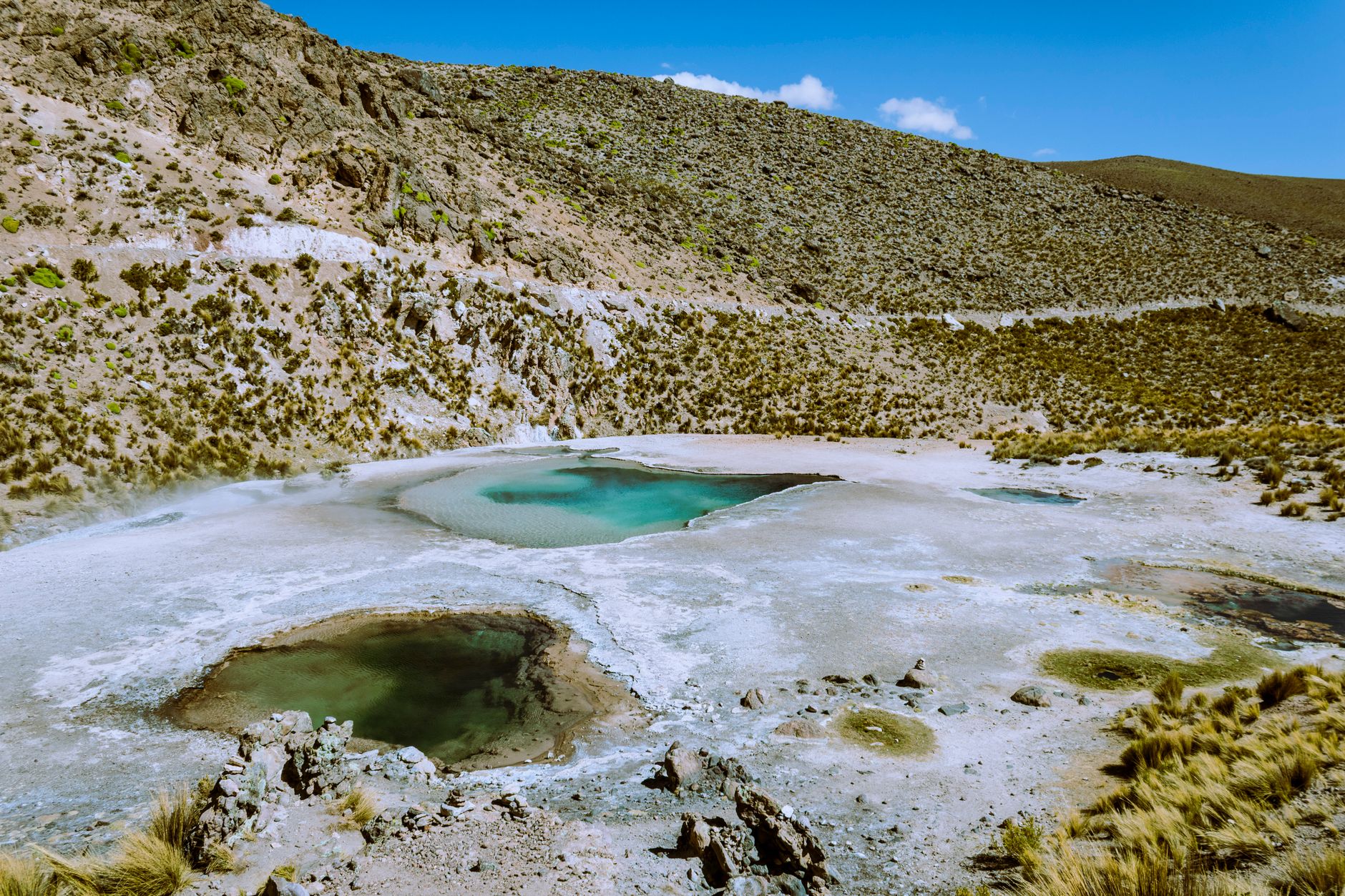
    These natural hot springs sit at more than 3,000 meters above sea level and cascade down a hillside in a series of tiered pools made of mineral-rich clay. The higher you go, the hotter the water gets – reaching temperatures of around 50°C in the top pools – while the lower ones are cooler and perfect for long soaks. The scent of sulfur mixes with the crisp mountain air, and the views stretch endlessly into the Andes. It’s one of those places where you can literally sit in steaming water while looking at snow.

    Practical Info

    Entrance fee: Around 10,000-15,000 CLP per person ($10-15 USD). Bring cash – cards aren’t accepted this high up.
    Getting there: Around 2.5-3 hours from Santiago. Follow the G-25 road through San José de Maipo until the pavement ends; from there, it’s a gravel road. A 4×4 or high-clearance vehicle is highly recommended.
    Best time to visit: October to April. In winter, snow often blocks the access roads.
    What to bring:
    – Swimsuit and towel
    – Flip-flops or water shoes (the ground can be rough)
    – Warm layers – it gets cold fast when you leave the pools
    – Water, snacks, and cash
    – Sunscreen (the altitude sun burns quickly)
    Facilities: Very basic. No changing rooms, no restaurants, and no cell service – just the mountains and the pools.

    Why go

    Because it’s the purest definition of wild Chile. Soaking in natural hot springs at the edge of a glacier, surrounded by nothing but silence and mountains, feels unreal. Termas Valle de Colina is rugged, raw, and easily one of the most breathtaking Hot Springs Chile experiences – the closest you’ll ever get to bathing in the clouds.

    4. Baños Morales & Embalse del Yeso (Cajón del Maipo)

    The Layout

    Tucked deep in Cajón del Maipo, Baños Morales feels like a hidden mountain village where time moves slower. The hot springs themselves are small, rustic, and community-run – a handful of shallow pools set against a dramatic backdrop of snowcapped peaks. The mineral water here is rich in clay and iron, giving it a reddish hue that locals say is great for the skin.

    Just a short drive (or hike) away lies Embalse del Yeso, a turquoise mountain reservoir that looks like it was painted into the Andes. Most travelers combine both spots into one day: a morning hike or photo stop at the reservoir, followed by a long, quiet soak at Baños Morales as the sun drops behind the mountains.

    Practical Info

    Getting there: About 3 hours from Santiago, following the G-25 road through San José de Maipo. Roads are winding and partly gravel – doable in summer with a normal car, but in winter, snow can close access completely.
    Entrance fee: Around 8,000-10,000 CLP ($8-10 USD), cash only.
    Open season: Typically October to April. Always check weather and road conditions before you go.
    Facilities: Very basic. Expect simple pools, a changing area, and not much else – no café, no Wi-Fi, just mountain silence.
    What to bring:
    – Swimsuit and towel
    – Flip-flops or sandals
    – Warm clothing (the altitude brings cold winds)
    – Water, snacks, and sunscreen
    – Cash and a camera for Embalse del Yeso

    Why go

    Because few places mix hiking, mountain views, and thermal waters this perfectly. Baños Morales is peaceful, authentic, and one of the easiest Hot Springs Chile experiences you can reach from Santiago. Add a stop at Embalse del Yeso, and you’ve got the perfect Andes day trip – turquoise lake in the morning, steaming pools in the afternoon.

    5. Geysers del Tatio (San Pedro de Atacama)

    The Layout

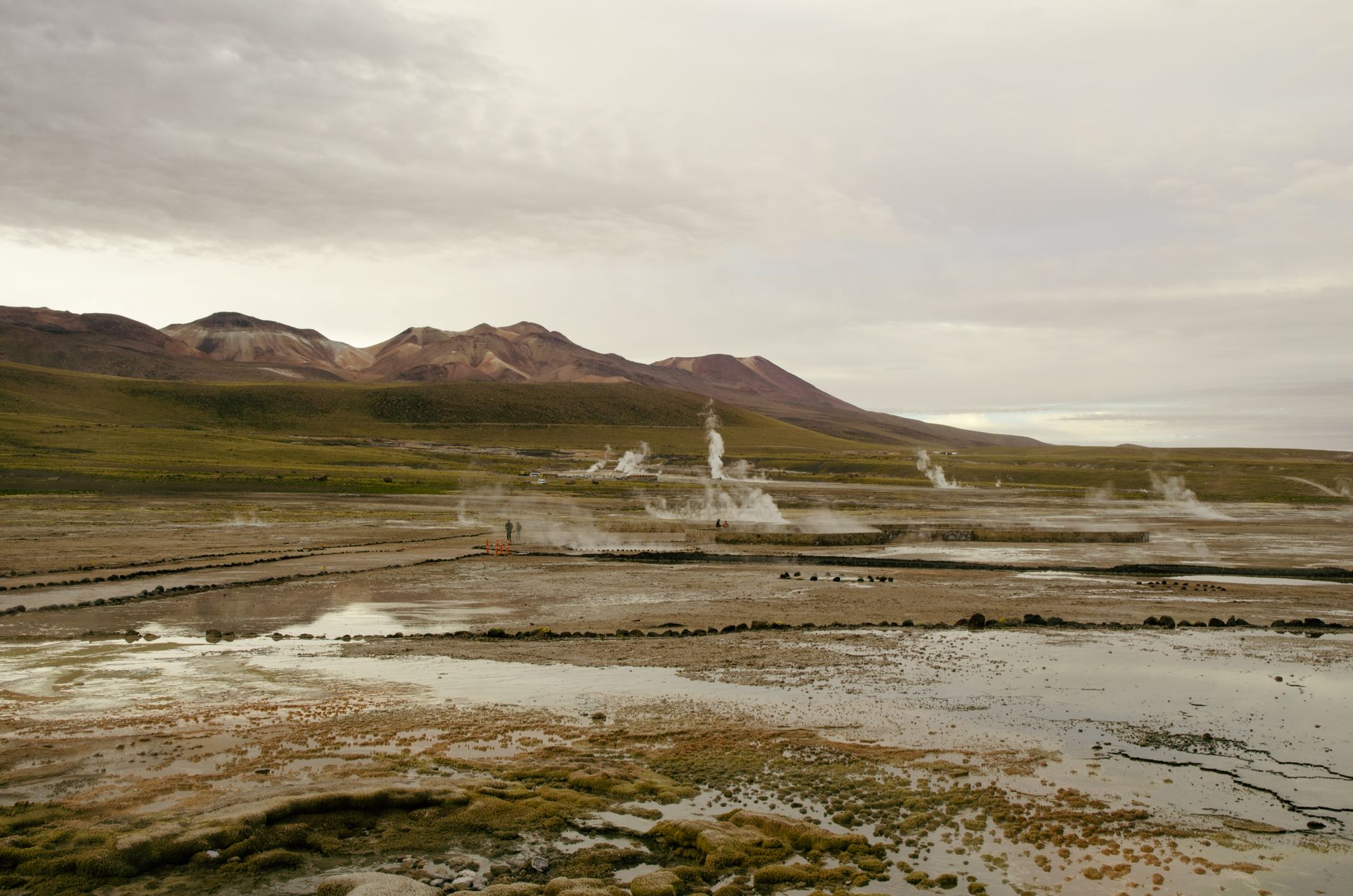
    At over 4,300 meters above sea level, Geysers del Tatio is the kind of place that feels like another planet. You arrive before sunrise, shivering in the freezing desert air, and then watch as the first rays of sunlight hit dozens of steaming geysers erupting from the earth. The landscape is surreal – bubbling pools, columns of vapor, and a golden glow spreading over the Andes.

    While it’s not a “soak and relax” kind of hot spring, there is one thermal pool where visitors can bathe. The water temperature hovers around 35°C, which feels glorious after the early morning cold. But the real magic of Tatio is the setting – one of the largest geyser fields in the world, surrounded by flamingos, vicuñas, and the endless silence of the Atacama Desert.

    Practical Info

    Getting there: About 2 hours from San Pedro de Atacama. Most people join a guided sunrise tour, since roads are rough and it’s easy to get lost in the dark.
    Entrance fee: Around 15,000 CLP ($15-18 USD) per person, payable in cash at the entrance.
    Best time to visit: Early morning (around 6:00 AM) for the full geyser effect – the contrast between freezing air and hot steam is strongest then.
    Facilities: Basic. A small visitor center, restrooms, and a designated bathing pool. Bring your own towel and snacks.
    What to bring:
    – Warm layers (temperatures can drop below zero)
    – Swimsuit and towel (if you plan to bathe)
    – Water, snacks, and altitude pills if needed
    – Camera for sunrise shots (tripod recommended)

    Why go

    Because it’s not just one of the best Hot Springs Chile experiences – it’s one of the most unique landscapes on Earth. Watching the sunrise over Geysers del Tatio feels like witnessing the planet breathe. And if you dip into the hot pool afterward, it’s the perfect ending to one of the coldest, most unforgettable mornings you’ll ever have.

    6. Termas de Puritama (San Pedro de Atacama)

    The Layout

    Hidden in a narrow canyon just north of San Pedro, Termas de Puritama is an oasis in the middle of the Atacama Desert. Eight crystal-clear pools are connected by wooden walkways, each one warmed naturally by underground volcanic heat. The name comes from the Kunza word “Puri-Tama”, meaning “hot water,” and once you step in, you’ll understand why locals have bathed here for centuries.

    Unlike the raw power of Geysers del Tatio, Puritama feels peaceful and refined – warm water flowing between desert rocks, small waterfalls trickling from one pool to the next, and the scent of desert plants drifting through the air. It’s the kind of place where time slows down, and the contrast between dry desert cliffs and lush green canyon walls feels almost unreal.

    Practical Info

    Getting there: About 30 km (45 minutes) from San Pedro de Atacama, via Route B-245. There’s no public transport, so you’ll need your own car or a guided tour.
    Entrance fee: Around 25,000-35,000 CLP ($25-35 USD), depending on season and time of day. Booking ahead is recommended.
    Best time to visit: Morning or late afternoon for softer light and fewer people.
    Facilities: Wooden paths, shaded resting decks, changing rooms, restrooms, and a small visitor area. simple but well maintained.
    What to bring:
    – Swimsuit and towel
    – Flip-flops (wooden paths can get hot)
    – Water and snacks (no café on-site)
    – Hat, sunscreen, and sunglasses

    Why go

    Because Termas de Puritama shows the softer side of the desert. It’s the perfect balance between nature and comfort – clean, quiet, and surrounded by surreal Atacama scenery. If you’re traveling through northern Hot Springs Chilespots, this is your must-do desert oasis: warm waters, clear skies, and absolute calm just minutes from San Pedro.

    7. Los Pozones (Pucón)

    The Layout

    Tucked deep in the forest near the Liucura River, Los Pozones is the definition of rustic charm. Picture a string of natural stone pools carved right into the riverbank, surrounded by trees, mist, and the sound of rushing water. There’s no fancy architecture or modern design here – just raw, wild nature and steaming volcanic water.

    At night, the atmosphere becomes even more magical. Steam rises under the stars, the river glows in the moonlight, and conversations fade into quiet. It’s one of those places where you feel completely off the grid – the kind of experience that reminds you why Chile’s hot springs are so special.

    Practical Info

    Getting there: About 35 minutes from Pucón by car, following the road toward Huife. The last part is gravel but manageable with a regular vehicle.
    Entrance fee: Around 10,000 CLP ($10-12 USD), cash only.
    Best time to visit: Early morning or at night. Both give you peace and space – midday tends to be busier with tours.
    Facilities: Very basic. A few changing cabins, restrooms, and wooden stairs leading down to the pools. No café or lockers.
    What to bring:
    – Swimsuit and towel
    – Flip-flops or water shoes
    – Water and snacks
    – Warm clothes for after your soak
    – Headlamp if visiting at night

    Why go

    Because this is Hot Springs Chile in its purest form – simple, natural, and unforgettable. Los Pozones isn’t about luxury; it’s about feeling connected to nature. If you want a raw, peaceful soak surrounded by forest and river sounds, this is your spot.

    8. Salto El León (Pucón)

    The Layout

    Salto El León isn’t just about soaking – it’s about the view. Around 30 km from Pucón, this hidden gem combines a roaring waterfall with a few natural thermal pools nearby. The main fall drops nearly 90 meters into a misty canyon, and the pools sit close enough that you can feel the spray while you bathe. The contrast between the icy mountain water crashing down and the warmth of the pools makes it a one-of-a-kind experience.

    The area around Salto El León is lush and green, filled with ferns, moss, and the constant hum of the forest. It’s a short walk from the parking area (about 300 meters), and while the pools themselves are small and simple, the setting more than makes up for it.

    Practical Info

    Getting there: Roughly 40 minutes from Pucón by car, on the road toward Palguín. The final stretch is gravel but accessible in a regular car.
    Entrance fee: Around 8,000-10,000 CLP ($8-10 USD).
    Best time to visit: Spring to early autumn (October-April), when the falls are at their fullest and the weather is pleasant.
    Facilities: Basic but clean. A small café and restrooms are available near the entrance, and parking is straightforward.
    What to bring:
    – Swimsuit and towel
    – Comfortable walking shoes
    – Water, snacks, and camera
    – Light rain jacket (the waterfall spray can soak you)

    Why go

    Because Salto El León combines two of Chile’s best natural experiences – waterfalls and thermal baths – in one peaceful setting. It’s less famous than Geométricas or Botánico, but that’s part of its charm. For travelers exploring Hot Springs Chile, this stop offers something truly unique: the sound of thunderous falls while you soak in warm volcanic water.

    9. Termas Quimey-Co (Pucón)

    The Layout

    Set in a sunny clearing surrounded by forested hills, Termas Quimey-Co offers a laid-back, open-air hot springs experience that feels both natural and comfortable. Several pools of different temperatures are spread across grassy terraces, with views of trees and mountains in the background. The atmosphere is friendly and relaxed – more like a mountain retreat than a spa.

    The pools themselves are clean and well-kept, with smooth stones and warm volcanic water averaging between 36°C and 40°C. On clear days, sunlight reflects off the water, making it the perfect spot to unwind after a day of hiking or exploring Pucón.

    Practical Info

    Getting there: Around 30–35 minutes from Pucón, following the same road that leads toward Huife and Los Pozones. Easy to reach by car.
    Entrance fee: Roughly 10,000-12,000 CLP ($10–13 USD).
    Best time to visit: Late morning or afternoon – it gets sunny and warm, ideal for lounging in the outdoor pools.
    Facilities: Moderate – changing rooms, restrooms, a small café, and picnic areas. More structured than Los Pozones but still surrounded by nature.
    What to bring:
    – Swimsuit and towel
    – Flip-flops or sandals
    – Sunglasses and sunscreen
    – Water and light snacks

    Why go

    Because Termas Quimey-Co strikes the perfect balance between rustic and organized. It’s not as dramatic as Geométricas or as curated as Botánico, but it’s peaceful, warm, and easy to reach. For anyone exploring Hot Springs Chile, this is a great middle-ground option – affordable, scenic, and authentically local.

    10. Eco Termas Río Blanco (Cochamó / Lake District)

    The Layout

    Deep in the forested valleys near Cochamó, Eco Termas Río Blanco feels like a hidden sanctuary for travelers who want to disconnect completely. The pools are set along a quiet river, surrounded by green hills and native trees. Steam rises through the morning mist, and the only sounds you’ll hear are birds and running water.

    The setup is simple but beautiful – a few wooden tubs and stone pools filled with natural geothermal water, perfectly warm for long soaks. It’s the kind of place where you bring your own food, stay at the nearby campground, and let time slow down. There’s no rush, no crowds, and definitely no phone signal – just peace, nature, and the steady warmth of the thermal water.

    Practical Info

    Getting there: About 2 hours from Puerto Varas or 1.5 hours from Cochamó by car. The final stretch is on a gravel road, but it’s well-marked.
    Entrance fee: Around 10,000 CLP ($10–12 USD).
    Best time to visit: Year-round, though it’s especially cozy on rainy days when the surrounding forest turns misty.
    Facilities: Rustic and eco-friendly – basic changing cabins, restrooms, and a small camping area. No restaurant or Wi-Fi, but cold drinks (and sometimes beer) are sold on-site.
    What to bring:
    – Swimsuit and towel
    – Water, snacks, and cash
    – Warm layers for the evening
    – Flip-flops or water shoes
    – A tent if you plan to stay overnight

    Why go

    Because Eco Termas Río Blanco captures the heart of Hot Springs Chile – remote, raw, and deeply relaxing. It’s not about luxury; it’s about immersion in nature. If your idea of the perfect hot spring is one where you can hear the forest breathe and forget the rest of the world exists, this is exactly where you want to be.

    Final Thoughts on Hot Springs Chile

    After soaking in steaming pools beneath volcanoes, beside rivers, and under starlit skies, one thing’s clear – Chile does hot springs better than almost anywhere. Whether you’re after wild and remote or cozy and curated, each spot offers its own version of calm.

    If you only visit one, make it Termas Geométricas for pure magic. But honestly, every stop on this list reminds you why slowing down – just sitting still in nature – might be the best part of traveling Chile.

    Frequently asked questions

    What are the best hot springs in Chile?

    For a first trip, Termas Geométricas near Pucón is our top pick. Near Santiago, look at Cajón del Maipo options like Termas Valle de Colina and Baños Morales. Choose by region: capital day trip versus Lake District base.

    Are there hot springs near Santiago?

    Yes. The main day-trip zone is Cajón del Maipo, about 1 to 2 hours from the city. See our hot springs near Santiago guide for the practical picks.

    Which hot springs near Pucón are worth it?

    Termas Geométricas is the standout. Parque Termal Botánico and other Pucón-area termas work well if you want a shorter drive or a different vibe.

  • Hot Springs Near Santiago Chile: Best Day Trips

    Hot Springs Near Santiago Chile: Best Day Trips

    I’d heard a lot of good things from locals about the Hot Springs Santiago – stories about natural pools hidden in the Andes, surrounded by snow and silence. Everyone said the same thing: “you have to go, it’s incredible”. So of course, I had to try it myself.

    Day trip from Santiago? Chile safety overview · Santiago travel guide.

    The best hot springs near Santiago are in Cajon del Maipo, within 1 to 2 hours of the city, including Banos Morales and Termas Valle de Colina.

    A few hours after leaving the city, the noise and chaos of Santiago faded behind me. The road climbed higher into the mountains, and soon there was nothing but winding valleys, steaming air, and that crisp Andean wind. The moment I stepped into the hot water, I got it – the locals were right.

    Every hot spring I’ve visited in Chile has been special, but there’s something unforgettable about the ones near Santiago. The combination of raw landscape, altitude, and peace hits different. It’s the kind of experience that makes you stop, breathe, and realize how stunning this country really is.

    Also planning to go further south to Chile’s Lake District? Check out the best hot springs of Pucón!

    1. Termas Valle de Colina (Cajón del Maipo)

    My Termas Valle de Colina Review

    The road to Termas Valle de Colina feels like an adventure in itself. Once you leave Santiago, the highway slowly turns into a narrow mountain road that winds deeper into Cajón del Maipo. Dust clouds rise behind every car, the air gets colder, and the Andes start to dominate the horizon. By the time you reach the valley, the only sounds left are the wind and the bubbling of the hot springs.

    My first dip into the pools was pure magic – warm volcanic water, thin mountain air, and snow still sitting on the peaks above me. It’s one of those places that make you forget you’re only a couple of hours away from a capital city. The contrast between the icy air and the steaming pools is something you’ll never forget.

    The Layout

    The layout of Termas Valle de Colina is something out of a postcard. Seven or eight natural pools cascade down a small slope, each one slightly cooler than the one above. They’re formed from mineral-rich mud and rock, so the edges feel rough and natural – nothing polished or built-up here.

    From the top pools, you get a clear view of the Andes stretching endlessly in every direction. Steam rises into the cold air, mixing with the smell of sulfur and the sound of distant meltwater streams. The higher you sit, the hotter the water – it can reach up to 50°C – while the lower pools are milder and perfect for just floating and watching the light change on the mountains.

    Practical Info

    Entrance fee: Around 10,000–15,000 CLP per person (roughly $10–15 USD), depending on the season. Bring cash – there’s no card payment this high up.

    How to get there from Santiago: Drive southeast toward San José de Maipo, then continue about 75 km into the Cajón del Maipo valley. The last stretch is gravel and can be rough, so a 4×4 or high-clearance vehicle is recommended. The total drive is around 2.5 to 3 hours from Santiago.

    Best time to visit: Late spring through early autumn (October to April). In winter, snow often blocks the access roads.

    What to bring:
    – Swimsuit and towel
    – Flip-flops or sandals (the ground is rocky and hot)
    – Water and snacks (no shops around)
    – Cash for entrance
    – Warm layers – once you get out of the water, the wind can be freezing

    Facilities: Very basic. There are no changing rooms, no café, no showers – just nature. Most visitors change behind their cars or wrap up in towels.

    Why go

    Because this is as close as you’ll ever get to bathing in the sky. The combination of wild scenery, pure silence, and steaming mineral water surrounded by snow-covered peaks makes Termas Valle de Colina one of the most unforgettable Hot Springs Santiago has to offer. It’s raw, real, and exactly the kind of experience that reminds you how powerful and peaceful nature can be – all within a few hours of the city.

    Powered by GetYourGuide

    2. Baños Morales & Embalse del Yeso

    My Baños Morales Review

    After soaking in Valle de Colina, I wasn’t sure another place nearby could compete – but Baños Morales has a completely different charm. It’s smaller, quieter, and feels like a little mountain village lost in time. The hot springs here are community-run, simple stone pools tucked between massive peaks, with steam rising gently into the cold air.

    The drive up is worth it alone. You pass turquoise rivers, sharp cliffs, and finally reach Baños Morales, sitting at over 1,800 meters above sea level. The air is thin, crisp, and filled with the sound of running water from nearby streams. And if you have time, combine it with a visit to Embalse del Yeso, the stunning turquoise reservoir just a short drive away – one of the most beautiful mountain views near Santiago. It’s the perfect day trip: adventure first, relaxation second.

    The Layout

    The pools at Baños Morales are simple but beautiful. Two or three small thermal pools sit on a rocky slope, surrounded by the Andes on all sides. The water temperature hovers around 25–30°C – not boiling, but comfortably warm – especially nice when the mountain breeze hits your face.

    What makes the experience special isn’t luxury; it’s the setting. You’re sitting in natural mineral water with snow-capped peaks towering above you and the sound of a mountain stream below. It feels peaceful, honest, and refreshingly local.

    Practical Info

    How to get there from Santiago:
    Take Route G-25 toward Cajón del Maipo and continue past San José de Maipo until you reach Baños Morales (around 93 km from Santiago). The drive takes roughly 3 hours. A car with good clearance is recommended; the last stretch can be rough and narrow.

    Entrance fee / open season:
    Entrance costs around 8,000–10,000 CLP per person. The hot springs are usually open from October to April, but it depends on weather and road conditions. In winter, snow often closes access.

    Road conditions / accessibility:
    The gravel road after San Gabriel can be challenging, especially after rain or snow. Check conditions before you go, and start early – there’s no phone signal in most of the valley.

    Facilities:
    Very basic. There are no changing rooms or restaurants, just a small area managed by locals. Bring everything you need for the day.

    What to bring:
    – Swimsuit and towel
    – Water and snacks
    – Sunscreen (the altitude makes the sun strong)
    – Cash (no card payments)
    – Warm clothes for when you get out
    – Camera – the landscape is unreal

    Why go

    Because Baños Morales gives you the purest version of mountain relaxation – no crowds, no fancy facilities, just the Andes, warm mineral water, and silence. Pair it with a quick stop at Embalse del Yeso, and you’ve got one of the most scenic day trips in Chile. It’s peaceful, authentic, and one of the easiest ways to mix hiking, adventure, and soaking in nature near Santiago.

    Powered by GetYourGuide

    Frequently asked questions

    What should travelers know about Hot Springs Near Santiago Chile?

    The best hot springs near Santiago are in Cajon del Maipo, within 1 to 2 hours of the city, including Banos Morales and Termas Valle de Colina.

  • Hot Springs Pucón (2026 Guide)

    Hot Springs Pucón (2026 Guide)

    The first time I came to Pucón, everyone told me the same thing: climb volcano Villarrica, go rafting, maybe try kayaking. But after one full day of running around, my body had other plans. I didn’t want another adrenaline hit – I wanted hot water, steam, and absolute silence. That’s when I discovered what locals already know: the best part of southern Chile’s Lake District isn’t just the volcanoes, it’s Hot Springs Pucón.

    Before you go: install a reliable eSIM for Patagonia’s remote areas so you have maps and messaging when cell signal drops.

    Driving out of town, the road quickly turns from smooth asphalt to gravel, dust swirling in the rear-view mirror. By the time you reach the forest, phone signal is gone and you’re left with the sound of rushing rivers and birds echoing between the trees. That’s where the hot springs in Pucón really begins – tucked away in valleys, hidden behind waterfalls, or spread out in gardens.

    I’ve visited a handful of these thermal spots. Some are raw and rustic, with little more than a stone pool by the river. Others feel designed, almost spa-like, with cafés, changing rooms, and towel service. Each one has its charm, but all share the same magic: stepping into steaming volcanic water while the southern Chilean forest closes in around you.

    Other quick links:
    – Best hot springs in Santiago, Chile
    – Best hot springs in Chile

    In this guide, I’ll take you through the top 7 hot springs in Pucón.

    1. Termas Geométricas

    The drive alone feels like an adventure – gravel roads, forest closing in, and then suddenly a red wooden walkway cutting through the green. Termas Geométricas isn’t just a hot spring, it’s a design masterpiece hidden in the canyon of the Quetrupillán volcano. Twenty pools are spread out along a 450-meter path, some steaming at 46°C, others pleasantly warm, with a freezing waterfall slicing through the middle.

    Why go: Because nowhere else in Chile blends wild forest and bold architecture this perfectly. It’s dramatic, unforgettable, and feels like walking through a dream before stepping into the water.

    2. Parque Termal Botánico

    It’s quite new – and it feels that way in the best sense. Closer to Pucón and easier to reach, Parque Termal Botánico is like soaking in a botanical garden. Paths lead you past hibiscus flowers and shaded trees until you find pools tucked between plants – some open-air, others cave-like, and even one inside a glass “crystal palace.” The vibe is calm and colorful, with modern facilities like heated changing rooms and a café adding comfort without losing nature.

    Why go: Because it’s a garden retreat as much as a hot spring. Perfect if you want something peaceful, family-friendly, and different from the more rugged springs.

    Still wondering where to stay in Pucón? Check out our list of the best hotels in Pucón.

    3. Los Pozones

    Los Pozones strips it back to basics: stone pools carved into the riverside, surrounded by forest and mountain air. It’s rustic, cheaper than the polished spas, and especially atmospheric at night when steam rises under the stars. There’s nothing fancy here – just natural hot water, rocks, and the sound of the river.

    Why go: Because you want the raw, no-frills version of hot springs. Ideal for backpackers, budget travelers, or anyone who prefers authenticity over luxury.

    4. Salto El León

    About 30 km from Pucón, Salto El León mixes two things you don’t usually find together: hot pools and a massive waterfall crashing down just a short walk away. The pools themselves are smaller and simple, but the setting makes it worth the trip. The sound of the falls, the forest air, and the quick walk through nature give it a unique feel.

    Why go: Because you want a soak with a side of sightseeing. The waterfall alone is worth the visit, and adding hot pools makes it even better.

    5. Termas Quimey-Co

    Quimey-Co sits in a sunny clearing with several outdoor pools looking out over the forest. It’s more organized than Los Pozones, but not as curated as Botánico or Geométricas – a middle ground between rustic and spa. You’ll find space to stretch out, warm water to relax in, and plenty of sunshine on clear days.

    Why go: Because you want balance. It’s easy, comfortable, and still natural, a solid option if you don’t want to choose between wild and polished.

    6. Termas Pucón Indómito

    Indómito feels more like a wellness center than a wild soak. Towels are included, there’s a restaurant serving full meals, and the pools are laid out with comfort in mind. You don’t come here for wilderness or rugged charm – you come for convenience and a smooth experience.

    Why go: Because you want everything taken care of. Great if you’re short on time, traveling with kids, or just want to relax without thinking about logistics.

    7. Eco Termas Río Blanco

    Hidden deeper in the valleys, Río Blanco is remote, rustic, and off-the-grid. The pools are simple but well-kept, surrounded by forest and with a small campground nearby if you want to stay the night. There’s even the surprise of grabbing a cold beer after your soak. It’s quiet, peaceful, and far from the tourist crowds.

    Why go: Because you want to disconnect completely. If your idea of paradise is hot water, forest silence, and zero phone signal, this is it.

    The Best Hot Springs Pucón choice for you

    For me, hot springs in Pucón aren’t just about relaxing – it’s about slowing down after days filled with hikes, volcano climbs, and road trips. The moment you sink into that steaming water, surrounded by forest and mist, it feels like time stops.

    If you’re heading this way, start with Termas Geometricas for the pure wow factor, and Parque Termal Botánico if you prefer something new, calm, and closer to town. Both are unforgettable in their own way.

    And if you want to know what they’re really like, read my full reviews. I’ve driven those gravel roads, slipped on those walkways, and stayed in those pools way too long – all so you can pick the perfect hot spring for your trip.

  • Best Time to Visit Santiago (2026 Guide)

    Best Time to Visit Santiago (2026 Guide)

    Planning a trip to Chile almost always means flying into Santiago first – the city is the main international hub and the gateway to the rest of the country. But here’s the thing: should you actually spend a few days here, and if so, when’s the best time to visit Santiago?

    Trip timing and safety: is Chile safe for tourists? · Santiago guide.

    The best time to visit Santiago is spring (September to November) or fall (March to May) for mild weather and clear Andes views.

    From my experience – and after digging deep into local travel patterns and climate data – there’s no single “perfect” month. It really depends on whether you want to ski, sip wine during harvest season, or explore the city without the crowds. That’s why I’ve broken Santiago down season by season, and then month by month, so you can match your trip to the experience you actually want.

    Quick Overview: Santiago’s Seasons Explained

    Summer in Santiago (Dec–Feb)

    Summer in Santiago means hot, dry days often above 30°C (86°F) and almost zero rain. January is lively with rooftop bars and busy parks, while in February many locals leave for vacation, making the city quieter but with some restaurants closed.

    It’s also the best time for day trips: vineyards are sunny, and the Andes look stunning in the mornings before the haze sets in. If you don’t mind the heat (and a bit of smog), summer gives you long days and plenty of sunshine.

    Autumn in Santiago (Mar–May)

    Autumn is Santiago at its most comfortable. Days are sunny but not too hot, nights are cool, and the city’s parks turn golden. Crowds thin out after summer, so it’s easier (and often cheaper) to get around.

    March and April are also wine harvest season — vineyards buzz with festivals and tastings just outside the city. If you want mild weather, fewer tourists, and a glass of fresh vino, autumn is hard to beat.

    Winter in Santiago (Jun–Aug)

    Winter in Santiago is cool and damp, with daytime temps around 10-15°C (50–59°F). Expect some rain and the occasional smoggy day, but also snow-capped Andes right on your doorstep.

    This is ski season – Valle Nevado, La Parva, and Portillo are just an hour or two away. Hotels and flights are usually cheaper than in summer, making winter a solid choice if you’re into skiing or city exploring without the crowds.

    Spring in Santiago (Sep–Nov)

    Spring is when Santiago wakes up again – clear skies, blooming parks, and mild temps that make walking the city a joy. By September, Fiestas Patrias (Chile’s Independence celebrations) take over with barbecues, music, and plenty of wine.

    October and November are perfect for vineyard visits and sightseeing without the summer heat. If you want lively festivals, comfortable weather, and fewer tourists, spring is one of the best times to be in Santiago.

    Best Time of Year to Visit Santiago (By Season)

    Summer: Who it’s for / What to expect

    Summer is for travelers who love long sunny days, rooftop drinks, and easy day trips to vineyards or the coast. Expect hot, dry weather, busy parks in January, and a quieter vibe in February when many locals head out of town. It’s great for sunshine seekers, but less ideal if you hate heat or want top restaurant options (some close in Feb).

    Autumn: Who it’s for / What to expect

    Autumn is perfect for travelers who want mild weather, fewer crowds, and a more local vibe. The city cools down, parks turn golden, and prices drop after summer. Wine lovers will especially enjoy March and April, when vineyards around Santiago celebrate harvest season with tastings and festivals.

    Winter: Who it’s for / What to expect

    Winter is ideal for skiers and budget travelers. The Andes ski resorts are in full swing, just a short drive from the city, while hotels and flights in Santiago are usually cheaper than in summer. Expect cool, damp days, some smog, and fewer tourists – great if you prefer a quieter city break.

    Spring: Who it’s for / What to expect

    Spring is for travelers who want the best balance – sunny but not scorching days, lively festivals, and vineyards turning green again. It’s great for sightseeing, outdoor walks, and timing your trip with Fiestas Patrias in September. Expect a cheerful atmosphere, comfortable temps, and fewer crowds than in peak summer.

    Best Time to Visit Santiago (By Traveler Type)

    Best time for wine lovers

    The best time for wine lovers to visit Santiago is March and April, during the vendimia (harvest season). Vineyards in the Maipo and Casablanca valleys buzz with grape-picking festivals, tastings, and live music. It’s when the region feels most alive, and you’ll get to try wines fresh from the harvest. Spring (October–November) is a close second, with lush green vineyards and fewer crowds.

    Best time for budget travelers

    Budget travelers will find the best deals in May or August. These shoulder months mean lower hotel rates, cheaper flights, and far fewer tourists. The weather is cooler, and you might get some rain, but the city feels more local and relaxed. If saving money matters more than sunshine, this is the time to go.

    Best time for skiing & outdoor adventures

    If skiing is on your list, July is prime time. The Andes resorts like Valle Nevado and Portillo have their best snow, though expect more crowds due to Chilean school holidays. For a quieter slope experience, late June or August works too. For hikers and outdoor explorers, spring (October-November) is ideal – clear skies, mild temps, and nearby trails without the summer heat.

    Best time for festivals & events

    The standout time for festivals in Santiago is September, when Fiestas Patrias fills the city with barbecues, traditional dancing, and endless wine. Music fans should aim for March or April, when Lollapalooza Chile takes over Parque O’Higgins. And if you’re into local culture with a foodie twist, the March-April wine harvest season is packed with vineyard festivals just outside the city.

    Month by Month Guide to Santiago in 2025

    January

    Hot, sunny, and busy. Expect temps over 30°C (86°F), buzzing parks, and lively nightlife. Great for rooftop bars and day trips, though smog can make afternoons hazy.

    February

    Still hot, but quieter. Many locals leave for vacation, so the city feels calmer with less traffic. Some restaurants and shops close, but it’s easier to explore tourist spots without crowds.

    March

    A sweet spot. Comfortable weather, fewer tourists, and the start of wine harvest season in nearby valleys. Perfect for vineyard tours and cultural festivals.

    April

    Crisp, clear days and autumn colors in the city’s parks. Vineyards are still celebrating harvest. Hotels are less busy, making this one of the best months to visit.

    May

    Cooler, with a relaxed local vibe. Fewer tourists, lower prices, and quieter streets. A great month for budget travelers who don’t mind chilly evenings.

    June

    Winter sets in. Cool, damp days in the city, but ski resorts in the Andes open up. Hotels in Santiago drop prices, making it easy to combine city life with skiing.

    July

    Peak ski season. The mountains are busy, especially during Chilean school holidays, so book early if you want the slopes. Santiago itself stays cool and quieter than summer.

    August

    Still winter, but slopes are less crowded as holidays end. The city is calm, prices are low, and clear days offer great views of the snow-covered Andes.

    September

    Spring begins and Fiestas Patrias takes over. Expect lively festivals, barbecues, and music everywhere around September 18–19. Book early – it’s one of the most exciting times to be in Santiago.

    October

    Sunny, mild, and green. Perfect weather for sightseeing and wine tours. Tourist numbers rise a little, but it’s not yet summer-busy.

    November

    Warm but not scorching. Parks are lush, vineyards are vibrant, and the city feels alive without overwhelming crowds. Another great “shoulder month.”

    December

    Summer kicks in. Long, hot days and busy streets in the lead-up to Christmas and New Year. Santiago stays active, while nearby Valparaíso gears up for its famous fireworks.

    Festivals and Events in Santiago Worth Timing Your Trip Around

    Fiestas Patrias (September)

    Chile’s Independence Day celebrations on September 18–19 turn Santiago into one big party. Parks fill with food stalls, barbecues (asados), traditional cueca dancing, and plenty of wine and pisco. Locals flock to fondas (festival grounds) that pop up around the city, especially in Parque O’Higgins. It’s one of the most authentic cultural experiences you can have in Santiago, but expect higher prices and book accommodation early.

    Vendimia / Wine Harvest (March–April)

    March and April are harvest season in Chile’s wine valleys, and Santiago is the perfect base to experience it. Vineyards in Maipo, Colchagua, and Casablanca host vendimia festivals with grape stomping, live music, and endless tastings. It’s the best time to see the wine culture in full swing – and yes, the fresh wines taste even better when you’re standing right in the vineyard.

    Lollapalooza Chile (March/April)

    Every March or April, Santiago hosts Lollapalooza Chile in Parque O’Higgins – a massive music festival that brings international headliners and local artists to the city. Expect multiple stages, food trucks, and thousands of fans. If you’re into big concerts and high energy, timing your trip around Lolla adds a whole different vibe to your Santiago visit.

    Other local events & holidays

    Beyond the big ones, Santiago has plenty of smaller events worth noting. New Year’s Eve brings fireworks and street parties, though the most famous show is in nearby Valparaíso. Christmas is family-focused, with the city quieter than usual. In January, the Santiago a Mil theater festival fills the city with live performances, parades, and art installations. Holy Week (Semana Santa) in March or April can mean closures, but it’s also a time to see local traditions. These smaller events give Santiago its rhythm throughout the year, so it’s worth checking the calendar before you go.

    Frequently asked questions

    What should travelers know about Best Time to Visit Santiago?

    The best time to visit Santiago is spring (September to November) or fall (March to May) for mild weather and clear Andes views.

  • Car Rental Santiago 2026: When You Need a Car (And When You Don’t)

    Car Rental Santiago 2026: When You Need a Car (And When You Don’t)

    I’m used to the straight, flat Dutch roads where cows outnumber the cars, so stepping into Santiago’s traffic for the first time was a whole new experience. Wide highways cutting through the city, sudden mountain curves just 30 minutes away, and taxi drivers who seem to know secret shortcuts you’ll never find on Google Maps. That’s when I realized: Car Rental Santiago isn’t just about getting from A to B, it’s about being prepared for Chile’s unique driving culture.

    Official sources: US Embassy Chile

    Rent a car in Santiago for wine valleys or the Lake District, not for a pure city stay. Book ahead for SCL pickup and keep bags out of sight.

    In this article I’ll walk you through everything you need to know – from picking up your rental at Santiago Airport (SCL) to choosing the right car type if you’re planning to drive into the Andes. Whether you want a small car just to cruise around the city, a 4×4 for a Patagonian road trip, or simply the cheapest option available, this overview will save you time, stress, and money.

    Let’s start with the basics: why renting a car in Santiago might be the best decision for your trip.

    Why Rent a Car in Santiago?

    Flexibility to Explore Chile

    One of the first things I noticed after landing in Santiago is how quickly the scenery changes. Within half an hour you can be in the middle of the Andes, sipping coffee in a mountain village, or driving through endless vineyards in the Maipo Valley. With renting a car in Santiago, you’re not tied to bus schedules or waiting for an Uber that never shows up outside the city center.

    You set your own pace: stop for empanadas in a roadside stand, take that random detour into the mountains, or keep driving until you find a small town that doesn’t even show up on Tripadvisor. That freedom is priceless.

    When a Rental Car is Worth It vs. Public Transport

    From my personal experience, Santiago itself has a decent metro system. If you’re just staying in the city for a couple of days, you might not need a car at all. But the moment you plan a day trip – Cajón del Maipo, Valparaíso, ski slopes in winter – public transport suddenly gets complicated and time-consuming.

    I remember trying to figure out buses to Cajón del Maipo and realizing I’d lose half the day just waiting. With a rental, you leave when you want, come back when you want, and don’t have to carry your luggage through a crowded metro station. In short: if you want to truly explore beyond the city limits, car rental Santiago is the smarter choice.

    Car Rental at Santiago Airport (SCL)

    How the Rental Process Works at Santiago International Airport

    Arriving in Santiago can feel a little overwhelming: new country, new language, long flight. Luckily, renting a car at the Santiago airport is pretty straightforward. Most major companies have their counters right inside the arrivals hall of Terminal 1. You just walk out of baggage claim and there they are – Avis, Hertz, Sixt, Europcar, Budget.

    The actual cars are parked in a rental lot just outside the terminal, about a 5-10 minute walk or a quick shuttle. Hand over your documents, sign the contract (don’t forget to check what’s included in the insurance), and you’re on the road in less than half an hour.

    Best Car Rental Companies at Santiago Airport

    If you’re like me, you probably check Google Reviews before choosing a rental company. At Santiago International Airport, the biggest names are all present:

    • Avis & Budget – good if you’re loyal to international brands.
    • Hertz – often has solid business options and frequent flyer deals.
    • Sixt – popular with Europeans, usually offering newer cars.
    • Europcar – solid mid-range option with plenty of availability.

    There are also several Chilean companies (like Econorent or Chilean Rent a Car) that sometimes offer cheaper daily rates, but with mixed reviews. If you value peace of mind, stick to one of the global players; if price is your top priority, local brands might be worth a look.

    Tips for Booking in Advance vs. On Arrival

    Here’s my personal lesson: don’t wait until you’re standing in Santiago Airport to book a car. Once, I thought I’d save time by walking up to the counter, only to find the car category I wanted was completely booked. Booking in advance online not only secures your car type (compact, SUV, 4×4), but also usually gets you a better price.

    That said, if you’re traveling off-season, you might score last-minute deals on arrival. Still, for peace of mind – especially if you’re heading straight from the airport to the mountains – booking your car rental at the Santiago airport ahead of time is the way to go.

    Car Types – What’s Best for Your Trip?

    Small Cars for Santiago City Driving

    If you’re planning to stay mostly inside Santiago, a small or compact car is your best friend. The city can get busy, parking spaces are often tight, and fuel prices aren’t exactly cheap. A tiny Kia Morning for example, is perfect for zipping around the city, sliding into narrow parking spots, and not stressing when traffic gets chaotic. For short distances and city trips, you don’t need a big SUV – a smaller rental will save you both money and nerves.

    SUVs and 4×4 for the Andes and Road Trips

    The moment you leave Santiago, the landscape changes dramatically. Heading to Cajón del Maipo? Planning a ski trip in the Andes? Driving the rougher stretches of the Carretera Austral? That’s when an SUV or even a 4×4 becomes more than just comfort – it’s almost a necessity. I still remember driving up to the mountains and being very glad I had a rental with some power behind it; the steep climbs and gravel roads are no joke. If your Chile itinerary includes nature, mountains, or long road trips, this is where you don’t want to go cheap.

    Luxury and Exotic Rentals in Santiago

    Of course, not every traveler is after practicality. In Santiago you’ll also find options for luxury sedans, convertibles, and even high-end brands. It’s not the cheapest way to get around, but if you’re in town for a special occasion, a business trip, or just want to enjoy cruising through the city in style, it’s available. Several international companies at the airport, as well as boutique rental agencies in the city, offer premium cars. It’s a fun way to make your trip unforgettable – even if you’ll spend half the time stuck in traffic on Avenida Apoquindo.

    Costs and Cheap Car Rentals in Santiago

    Average Prices for Car Rentals in Chile

    Prices for rental cars in Santiago can vary a lot depending on the season and the car type. On average, you’ll pay around $30–40 USD per day for a compact car, and between $50–80 USD for an SUV or 4×4. During high season (summer or ski season) those prices can easily go up. I remember renting in January and prices were almost double compared to September. If your dates are flexible, it really pays to book outside the peak weeks.

    Hidden Fees (Insurance, Tolls, Extra Drivers)

    This is where many travelers get caught off guard. The base price looks cheap online, but once you’re at the counter, suddenly there’s talk of insurance upgrades, airport surcharges, or extra driver fees. Chile also has a tag system for toll roads (the “TAG”), which is usually added as a daily fee to your rental. And don’t forget fuel: some companies charge you for a full tank whether you use it or not. My advice? Always double-check what’s included in your quote and take photos of the car before you leave the lot.

    How to Find Budget Car Rentals

    If you’re after the cheapest deal, a few tricks help:

    • Book online in advance – comparison sites often give better rates than walk-ins.
    • Check local companies – Econorent, Chilean Rent a Car, and LYS sometimes undercut the big brands.
    • Consider pickup location – rentals from the airport are often more expensive than those booked in the city center.
    • Look for long-term discounts – if you’re staying a few weeks, rates usually get cheaper per day.

    When searching for cheap car rentals in Santiago, balance is key. Saving $10 a day is great, but not if it means dealing with unreliable service or hidden charges. Sometimes peace of mind is worth the extra few pesos.

    Driving in Santiago and Chile – What You Need to Know

    Required Documents and Insurance

    Before hitting the road, make sure your paperwork is in order. You’ll need a valid driver’s license (your national license is usually fine for short-term rentals, but some companies ask for an International Driving Permit, like I had to get at ANWB – the Dutch Tourist Association). A credit card in the driver’s name is usually also required for the deposit. Insurance is another key point: most rentals include basic coverage, but many travelers add supplemental insurance for peace of mind – especially if you’re heading into the mountains or rural areas where road conditions can be rougher.

    Toll Roads (Tag System) and Gas Stations

    Chile uses an electronic toll system in Santiago called TAG. Instead of paying cash at a booth, your rental car has a device that records every toll you pass. The company then charges you a daily fee for using it, on top of the toll costs. It’s convenient but adds to your budget, so ask the rental desk how much per day they charge. Gas stations are widely available in Santiago and along major highways, but once you venture into remote areas, fill up whenever you can – I’ve learned the hard way that “next station in 50 km” can actually mean 100 km if you miss the turn.

    Safety and Local Driving Rules

    Driving in Santiago itself can feel chaotic (compared to the Dutch roads). People cut you off without hesitation, motorbikes weave between cars, and in rush hour, it sometimes feels like traffic rules are more of a suggestion than law.

    One thing that surprised me at night: many cars and buses have tail lights positioned higher than I was used to, which means headlights from oncoming traffic can shine directly into your eyes – making night driving more tiring and, honestly, a bit blinding.

    Outside the city, the pace is calmer, but watch for animals crossing the road and sudden changes in road conditions. Always drive defensively and give yourself extra time; it’s the safest way to enjoy the ride.

    Alternatives to Renting a Car in Santiago

    When Uber, Metro, or Tours Are Easier

    Santiago actually has one of the better metro systems in Latin America. If you’re only staying in the city, hopping on the metro is usually faster (and cheaper) than dealing with traffic and parking. Uber also works well here, especially for short rides or airport transfers, though technically it’s a gray area in Chile – drivers often ask you to sit in the front so it looks like you’re just friends. And then there are tours: for places like Valparaíso or wine country, a guided day trip might be less hassle if you don’t want to worry about navigating or driving after a glass (or two) of Carménère.

    Combining Rental with Domestic Flights

    Chile is long. Really long. Driving from Santiago to the Atacama Desert would take you nearly a week — and that’s if you don’t stop. For big distances, domestic flights are the smarter choice: fly to Calama for Atacama, Puerto Montt for the Lake District, or Punta Arenas for Patagonia. From there, renting a car locally gives you flexibility without losing days behind the wheel.

    That said, “distance” is very relative in Chile. I once drove from Temuco to Termas Geométricas – about 2.5 to 3 hours one way. Locals told me, “Oh, that’s not far at all!” But coming from the Netherlands, that felt like driving all the way from north down to all the way in the south in a single stretch. It made me realize how Chileans see long drives as normal, while for me it was a proper road trip.

    Final Tips for Renting a Car in Santiago, Chile

    • Plan ahead – Popular cars (like SUVs and 4x4s) sell out fast, especially in ski season or during summer holidays. Book before you land in Chile to avoid surprises and to lock in better rates.
    • Compare prices – Check both global brands (Avis, Hertz, Sixt, Europcar) and local companies (Econorent, Chilean Rent a Car). The cheapest option isn’t always the best, but knowing the range helps you choose smart.
    • Take your time – At the counter, don’t rush through the paperwork. Double-check what’s included in the insurance, ask about toll fees, and inspect the car carefully before driving off.
    • Read the fine print – Hidden fees can sneak up on you. Extra driver costs, young driver surcharges, fuel policies — it’s all in the details. Better to ask twice than to pay later.
    • Read the reviews (especially the bad ones) – A company with five-star ratings only can look great, but the negative reviews usually tell you the real story: long waits, poor customer service, or unexpected charges. Take them seriously before choosing your rental.

    In short: renting a car in Santiago isn’t complicated, but being prepared makes the difference between a smooth trip and a stressful one. With the right car, Chile’s highways, mountains, and coastlines are yours to explore.

    Frequently asked questions

    What should travelers know about Car Rental Santiago 2026?

    Rent a car in Santiago for wine valleys or the Lake District, not for a pure city stay. Book ahead for SCL pickup and keep bags out of sight.

  • Santiago Hiking Trails: Best Day Hikes Near the City (2026)

    Santiago Hiking Trails: Best Day Hikes Near the City (2026)

    When I first hiked in Santiago, I couldn’t believe how quickly the city disappeared. One moment I was weaving through traffic and noise, and the next I was on a dusty trail, the wind sharper, the air cleaner, with the Andes stretching out endlessly in front of me. The sounds of the city faded, replaced by the crunch of gravel under my boots and the rustle of dry grass in the breeze.

    Trail days start with knowing the city — is Santiago Chile safe? covers areas we’d actually explore.

    Official sources: CONAF Chile

    The best hikes near Santiago include Cerro San Cristobal in the city and canyon trails in Aguas de Ramon park on the eastern edge.

    I’ve put together a Google Maps list of these 11 Santiago hiking trails, so you can easily save and use it for your own adventure. Follow it here: 🥾 Santiago Hiking Google Maps List.

    From short city walks to full-day climbs, hiking Santiago has become my favorite way to escape the chaos and see the city from a completely new perspective – raw, quiet, and unforgettable.

    These are the 11 best Santiago hiking trails that will show you exactly why.

    Best Santiago Hiking Trails

    1. Cerro Manquehue – Santiago’s Classic Summit

    If you ask locals about their favorite hike in Santiago Chile, chances are they’ll say Cerro Manquehue. Rising 1,638 meters above the city, it’s one of the most recognizable peaks and a true classic for Santiago hiking.

    The trail isn’t long, but it’s steep. You’ll zigzag your way up dusty paths, sometimes scrambling over rocks, with every turn revealing wider views of both the city and the Andes. On a clear day, the panorama is unforgettable – Santiago’s skyline on one side, endless mountains on the other.

    Difficulty: Moderate – expect a good workout, especially on hot days
    Duration: Around 4 hours round trip
    How to get there: The trailhead is at Vía Roja Street in Vitacura. You can grab an Uber or taxi straight to the start, or take public transport to Vitacura and continue by car.

    If you only have time for one trail, this is easily one of the best hikes near Santiago Chile to experience how close the city is to real mountain adventure.

    2. Alto del Naranjo – A Mountain Escape Near Farellones

    Alto del Naranjo is a local favorite for anyone looking for a quiet escape from the city. At 1,866 meters high, this trail gives you both a solid workout and incredible views of the Andes. It’s one of those hikes near Santiago where you really feel like you’ve left urban life far behind, even though you’re still so close to the capital.

    The path begins at Puente Ñilhue Park on the road to Farellones. The trail is well-marked, with color-coded routes that branch off toward different peaks. Stick to the green markers to reach Alto del Naranjo itself. Along the way you’ll pass native trees and open ridges, perfect spots to pause and take in the scenery.

    Difficulty: Moderate
    Duration: About 4 hours round trip
    How to get there: Take the road toward Farellones and get off at Puente Ñilhue Park. From there, follow the green-marked trail to Alto del Naranjo.

    If you’re searching for hiking around Santiago Chile that’s accessible yet feels adventurous, Alto del Naranjo is one of the best options.

    3. Salto de Apoquindo – Waterfall Hike in Aguas de Ramón

    Salto de Apoquindo is one of the most rewarding hikes near Santiago, ending at a 30-meter waterfall hidden deep in the valley. Unlike many of the city’s steeper climbs, this route is less about pushing uphill and more about following a scenic trail through forests, streams, and open valleys. On hot days, some hikers even take a quick dip at the base of the falls.

    The trail starts inside Aguas de Ramón Park, a protected area on the eastern edge of the city. The path is well-marked and takes you gradually deeper into the canyon, with plenty of shaded sections along the way. It’s a longer hike, so be prepared with enough water and snacks.

    Difficulty: Moderate
    Duration: Around 8 hours round trip
    How to get there: Enter through Aguas de Ramón Park in La Reina. There’s a small entrance fee, and it’s best to arrive early since access is limited during busy weekends.

    If you’re looking for hiking in Santiago Chile that combines adventure, scenery, and a natural reward at the end, Salto de Apoquindo is hard to beat.

    4. El Roble – Autumn Colors and Andean Views

    El Roble is a peaceful trail that rewards hikers with sweeping views of the Andes and a chance to spot eagles circling overhead. The real highlight, though, comes in autumn when the oak forests turn deep shades of red and orange, making this one of the most scenic hikes around Santiago Chile during that season.

    The path is steady but not too demanding, winding through forest before opening up to panoramic viewpoints. It’s the kind of trail that feels both calming and adventurous, perfect for a full day outdoors without pushing yourself too hard.

    Difficulty: Easy to moderate
    Duration: About 6 hours round trip
    How to get there: Access is via the Caelu Chapel Association gate. Entry is usually open on weekends and holidays, but for weekdays you’ll need a special permit, so it’s best to plan ahead.

    For anyone searching for the best hikes near Santiago that combine mountain views with seasonal color, El Roble is a memorable choice.

    5. Cerro Pochoco – Short but Steep Challenge

    Cerro Pochoco is a classic for locals who want a quick but intense climb. The trail isn’t long, yet it rises steeply from the start, making it a great workout and one of the most popular hikes near Santiago for an afternoon escape. From the summit you get clear views of the city and the snowcapped Andes in the distance.

    The path is rocky and dusty, so good shoes are essential. Because it’s shorter, many hikers choose it as a training route or as an introduction before tackling bigger peaks like Cerro Manquehue or Cerro Provincia.

    Difficulty: Moderate to hard
    Duration: Around 4 hours round trip
    How to get there: The trailhead starts near San Enrique in Lo Barnechea. From Plaza San Enrique, follow Pastor Fernández Street and then El Alto Road until you reach the Pochoco Observatory parking lot.

    If you want hiking around Santiago Chile that delivers a challenge without taking up your whole day, Cerro Pochoco is a perfect pick.

    6. La Campana National Park – Darwin’s Favorite Climb

    La Campana is one of the most famous hikes near Santiago, partly because Charles Darwin himself climbed it in 1834. The trail takes you through forests of quillayes and peumos before opening up to rocky slopes near the summit. The last stretch can be tough, with scrambling over boulders, but the 360-degree view from the top makes it worth every step.

    The park is also home to Chile’s iconic palm trees, and in spring and autumn the landscape is especially colorful. Because it’s about two hours from the city, La Campana works best as a full-day trip, giving you time to enjoy both the hike and the surroundings.

    Difficulty: Moderate
    Duration: Around 7 hours round trip
    How to get there: From Santiago, drive or take a bus to Olmué. From there, follow the road east to the Granizo sector, where the main entrance to La Campana National Park is located.

    For anyone searching for the best hikes near Santiago Chile that mix history, biodiversity, and adventure, La Campana is a must.

    7. Parque Andino Juncal – Wetlands, Valleys, and Glaciers

    Parque Andino Juncal is a private ecological reserve about three hours from Santiago, and it feels like stepping into another world. The trail begins with a quiet valley walk, passes through high Andean wetlands, and eventually leads to dramatic views of the Juncal Glacier. It’s one of the lesser-known hikes around Santiago, which means fewer crowds and a stronger sense of wilderness.

    There are two main options: a shorter route to the river that’s manageable for beginners, and a longer, more challenging hike that crosses streams and climbs higher into the mountains. Both give you a taste of untouched Andean landscapes that are rare so close to the city.

    Difficulty: Moderate to hard, depending on the route
    Duration: 3 hours for the short loop, 8 hours for the longer trail
    How to get there: Take the international road toward Mendoza and turn off on a gravel track that follows the old Trasandino railway. You’ll reach Los Hornitos, where the park rangers are based and where the trail begins.

    If you’re looking for hiking day trips from Santiago Chile that feel remote and wild, Parque Andino Juncal is one of the best-kept secrets.

    8. El Morado Glacier – Iconic Cajón del Maipo Hike

    El Morado Glacier is one of the most iconic hikes near Santiago Chile, and for good reason. Located in the Cajón del Maipo valley, this trail takes you past rivers, alpine meadows, and rugged peaks before finishing at the base of the impressive hanging glacier. Standing there, surrounded by icy cliffs and bright blue sky, you feel like you’ve stepped deep into the Andes.

    The trail isn’t overly technical, but the altitude and terrain can make it demanding. It’s a favorite for anyone looking to combine adventure with stunning mountain scenery on a single-day hike.

    Difficulty: Moderate
    Duration: Around 3 to 4 hours round trip
    How to get there: From Santiago, drive into Cajón del Maipo and continue past Baños Morales. The trailhead begins about 1.5 km past the Choriboulder climbing area.

    Book your tour on GetYourGuide here!

    For hikers who want to experience the Andes without straying too far from the capital, El Morado is one of the best hiking day trips from Santiago Chile.

    9. Río de los Cipreses – Trails Through a Hidden Reserve

    The Río de los Cipreses National Reserve is a quiet alternative to the more famous parks near Santiago. Its main trail runs for 33 kilometers, but most hikers choose shorter sections that pass through forests, rivers, and viewpoints over the valley. Along the way you can spot orchids, condors, and even the endangered Tricahue parrot, making it one of the most unique hikes around Santiago Chile.

    What makes this reserve special is its variety. You can plan a multi-day trek with camping or simply enjoy a half-day walk to Los Maitenes sector. Either way, it offers a real sense of being off the beaten path.

    Difficulty: Easy to moderate, depending on distance
    Duration: From 3 hours to multiple days
    How to get there: Take Carretera del Cobre from Rancagua to Coya, then continue into the Río de los Cipreses National Reserve. Public transport is limited, so driving or joining a tour is the easiest option.

    For hikers searching for less-crowded routes and authentic nature, this is one of the best hikes near Santiago Chile to truly disconnect.

    10. Cerro San Cristóbal – Iconic City Hike With Panoramic Views

    Cerro San Cristóbal is the most famous city hike in Santiago, rising right from the center and offering some of the best views without leaving town. The trails wind through eucalyptus and cactus, and at the summit you’ll find the Virgin Mary statue looking out over the city with the Andes as a backdrop. It’s one of the easiest ways to get a taste of Santiago hiking without needing a full day.

    You’ll share the path with locals walking, running, or biking, especially on weekends. While it’s not remote like Cajón del Maipo, it’s a classic experience and perfect if you want to stretch your legs and catch sunset over the skyline.

    Difficulty: Easy
    Duration: About 1–2 hours round trip
    How to get there: The main entrances are at Pío Nono in Bellavista or Pedro de Valdivia in Providencia. You can also take the funicular up and hike down if you want to save time.

    Book a tour for this hike here (GetYourGuide link)!

    For anyone short on time, Cerro San Cristóbal is one of the best hikes in Santiago Chile to combine urban life with mountain views.

    11. Cerro Provincia – A True Andes Adventure Near Santiago

    Cerro Provincia is one of the toughest day hikes near Santiago Chile, and also one of the most rewarding. Standing at 2,750 meters, it towers above many of the other city peaks and delivers incredible views over both Santiago and the Andes. The climb is long and demanding, with steep switchbacks and rocky terrain, but reaching the summit feels like a true accomplishment.

    Many hikers start before sunrise to make the most of daylight and cooler temperatures. If you’re prepared, you can also camp overnight near the summit and watch the city lights glow far below.

    Difficulty: Hard
    Duration: 8–10 hours round trip
    How to get there: The trailhead is at Puente Ñilhue on the road to Farellones, the same starting point as Alto del Naranjo. From there, follow the blue-marked trail all the way up to Cerro Provincia.

    For those seeking a serious challenge, Cerro Provincia is the ultimate test of Santiago hiking and a true Andean adventure right on the city’s doorstep.

    Best Season for Hiking in Santiago

    Santiago is surrounded by mountains, which means the seasons change the hiking experience a lot. Summer (December to February) brings hot, dry days, so start early and carry plenty of water. Autumn (March to May) is cooler, with colorful forests in places like El Roble and La Campana. Winter (June to August) can bring snow to higher peaks such as Cerro Provincia, making them more challenging but also spectacular. Spring (September to November) is one of the best times for hiking in Santiago Chile, with mild weather and blooming landscapes.

    How to Get to the Trails Around Santiago

    Most of the hikes near Santiago Chile can be reached within one to three hours. For city hikes like Cerro San Cristóbal or Cerro Manquehue, you can simply grab an Uber or local bus. For Cajón del Maipo or La Campana, it’s easier if you have a car or join an organized tour. Public transport is limited for some of the more remote routes, so planning ahead is key. If you prefer convenience, guided hiking day trips from Santiago Chile are widely available and often include transport, making it simple to explore without stress.

    Frequently asked questions

    What should travelers know about Santiago Hiking Trails?

    The best hikes near Santiago include Cerro San Cristobal in the city and canyon trails in Aguas de Ramon park on the eastern edge.