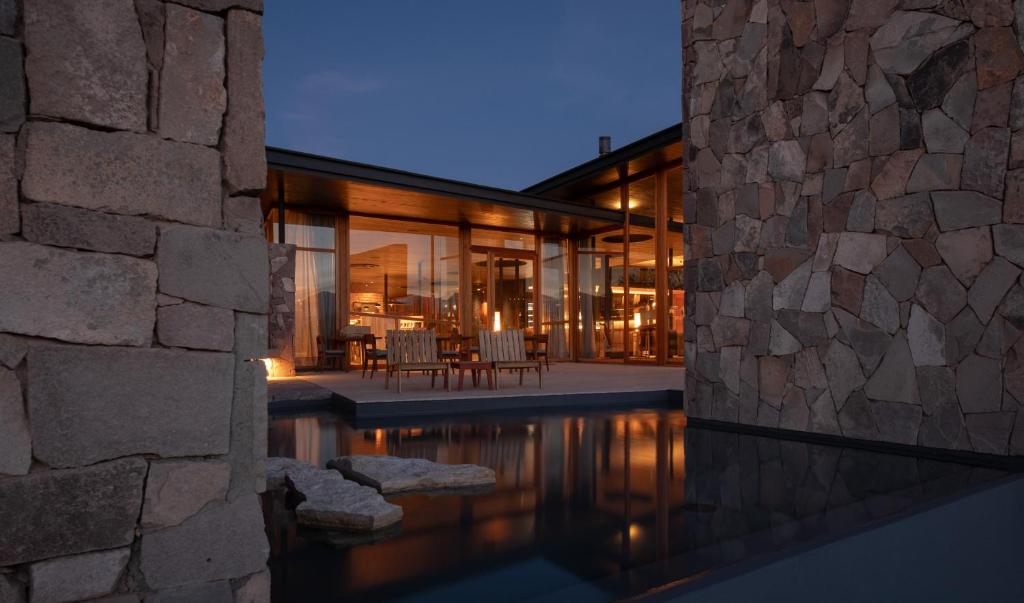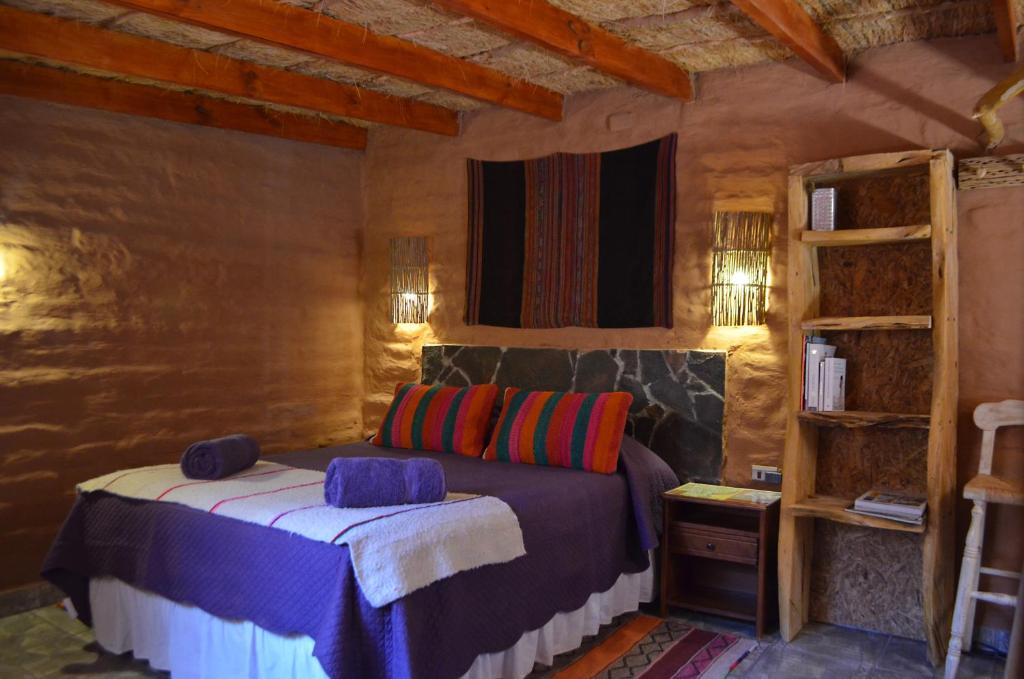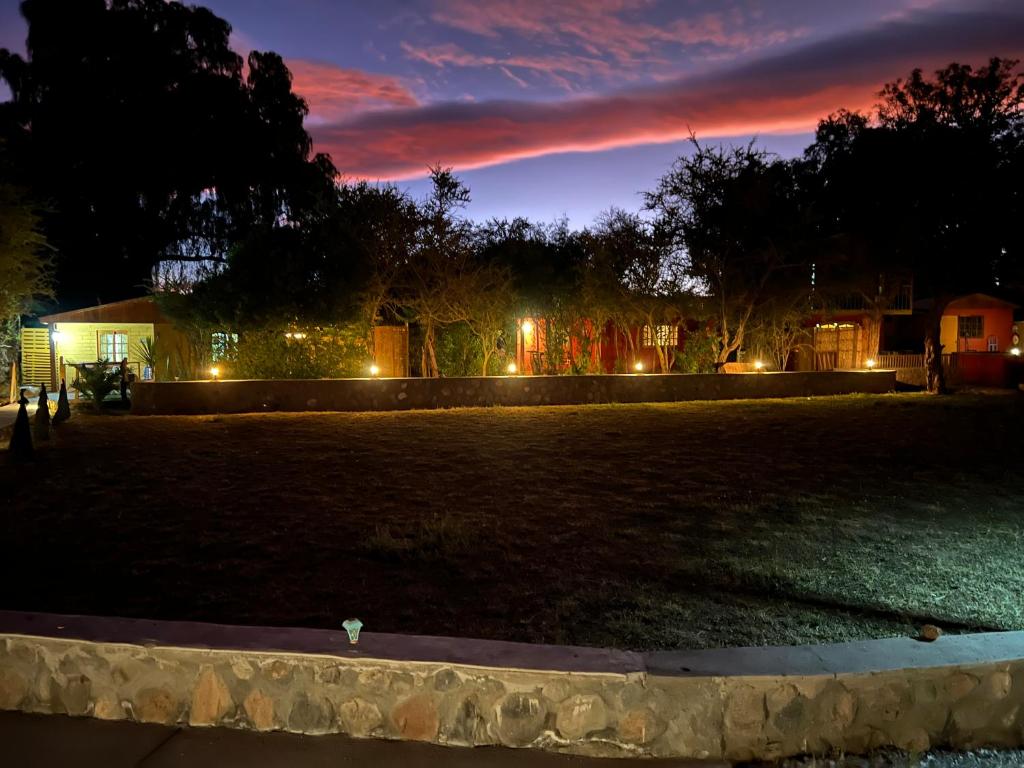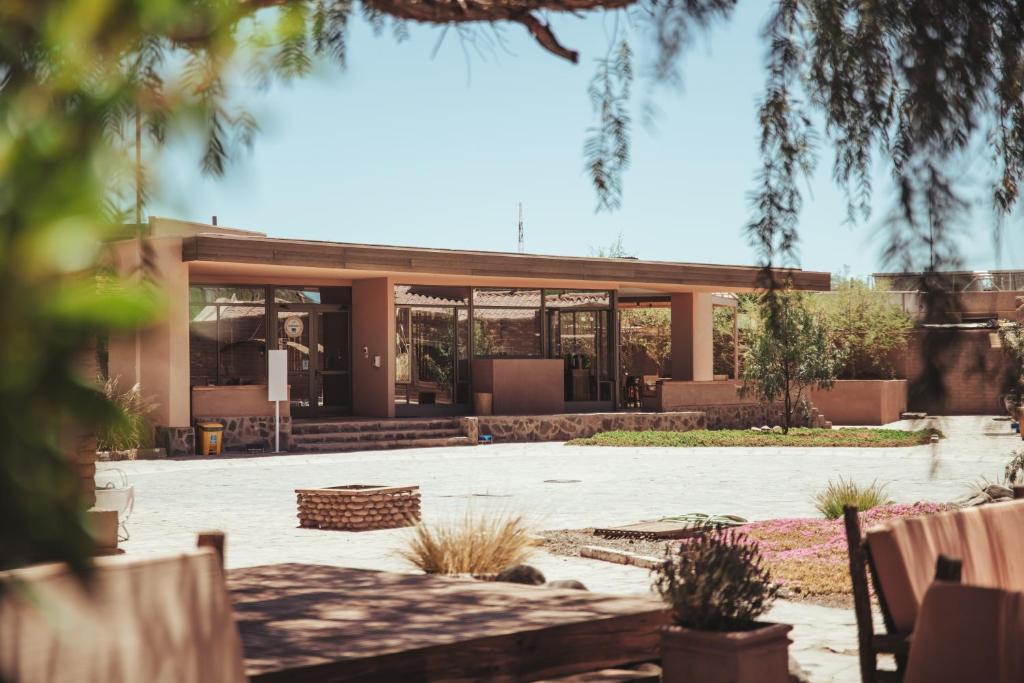
Category: Atacama Desert Travel

Atacama Desert travel guides. San Pedro hotels, itineraries, Puritama hot springs, and practical desert planning.

  • Valle de la Luna Guide (2026 Edition)

    Valle de la Luna Guide (2026 Edition)

    Valle de la Luna guide: Moon Valley from San Pedro, sunset classic, tickets first.

    Jan & Valeria. We travel to Chile often and love sharing tips to help you experience this beautiful country.

    When we plan a desert chapter the way we plan a Termas Geométricas day from Pucón, the feeling comes first and the ticket comes immediately after. Valle de la Luna is the landscape most people already have in their head: sculpted ridges, pale salt, a sky that turns theatrical late in the day. Visitors meet wind that can lean you sideways and sun that does not care that you “only came for sunset.” We do not write this as a story of standing on a dune last year. We write it as the logistics we would lock before anyone in the family is allowed to get romantic about the light.

    This is the classic Atacama half-day. It sits closer to San Pedro than El Tatio. It still asks for official access, closed shoes, water, and a plan for when the vans cluster. Pair it with the Atacama travel guide and put it on day 2 of a sane itinerary, not on the afternoon you just rolled in from Calama.

    Why this valley sits on the plan
    Valle de la Luna Guide (2026 Edition)

    Valle de la Luna is the landform day most first trips are built around. Salt crusts, wind-cut shapes, viewpoints that look like another planet in late light. Chile.travel frames San Pedro through this valley and the geyser country beyond it. That is the right order of fame. It is not an excuse to skip tickets.

    We treat it as moderate energy: sun, walking, dust, a cooler afternoon. It is not the hard high-altitude morning. That is why it belongs after an easy town day and before you decide whether El Tatio is a good idea. See the altitude guide if you are tempted to invert that order.

    National tourism context: Chile.travel on San Pedro de Atacama.

    How visitors get there from San Pedro

    The valley sits a short drive west of town. You do not wander in on foot from the plaza. Current official access requires a vehicle, bicycle, or authorized tour. Pedestrian walk-up is not the system. That is why day tours are the default we recommend for a first Atacama trip. Operators know pickup times, entry rules, and how late you can still catch the light.

    A rental car can work if you are comfortable with dust, limited signage, and buying the correct ticket before you arrive. We would not make a rental the default for every desert day. Tours exist because the valley is popular and the rules are specific. Confirm with your hotel who picks up at the door. A confusing 3 p.m. meeting point wastes the hour you wanted for golden light.

    If Valle de la Luna is full on your planned day, swap it with the next landscape slot and keep high-altitude mornings for when you feel stronger. Flexibility beats a rigid spreadsheet. That swap logic is already on the itinerary page.

    Tickets and official access

    Yes, you need proper entry. Valle de la Luna sits in the Los Flamencos reserve story. Tickets are sold through the valley’s official channel, not as a casual cash handshake at a random gate. We checked the live official pages while writing this: buy through valledelaluna.com, and read current hours and rules on Reserva Nacional Los Flamencos access notes. CONAF’s national portal is conaf.cl for broader park context.

    Hours change by season. Tickets are typically valid for the date and window you bought, not for “sometime this week.” Screenshot the QR or confirmation in town Wi-Fi. Tour prices often exclude the site ticket. Ask your operator, in writing, whether you must purchase entry yourself and by when. Do not invent a walk-up cash plan. The official sites are the ones that matter on your travel dates.

    We are not printing peso amounts here. Fees move. Live official pages are the price list. If a blog from 2022 quotes a number, ignore it.

    Sunset is the classic window
    Valle de la Luna Guide (2026 Edition)

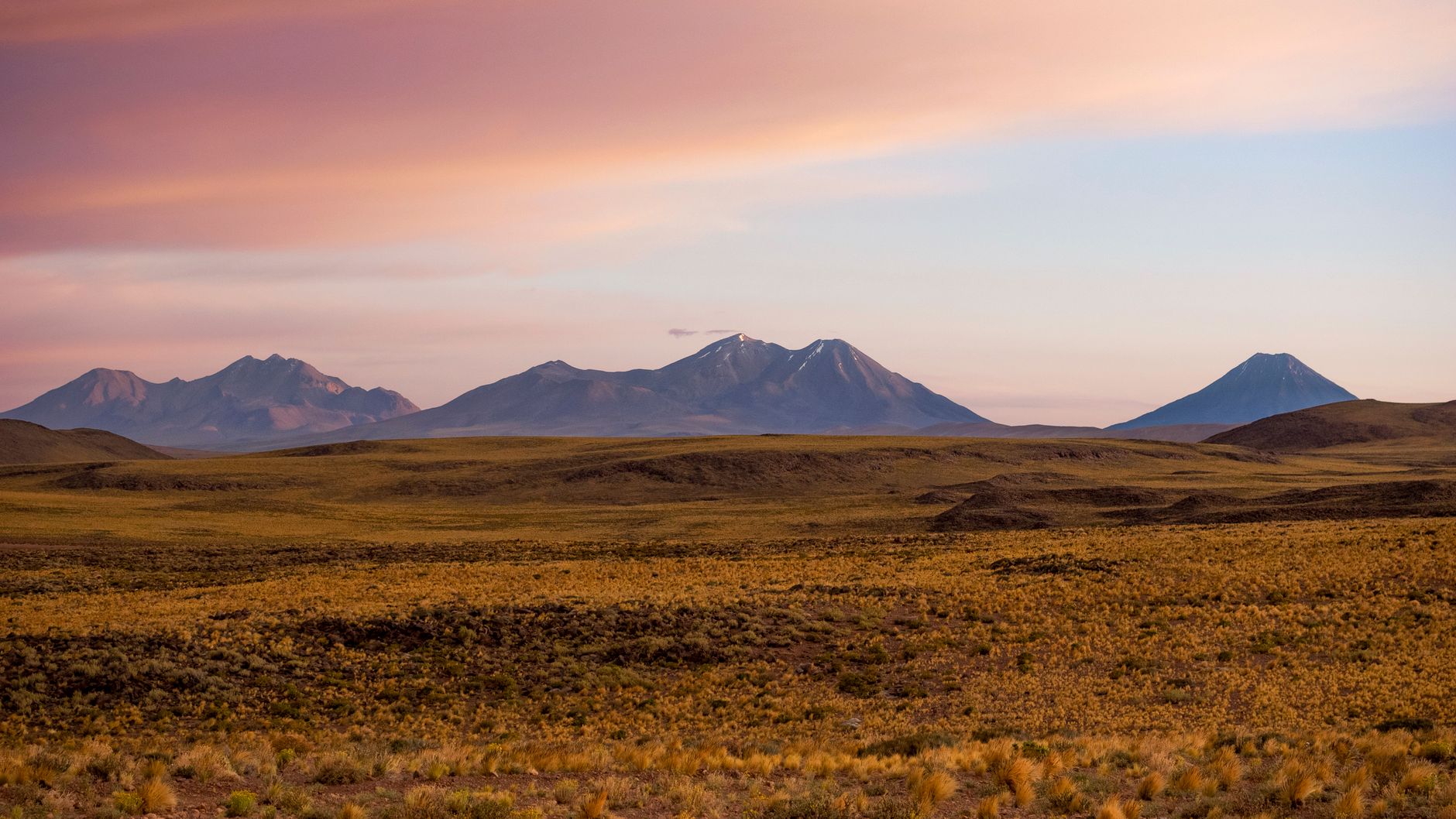
    Afternoon into sunset is the slot most visitors want, and for good reason. The landforms read more clearly when the sun drops and the wind often reminds you that you are in a desert, not a studio. That also means you share viewpoints. Arrive with the official window, not with a fantasy of having the ridge to yourself in July.

    Check last-entry rules on the official site for your season. A late taxi idea that ignores closing time is how people miss the valley entirely. Tours that advertise sunset should tell you the pickup and the latest you can still enter. If they cannot, pick another operator.

    If you want stars the same night, keep the evening slow after you get back to town. Do not stack a 4 a.m. geyser on top of a long sunset stand. Best time to visit the Atacama is about months. This page is about not burning the one classic afternoon.

    Sun, wind, and what not to assume

    Assume sun. Assume wind. Assume dust in your camera bag. Closed shoes for rocky viewpoints. A wind layer even when town felt warm at lunch. Water in the pack, not “I’ll buy something later.” A headlamp if your tour returns after dusk. That is the same packing honesty we use on a Lake District thermal day that might turn wet, just with less rain and more glare.

    Do not assume drones are fine. Protected areas in Chile are not your personal aerial studio. CONAF and local administrators restrict unmanned aircraft. If you do not have a current official permit, leave the drone in the hotel. The photo you want is not worth a fine or damage to a fragile crust that took longer to form than your vacation.

    Stay on marked paths. Salt crusts are not a playground. If a sign says no, it means no even when someone else is already off-trail for a reel. Conservation is the reason the valley still looks like the picture in your head.

    What to pack for the half-day

    • Official ticket proof offline, plus ID if asked
    • Sun hat, sunglasses, sunscreen, lip balm
    • Wind layer and a light scarf or buff
    • Closed shoes, water, a small snack
    • Charged phone and a Chile eSIM that already works in town. Signal in the valley can drop. Download maps before you leave San Pedro. Atacama eSIM notes.

    Keep a small daypack pre-packed. It saves the hour you would spend hunting a charger while the van is outside. Hotel heat matters when you get back and the temperature has already fallen.

    How it fits the rest of the desert week

    Three full days after arrival can hold this valley plus one other highlight. Four to five days is how you add geysers or Puritama without rushing. Count those days here: how many days in the Atacama. Sleep in one San Pedro base. Hotels in San Pedro is the shortlist framework.

    This valley is not a substitute for Puritama, and Puritama is not a substitute for this valley. One is landforms and light. The other is a canyon soak. If you only have two full days, prioritize acclimatization and this landscape. Add the soak when the calendar allows.

    What Valeria says: Nobody in the family treats Moon Valley as a casual stroll you invent after lunch. They ask who has the ticket, who has water, and whether you are going with a proper pickup. The romance is real. The paperwork is why the romance still exists.

    Would we tell friends this is the one desert must?

    Yes, as the landscape we would protect first after the easy town day. Not because it is empty. Because it is the feeling people came for, if they enter the official way and leave before they are arguing with the wind.

    Can you go without a tour? Sometimes, with a vehicle or bike and a valid ticket. For a first trip, a reputable tour is simpler.

    Is it safe? With sun sense, water, and marked paths, yes. The risks are exposure and ignoring rules, not a scary town. Broader frame: is Chile safe?

    Related: Puritama · hot springs in Chile · Chile eSIM comparison.

    We would book the ticket, pack the wind layer, and let the light do the talking. Moon Valley is not a secret. It is a place you enter correctly, then remember for a long time.
  • Atacama Altitude Guide (2026 Edition)

    Atacama Altitude Guide (2026 Edition)

    Atacama altitude guide: San Pedro is already high. El Tatio is much higher. Slow the first day.

    Jan & Valeria. We travel to Chile often and love sharing tips to help you experience this beautiful country.

    The conversation in Valeria’s family is not “is the desert scary.” It is “did you give the first day away to the geysers.” In the Lake District we worry about gravel, rain, and whether we packed a dry layer for after a soak. In the Atacama the first risk we plan for is thinner air. You can be fit, excited, and still feel stairs in a way Santiago never asked of you.

    This page is logistics and caution, not a medical lecture and not a story about how we raced to El Tatio at dawn. Visitors meet a high desert that looks gentle in town and then climbs. Soft adventure here means listening to your body. If you have personal risk factors, talk to a doctor before you book high-altitude mornings. We are not your physician.

    Start with the Atacama travel guide for flights and transfers. Use this page for pace. Day order lives on the itinerary.

    The honest short answer

    Atacama Altitude Guide (2026 Edition)

    San Pedro de Atacama sits around 2,400 meters, roughly 7,900 feet. That is already high enough that some people feel a headache, odd sleep, or shortness of breath on stairs on day one. Popular tours climb much higher. El Tatio geyser mornings sit well above 4,000 meters. Altiplano lagoon days do the same kind of work. The gap between town and those viewpoints is the part first-timers underestimate.

    Altitude affects people differently. Fitness is not a reliable predictor. We plan a gentle first day in town: walk the adobe streets, eat normally, drink water, skip heavy drinking, go to bed early. The desert will still be there tomorrow. A geyser sunrise hits different after two easy nights than after a long flight from sea-level Santiago.

    Symptoms that stay mild often ease as you acclimatize. If they worsen, slow down and ask your hotel or tour operator for local advice. If you feel seriously unwell, that is a medical situation, not a stubbornness contest. This guide is not medical advice.

    San Pedro vs El Tatio

    Think of San Pedro as the acclimatization shelf, not the summit. The town is dusty, compact, and built for visitors. You can have a useful day without leaving it. That is a feature. Use it.

    El Tatio is the classic high-altitude morning: very early pickup, cold start, steam in a landscape that looks prehistoric, then a long bright drive back. It is also the tour we refuse to stack on arrival morning. Same rule for other high altiplano days. Choose them after you know how town stairs felt on day one.

    Valle de la Luna sits closer to the San Pedro elevation story than a geyser dawn does. It is still sun, wind, and walking. It is a better second-day landscape than a 4 a.m. climb. Details: Valle de la Luna guide.

    Official landscape names and visitor framing: Chile.travel’s San Pedro page. For protected-area access around the reserve, use CONAF and the live pages for the specific site you are entering.

    The first day we protect

    Fly SCL to CJC, transfer about 90 minutes to San Pedro, check in. Then stop treating the clock like an enemy. A short walk to the church square is enough. Cafe lunch. Water on the table. Early dinner by Chile standards, which still may be later than you eat at home. Early bed.

    Do not race up hills “to see if you are fine.” You will find out soon enough. Soft adventure is choosing tours that match how you feel each morning, the way we choose a thermal day in the Lake District based on road and weather, not ego.

    Three full days after arrival is the minimum we recommend. Four to five is better if you want geysers plus a slower evening. That math is on how many days in the Atacama. Altitude is why those extra nights are not luxury padding. They are the buffer.

    Hydration, food, and alcohol

    Atacama Altitude Guide (2026 Edition)

    Drink water. Eat normally. Skip heavy drinking on night one. That is the whole first-night rule. The dry air and the sun will take moisture whether you notice or not. A refillable bottle on tours is not optional decoration.

    Coca tea appears in some hotels and tour stops. Opinions vary on whether it helps. We do not treat it as a plan. We treat hydration, slower walking, and not racing as the plan. If you use any remedy, that is a personal and medical choice, not something this page can endorse.

    Eat lighter on acclimatization day if that is what your stomach wants. Eat more after a long tour. Town water is the everyday kind of usable. Bring extra on excursions. ATMs in San Pedro can run dry on busy weekends, so carry some cash for small purchases, but do not let “finding a drink” become a scavenger hunt at 4,000 meters.

    How tours should change if you feel off

    If day one feels rough, keep day two moderate. Valle de la Luna in cooler afternoon hours is the classic swap. Puritama is the gentler highlight when you have four or five days. Do not put Puritama the morning after a geyser dawn. Recovery days work better in the middle. Puritama guide and the hot springs hub explain the fit.

    Tell the operator how you feel. Reputable tours care about altitude handling. The cheapest van is not a bargain if it leaves late and you are already depleted. Cancellation flexibility on hotels matters when you need to drop a hard morning.

    Guides earn their fee when someone in the group needs to turn around. Hiring one is not a lack of courage. It is how comfort-first travelers keep the day beautiful instead of stubborn.

    When to talk to a doctor

    If you have heart or lung conditions, are pregnant, have had altitude problems before, or take medications that change fluid or blood pressure, talk to your own doctor before you book high-altitude tours. Do that at home, not in a dusty street the night before pickup. We cannot assess your risk. A clinician who knows you can.

    Travel insurance is something we carry on Chile trips with expensive domestic flights and altitude variables. Read the policy for evacuation language at high elevation. That is boring. Boring is the point.

    What Valeria says: The family does not treat the desert like a dare. They treat it like a place you arrive to. If someone feels bad, they stay in town. Nobody gets a medal for the 4 a.m. van. The medal is still feeling like yourself at dinner.

    Connectivity if you need help

    Town signal is usable. Tour zones often are not. Install a Chile eSIM before SCL so hotel Wi-Fi is not your only way to message a driver, a hotel, or family. Download maps and confirmation PDFs in San Pedro each evening. Details: Atacama eSIM and Chile eSIM comparison.

    A power bank belongs in the daypack. A dead phone at altitude is how a small problem becomes a lonely one. Same mindset we use after a Lake District soak when the canyon has no signal: you planned the return before you left coverage.

    Would we still send friends to the desert?

    Yes. We would send them with a slow first day, water, and permission to cancel the hardest morning. The Atacama is worth protecting on a two-region trip. It is not worth performing toughness for.

    Can you do El Tatio on day one? We do not recommend it.

    Is San Pedro itself “high altitude”? High enough to feel. Higher tours are a second step.

    Does a rental car change the altitude math? No. It adds dust, remote roads, and the chance you drive yourself higher than you should. Tours are the default for a first trip.

    Stay: San Pedro hotels. Timing: best time to visit the Atacama. Safety frame: is Chile safe?

    We would rather you arrive proud of a quiet first night than proud of a sunrise you barely remember. Drink the water. Walk slowly. Let the higher country wait until you are ready.

  • Best Time to Visit Atacama Desert (2026 Edition)

    Best Time to Visit Atacama Desert (2026 Edition)

    Best time to visit the Atacama Desert: dry year-round, cold nights, pick your crowd.

    Jan & Valeria. We travel to Chile often and love sharing tips to help you experience this beautiful country.

    The first time we mapped an Atacama chapter onto a Chile calendar, Valeria’s aunt asked one question before anyone mentioned hotels: “Which month, and do you understand the nights?” In the Lake District we pack for rain that can arrive while you are still zipping a jacket. In the desert the weather story is different. Rain is rarely the main character. Cold after sunset is. So is the number of vans leaving town at 4 a.m.

    This is a timing post, not a “we stood on a dune last July” story. The Atacama is the chapter we protect when a two-region trip needs a landscape that feels unlike Pucón or Santiago. Visitors meet dry air, fierce midday sun, and a sky that can look close enough to touch. The month you choose changes crowds, hotel availability, and how early you have to book. It does not change the need for an altitude buffer.

    Our short answer: the Atacama is a year-round destination with tradeoffs. Days stay dry much of the year. Nights get cold. Southern hemisphere summer brings more visitors. Winter often means clearer, colder nights. Shoulder months are the window we would pick first if the calendar is flexible. Pair this with how many days in the Atacama and the Atacama travel guide.

    The honest short answer

    Best Time to Visit Atacama Desert (2026 Edition)

    You can visit San Pedro in any month if you pack layers and respect altitude. There is no single closed season the way a southern park trail can close for weather. What changes is how many other people want the same sunset slot at Valle de la Luna, and how cold your walk back to the hotel feels after dinner.

    Peak travel months align with summer vacation windows in the northern hemisphere and with Chilean holiday periods. June through August is busy for visitors flying from the US, Canada, and Europe. Chilean long weekends and January and February also fill vans and rooms. Shoulder seasons can mean fewer tour crowds and a little more room to swap a day if wind or dust asks for it.

    Official destination context: Chile.travel on San Pedro de Atacama. For reserve hours and access notes around Los Flamencos, start at Reserva Nacional Los Flamencos and CONAF. Hours shift by season. Confirm live before you treat a sunset as guaranteed.

    Dry year-round is not the same as comfortable

    The Atacama’s reputation is dryness, and that reputation is earned. You are not packing the Lake District rain shell as your main personality. You are packing sun, wind, and a warm layer you will actually put on when the temperature drops after late afternoon.

    Days can feel warm and bright. Midday sun is fierce. A hat, lip balm, and moisturizer are not vanity items. Dust gets everywhere. Nights in San Pedro are colder than most first-time visitors pack for. Hotel heat reliability matters as much as a pretty courtyard photo. That is one reason we keep one San Pedro base for the whole stay instead of hopping lodges.

    Wind and dust can still rewrite a day. A “clear” forecast does not mean a gentle valley walk. Closed shoes, a light scarf or buff, and water matter on every season’s tour. If you want the valley logistics, use our Valle de la Luna guide rather than treating Instagram gold hour as a plan.

    Summer crowds vs winter clarity

    Chilean summer, roughly December through February, is vacation time in the country. San Pedro feels like a town built for visitors in every month, but summer adds families, fuller restaurants, and earlier sellouts on popular sunrise departures. If your only window is January, go. Just book flights, the Calama transfer, and core tours earlier than you would for a quiet April week.

    Northern hemisphere summer, June through August, is the other crowd pulse. That is when a lot of our readers can take two weeks. The desert does not close. It just asks you to reserve the mornings that matter. Slots fill before hotel rooms do for some departures. We compare a few operators in town, or we book the must-do landscape tour before we fall in love with a flexible “we’ll decide on arrival” fantasy.

    Winter nights can feel especially clear. Stargazing is a year-round draw because town light is relatively low and clear skies are common. We still would not stack a 4 a.m. geyser tour on the same night we want to stand outside looking up. Pick one obsession per evening. Cold hands are part of the deal. Gloves are not overpacking.

    Shoulder season is the advice we give friends

    Best Time to Visit Atacama Desert (2026 Edition)

    If the calendar is ours to choose, we lean shoulder: the stretches that avoid Chilean summer holiday weeks and the thickest northern-hemisphere vacation block. You still get dry days. You still need the warm layer. You may get an easier time swapping Valle de la Luna if a day goes dusty, or finding a Puritama entry window that is not the only one left.

    Shoulder is not empty. San Pedro exists because the landscapes around it are extraordinary. Tourist infrastructure is the point. Shoulder just means the town can feel a little more like a working oasis and a little less like a convoy.

    Chilean holiday weeks still punch above their size. If your dates land on a long weekend, treat it like peak. Book the hotel, the transfer, and the sunset tour first. Then decide whether El Tatio is worth the early alarm after you have slept in town.

    What Valeria says: People in Chile do not wait for a “perfect” desert month. They wait for a week they can actually rest. If the nights are cold, bring the jacket. If the town is busy, eat a little earlier or a little later than the tour-bus wave. The landscape does not get less strange in April than in January.

    What the night sky does to the calendar

    Stargazing is one reason couples and first-timers protect this region. You do not need a new moon to feel the sky, but dedicated astronomy evenings are nicer when you have not promised yourself a geyser sunrise six hours later. Build at least one slow night into a 4- or 5-day stay. Our itinerary keeps that buffer on purpose.

    You can look up from dark edges near town on a clear night. Guided astronomy tours add telescopes and commentary if you want that. Either way, download confirmations in San Pedro each evening. Tour-road signal is weak. An eSIM installed before SCL helps in town for bookings and banking. It will not turn the altiplano into downtown Providencia. See Atacama eSIM.

    How we would pick months for a first trip

    If a couple asked us to pick, we would start with shoulder dates, four nights in one San Pedro hotel, and tours booked in this order: flights, lodging, Valle de la Luna, then a high-altitude morning only after the easy first day. Puritama sits in the middle of the trip, not the morning after geysers. That is comfort-first desert math.

    If their only vacation is July or January, we would still say go. We would not say “wait a year for April.” We would say book earlier, keep Day 1 easy, and do not treat a packed van as a failed trip. The landforms are still the landforms.

    Altitude does not take a month off. A winter arrival and a summer arrival both need water, a slow first day, and a doctor conversation if you have heart or lung conditions. Timing the calendar does not replace the altitude guide.

    What to lock once you choose dates

    • SCL to CJC and the Calama transfer, with a Santiago buffer night if the international connection is tight
    • San Pedro hotel for every night. Framework: San Pedro hotels
    • Official Valle de la Luna tickets or a tour that tells you exactly how access works on your dates
    • Puritama if you want the soak, checked on the official channel 24 to 48 hours out
    • Layers, sun protection, and a power bank. A dead phone is a logistics problem in a dusty town.

    Stay east in Santiago around those flights. Where to stay in Santiago is the base layer. Combining Atacama with Patagonia or Easter Island on one two-week vacation is how chapters get thin. Pick two regions. Come back for the third.

    Would we tell friends to wait for a “perfect” month?

    No. We would tell them to pick a month they can actually rest, pack for cold nights, and book the mornings that matter. The Atacama is dry year-round. The visitor who wins is the one who leaves a day empty on purpose, not the one who hunted a mythical rain-free secret season.

    Is winter too cold? Nights are cold. Days are still desert-bright. Pack the jacket. Do not cancel the trip.

    Is summer too crowded? It can feel busy. Book earlier. Keep the first day easy anyway.

    Do you need travel insurance? We carry it on Chile trips with domestic flights and altitude variables. Read your policy for high-elevation coverage.

    Related: Atacama itinerary · Puritama · hot springs in Chile · is Chile safe?

    We would choose a slightly quieter week and a warm jacket over a “perfect” month that never arrives. Pick your dates. Protect the altitude day. Let the dry light do the rest.

  • How Many Days in the Atacama Desert (2026 Edition)

    How Many Days in the Atacama Desert (2026 Edition)

    How many days in the Atacama Desert: three full days after arrival, four to five if you can.

    Jan & Valeria. We travel to Chile often and love sharing tips to help you experience this beautiful country.

    When we sit with Valeria’s family and someone says “just two nights in the desert,” the room goes quiet the way it does when a cousin proposes a same-day Termas Geométricas drive after a red-eye. Not because the Atacama is dangerous. Because altitude does not care that your spreadsheet looks tidy. The Lake District lets you abort a gravel road and go back to the hotel. San Pedro does not give that same easy undo on day one.

    This is the chapter we protect on a two-region trip. Santiago first, then the high desert. Visitors meet air that feels thinner than anything around Pucón, light that is sharper, and nights that drop colder than the photos suggest. The question is not whether the Atacama is worth it. The question is how many days you still have after you actually arrive.

    Our short answer: plan three full days in San Pedro after arrival as a minimum. Four to five feels better if you want a geyser morning, a valley sunset, and a soak or rest day without stacking hard days. Pair this page with our Atacama travel guide and the day-by-day Atacama itinerary.

    The honest short answer

    How Many Days in the Atacama Desert (2026 Edition)

    Three full days in San Pedro is a highlights pass. Tight, doable, and honest if you treat arrival as travel, not sightseeing. Four days is what we would book for most first-time visitors. Five days is the version that lets you skip a tour without feeling like you wasted the flight to Calama.

    Count nights the way Chile actually works. Fly Santiago to Calama, transfer about 90 minutes to San Pedro, check in, drink water, go to bed. That is Day 0. The next morning is when the trip starts. If you only booked two hotel nights, you have one real desert day and a departure morning. That is how people leave thinking the Atacama was “fine” instead of otherworldly.

    Official tourism context for the oasis town lives on Chile.travel’s San Pedro page. Use it for landscape names and current visitor notes. Use our pages for pace.

    Why arrival day does not count

    San Pedro sits around 2,400 meters. That is already high enough to change how stairs feel. Popular tours climb higher. We do not stack a high-altitude sunrise on the morning after a SCL to CJC hop. If you want the altitude mechanics, read our Atacama altitude guide before you lock El Tatio.

    Arrival day is for the transfer, a short town walk, groceries, and an early dinner. Meals run later than many North American travelers expect. Lunch after a morning tour, dinner around 8 p.m., then bed before tomorrow’s van. Fighting Chilean meal time on vacation wastes energy you need for thin air.

    This is the same buffer habit we use around Patagonia flights and Lake District thermal days. Land, sleep, start fresh. The desert will still be there tomorrow. Your head will thank you.

    What three full days can actually hold

    A three-full-day stay after arrival looks like this in our planning, not as a race:

    • Day 0: Fly SCL to CJC, transfer to San Pedro, easy evening.
    • Day 1: Acclimatization. Town, cafe, church square, no high-altitude tour.
    • Day 2: Valle de la Luna or a similar valley afternoon and sunset.
    • Day 3: One choice: a high-altitude morning if you feel ready, or Puritama as the gentler highlight.
    • Departure morning: Transfer back to Calama with slack for dust and sluggishness.

    That is a highlights pass. You see the classic moon-valley landforms most visitors picture. You do not get geysers plus a soak plus a second landscape morning unless you skip rest. We would rather skip a tour than skip the easy first day. The itinerary page spells the swap rules if Valle de la Luna is full on day 2.

    Why four to five feels better

    How Many Days in the Atacama Desert (2026 Edition)

    Four full days after arrival is our default recommendation. You keep the easy first day. You get the valley sunset. You can place a high-altitude morning later, then put Puritama or a rest block in the middle instead of the morning after geysers. That is the shape we would book for a first Atacama trip today.

    Five days lets the desert breathe. Add a dedicated stargazing evening, a second valley or lagoon half-day, or a full rest morning with a book in an adobe courtyard while dust blows past the wall. Sitting still is a valid Atacama day. Not every hour needs a van pickup.

    Do not put two hard days back to back on a first trip. Hard means early wake-ups and high elevation. Moderate means sun, walking, and a valley afternoon. Easy means town. The itinerary labels days that way on purpose.

    What Valeria says: In Chile nobody brags about how fast they “did” the desert. They ask if you slept the first night and if you drank water. If a cousin feels off, the family cancels the 4 a.m. pickup without drama. That is the local sentence I wish more packing lists printed.

    How this fits a two-region Chile trip

    We like Santiago plus Atacama on a two-week mainland trip. Add one easy Santiago night before the Calama flight and one after return if your international connection is tight. Domestic SCL to CJC flights run more often than Patagonia or Rapa Nui routes, which makes the desert easier to slot. Still book holiday weeks early. Chilean families travel then too.

    Trying to squeeze Patagonia into the same vacation usually means none of the regions get the days they deserve. Same warning for Easter Island. The island is its own chapter. If you want Rapa Nui this year, protect those nights and come back for the desert later. Depth over a checklist is the whole point of how we travel Chile.

    When we sketch a two-week Chile trip for friends, the desert block is never the leftover. It is a decision. Santiago nights for jet lag and neighborhoods, then a real San Pedro stay, then home or a wine valley that does not need its own altitude lecture. That shape respects how tired people feel after Calama and how much light they still want in the valleys. A “quick desert add-on” is how the first morning becomes a geyser you should have skipped.

    For the Santiago buffer nights, where to stay in Santiago is the neighborhood framework. Sleep east. Do not spend arrival energy decoding Centro.

    What to book before you count the days

    Days only work if the logistics are already locked:

    • SCL to CJC flights and the Calama transfer
    • All San Pedro nights in one base. See hotels in San Pedro de Atacama.
    • Valle de la Luna or your must-do landscape tour, plus official site access as required
    • High-altitude sunrise tour only after you plan the easy first day
    • Puritama timed entry if you want the soak, per current official rules
    • A Chile eSIM before you leave SCL. Town signal is usable. Tour zones often are not. Notes: Atacama eSIM.

    Keep the same hotel for the whole stay. Packing up daily is wasted energy in the desert. Ask which operators pick up at the door. Confirm the night before. Cancellation flexibility matters when altitude forces a slower day than planned. Quiet rooms matter more than you think. Tour vans leave early. A courtyard that looks romantic at noon can feel loud at 5 a.m. if your window faces the street.

    Money and packing sit next to the day count. Chile uses pesos. ATMs exist in San Pedro and can run dry on busy weekends. Carry some cash for small purchases. Sun hat, lip balm, and a refillable bottle are not extras. Dust gets everywhere. A light scarf or buff helps on windy stops. Evenings are cold. Midday is fierce. That packing list does not change if you stay three days or five. The extra nights just give you a chance to use it without rushing.

    Month choice changes crowds more than rain. If you are still picking dates, read best time to visit the Atacama next. Peak weeks fill sunrise slots before hotel rooms.

    Would we tell friends to give it three days or five?

    We would tell friends to give it four if they can, three if the calendar is tight, and never two. Three full days after arrival is the honest minimum. Four to five is how the desert stops feeling like a commute between vans.

    Is 3 days enough? Yes for a highlights pass if Day 1 stays easy. Add a fourth if you want geysers plus a soak without rushing.

    Can you do geysers on day one? We do not recommend it. Give yourself at least one easy day in San Pedro first.

    Do you need a car? Not required if you book tours. A rental helps for flexible timing, but altitude, dust, and remote roads need respect.

    Is the Atacama safe? With normal precautions, yes. The main risks are altitude, sun, dehydration, and remote driving. Country frame: is Chile safe?

    Related: Atacama itinerary · San Pedro hotels · Puritama · hot springs in Chile · Chile eSIM comparison.

    We would rather leave the Atacama with one tour skipped than with a headache and a flight home. Count the days after you arrive. Protect the first easy morning. Then let the valleys and the night sky do what they do.

  • Santiago to San Pedro de Atacama (2026 Edition)

    Santiago to San Pedro de Atacama (2026 Edition)

    Santiago to San Pedro de Atacama: fly to Calama, then the desert road.

    Jan & Valeria. We travel to Chile often and love sharing tips to help you experience this beautiful country.

    The Atacama does not begin in a Santiago boarding line. It begins when the plane door opens in Calama and the air feels drier, the light harder, and the next ninety minutes are a desert transfer instead of a city taxi. We plan this hop the way we plan a Lake District thermal day. The moving is part of the experience. The reward is the adobe town and the valleys. The people who struggle are the ones who treat altitude as a footnote and the transfer as a blur.

    The default is simple. Fly Santiago (SCL) to Calama (CJC). Transfer about 90 minutes to San Pedro de Atacama. Sleep before you stack a high tour. Confirm live flight times and transfer fares when you book. The planning hub is our Atacama Desert travel guide.

    The honest short answer

    Santiago to San Pedro de Atacama (2026 Edition)

    There is no useful passenger flight that drops you in San Pedro itself. Calama is the airport city, the same way Temuco is the airport city for Pucón. Flight time SCL to CJC is roughly two hours. The road from the airport to San Pedro is the standard visitor transfer, typically around 90 minutes depending on stops and traffic. Book that ride before you land if you can. A late improvisation at CJC is how a calm desert chapter starts loud.

    If the flight lands late and the San Pedro options have thinned, sleep in Calama and continue in the morning. That overnight is a gateway night, not a failed desert day. We wrote that posture in is Calama safe? so you do not have to romanticize a mining city to use it well.

    Fly to Calama, not to San Pedro

    SCL is the mainland hinge. If you have just arrived from overseas, give Santiago a buffer night when the connection looks tight. Jet lag plus altitude is a rude pairing. We would rather you sleep in a neighborhood we already trust, then fly north in the morning, than sprint from an international belt to a CJC gate and a sunset tour. Where to stay in Santiago is the city-side page. Santiago airport to city center covers the SCL legs.

    Domestic check-in at SCL still deserves an early hotel departure. Confirm live airline schedules and fares. LATAM and other carriers serve CJC. We do not print ticket prices here. They move. Build more connection buffer than the booking engine implies if you are coming off an international flight the same day.

    Keep a layer and water in the cabin bag. Calama and San Pedro mornings can feel cold even when the midday desert looks like it should be hot. The first hour after landing is a bad time to discover your warm layer is in a delayed suitcase.

    The transfer to San Pedro

    Santiago to San Pedro de Atacama (2026 Edition)

    Shared shuttles and private transfers are the normal tools. The drive is the moment the trip changes register. City falls away. The light goes sharp. Dust sits in the air. You are climbing into a different Chile. It is not a mountain pass epic. It is a dry, bright corridor that takes about an hour and a half when the road is ordinary. Confirm live timing the day you fly.

    We prefer a ride that is already booked to a curb negotiation with full luggage. Tell the hotel in San Pedro your arrival window. Have the address written down. If you land late, the honest choice may be Calama instead of a tired night road. That is adult planning, the same choice we make when a Temuco flight would push us onto a dark lake drive.

    Do not treat the transfer as the start of Valle de la Luna. Drink water. Keep the first evening in town. The valleys will still be there after a night of sleep.

    Altitude on arrival

    San Pedro sits around 2,400 meters, roughly 7,900 feet, and popular tours climb higher. Altitude affects people differently. The editorial call is not dramatic. Drink water. Eat normally. Skip heavy drinking on night one. Do not stack the hardest high-altitude morning on the day you flew SCL to CJC.

    A headache or shortness of breath on stairs is common on day one. It usually eases. If it worsens, slow down and ask the hotel or operator for local advice. We plan a gentle first day: town walk, early dinner, early bed. Soft adventure in the Atacama is listening to your body, not collecting sunrise stamps while you feel wrong.

    If you have heart or lung conditions, talk to your doctor before you book high tours. We are not going to invent a medical protocol in a travel draft. We are going to tell you the desert is beautiful and unforgiving when you ignore altitude. Pair this page with our Atacama itinerary so day one stays empty enough to work.

    Car rental for desert days

    Day tours are the default for a first trip, and we still like them. Operators know road conditions, entry rules, and the timing of a sunrise departure. You avoid navigating dust, altitude, and remote stretches on your own while you are still learning how the air feels.

    A rental car is optional, not the personality of the region. It helps if you want flexible timing on specific days and you are honest about unpaved roads, limited signage, sun, and the kind of flat tire that happens far from a café. This is not a Santiago neighborhood loop. Remote desert driving is a skill and a risk category. If you rent, do it for chosen days, not as a default for every tour.

    Compare Chile rentals on DiscoverCars. If you are picking up at SCL for a wider mainland plan, start with Santiago airport car rental. Many visitors still fly SCL to CJC without a car and add a local rental only if it fits. Confirm live availability, insurance details, and what the desk allows on unpaved roads. Photograph the vehicle. Keep nothing visible when you park at a viewpoint.

    We would not rent a car in Santiago and drive it to San Pedro as the default. That is a long, dry project. Fly, then decide whether a desert car earns a day.

    Stay connected before you land

    Install a Chile eSIM before you leave home Wi-Fi or before you leave the Santiago hotel. CJC is not the moment to discover you cannot message the driver. We use Airalo on most trips and compare plans in our Chile eSIM guide and Atacama eSIM notes.

    Town signal in San Pedro is often usable. Tour zones often are not. Download offline maps for Calama, the transfer road, and San Pedro before you fly. A dead phone in the desert is not only inconvenient. It is how you lose banking, bookings, and two-factor codes when you need them back in town.

    Activate. Test data. Screenshot the hotel address and the transfer confirmation. That ten-minute habit is the same one we recommend for every Chile arrival, from SCL to a lake town.

    What we would do on night one

    Check into a San Pedro hotel you already booked. Walk a short loop if you feel all right. Eat a normal dinner. Drink water. Sleep. Save Valle de la Luna and any high morning for a day when your body has voted. For rooms, use hotels in San Pedro de Atacama. For a softer later day, Puritama hot springs is the canyon soak we point to, not a substitute for the first night’s rest.

    • Book SCL to CJC first, with a Santiago buffer if you are coming from overseas.
    • Book the Calama to San Pedro transfer, or a Calama hotel if the landing is late.
    • Book San Pedro nights before peak tour slots disappear.
    • Install the eSIM and download offline maps before SCL.
    • Leave the first desert morning lighter than your ambition.

    We hope this keeps the Santiago to San Pedro leg in the right order. Fly to Calama. Take the dry road. Let the altitude introduce itself before the valleys do. The desert is not asking you to be fearless on day one. It is asking you to arrive, drink water, and still be kind to yourself at dinner.

  • Where to Stay in San Pedro de Atacama 2026

    Where to Stay in San Pedro de Atacama 2026

    Hotels in San Pedro De Atacama: Comfort at Altitude.

    Official sources: Chile.travel

    Stay in San Pedro de Atacama for Atacama tours. Choose a quiet property with heat for cold nights, book early in peak season, and keep tour pickup logistics simple.

    Jan & Valeria. We travel to Chile often and love sharing tips to help you experience this beautiful country.

    Affiliate disclosure: some links below (including Booking.com and Airalo) may earn us a commission at no extra cost to you. We only recommend what we would use ourselves.

    San Pedro de Atacama is dusty, charming, and colder at night than first-timers expect. The right hotel is not about Instagram adobe walls alone. It is about heat that works, a quiet room after early tour vans, and a base close enough to dinner that you are not negotiating taxis every evening while altitude settles in.

    Our short answer: Book a Booking.com 8.0+ stay with recent mentions of heating, hot water, and sleep quality. Give yourself a light first day. San Pedro rewards travelers who protect recovery as carefully as they protect sunrise slots.

    Use this with our Atacama travel guide, Atacama itinerary, and Puritama hot springs page. Connectivity: Atacama eSIM coverage and a Chile eSIM before you fly north.

    Getting to San Pedro: Logistics First

    Hotels in San Pedro de Atacama (2026 Edition)

    Nearly everyone flies Santiago to Calama (CJC), then transfers roughly 90 minutes to San Pedro de Atacama. Pre-booked transfers, shared vans, and private drivers are all common. Your hotel may offer pickup or can recommend a trusted operator. We confirm transfer timing when we book lodging, especially on arrival day when altitude and fatigue hit together.

    San Pedro sits around 2,400 meters (roughly 7,900 feet). That is high enough to feel different on day one if you flew up from sea-level Santiago. Your hotel choice should support a gentle first night: warm room, easy dinner walk or reliable taxi, and no pressure to stack the hardest tour immediately. Altitude is not a reason to panic. It is a reason to plan sleep as carefully as sunrise tours.

    The town itself is compact and walkable in the core. Most shortlist hotels sit within a few blocks of the main plaza, restaurants, and tour agency rows. That matters because you will leave early for El Tatio, Valle de la Luna, and laguna days. Coming back to a hotel where check-in is simple and hot water is reliable beats saving money on a remote property that adds friction every evening.

    When to Book San Pedro Hotels

    Atacama high season (June through August for northern winter stargazing, plus December through February for many international travelers) fills well-rated rooms early. We book refundable San Pedro hotels right after Calama flights are locked, then align tours once we know how many full days we have. Shoulder weeks often bring better rates and easier restaurant reservations, but cold desert nights still require the same heating checks.

    Luxury lodges like Tierra Atacama have smaller inventories than downtown hotels. If that splurge is central to your trip, move it up the booking queue. For town hotels, compare recent reviews from travelers who visited in your month. A property that feels perfect in spring can read differently when winter nights drop below freezing and heating becomes the whole story.

    What Matters in a San Pedro Hotel

    Hotels in San Pedro de Atacama (2026 Edition)
    • Heat and hot water (desert nights drop hard)
    • Noise control (tour vans leave early)
    • Walk to dinner vs needing a taxi every night
    • Altitude-aware first day (do not stack the hardest tour on arrival)
    • Flexible cancellation when weather or energy forces a slower day

    What to Pack for Desert Nights

    Days are bright, dry, and often windy. Nights get cold fast. Your hotel should provide real blankets and working heat. You still want layers for walking to dinner and for stargazing tours that run late. We pack a warm mid-layer, a beanie, and sunscreen in the same day bag without apology.

    • Altitude comfort: reusable water bottle, lip balm, mild headache relief (ask your doctor what is safe for you)
    • Sleep: eye mask for early tour departures, earplugs if your room faces a busy street
    • Dust management: closed shoes for town walks, sunglasses, a light scarf or buff for windy afternoons
    • Evening warmth: packable down jacket; restaurant patios cool down quickly after sunset

    Leave room in your bag for slow mornings. The best San Pedro days often start with coffee near the plaza, not a rushed scramble for a taxi.

    How Many Nights We Would Plan

    Three nights is our minimum for a first Atacama visit: arrival evening, two full tour days, departure morning. Four nights adds breathing room for altitude adjustment and a weather backup. Five nights lets you mix intense tours (El Tatio dawn, Valle de la Luna sunset) with a slower day like Puritama hot springs without stacking exhaustion.

    Your hotel is the recharge point between high-impact days. Book accordingly.

    Hotels We Would Book in San Pedro De Atacama

    Every property below scores 8.0 or higher on Booking.com. Layout matches our Santiago hotel cards: Booking photo, two paragraphs, bullets, best-for, CTA.

    Tierra Atacama

    San Pedro de Atacama Chile hotel Tierra Atacama

    Tierra Atacama is the luxury desert lodge we shortlist when the stay itself is a highlight. Located in San Pedro de Atacama.

    Top guest scores and a polished recovery environment after high-altitude days. Book it when comfort and guided-experience quality lead the decision.

    • Exceptional Booking.com score
    • Luxury lodge atmosphere
    • Strong for celebratory Atacama trips

    Best for couples and travelers who want a high-end Atacama base.

    👉 Check availability here

    Ckuri Atacama

    San Pedro de Atacama Chile hotel Ckuri Atacama

    Ckuri Atacama stands out for outstanding recent guest scores in town. Located in San Pedro de Atacama.

    A comfort pick when you want excellent reviews without defaulting to the most famous lodge name. Re-check heating and quiet-room comments before you confirm.

    • Very high Booking.com score (9.8)
    • Strong recent guest feedback
    • Practical San Pedro base

    Best for travelers who want a highly rated town stay.

    👉 Check availability here

    Rincon del Inca

    San Pedro de Atacama Chile hotel Rincon del Inca

    Rincon del Inca is a high-scoring in-town option for walkable evenings. Located in San Pedro de Atacama.

    Useful when dinner access and sleep quality matter more than a remote lodge setting. Good for itineraries that mix tours with town time.

    • Booking.com score 9.5
    • In-town convenience
    • Strong for multi-night stays

    Best for couples who want an easy San Pedro evening rhythm.

    👉 Check availability here

    Hotel La Casa de Don Tomás

    San Pedro de Atacama Chile hotel Hotel La Casa de Don Tomás

    Hotel La Casa de Don Tomás is a classic San Pedro hotel name with strong guest scores. Located in San Pedro de Atacama.

    Familiar full-hotel logistics for first-timers flying in from Calama. Confirm transfer options and heating notes in recent reviews.

    • Booking.com score 9.1
    • Established hotel-style stay
    • Good first-timer logistics

    Best for first-time Atacama visitors who want a straightforward hotel.

    👉 Check availability here

    Lascar 31

    San Pedro de Atacama Chile hotel Lascar 31

    Lascar 31 fits travelers who want a highly rated smaller stay close to the town rhythm. Located in San Pedro de Atacama.

    Strong scores for guests who value rest after early starts. Ideal when you want character without a huge resort footprint.

    • Booking.com score 9.3
    • Smaller-scale property
    • Good for quiet recovery nights

    Best for couples and independent travelers who want a compact, well-rated base.

    👉 Check availability here

    Hotel-Camping Takha Takha

    San Pedro de Atacama Chile hotel Hotel-Camping Takha Takha

    Hotel-Camping Takha Takha is a flexible mid-range option that mixes hotel rooms with a more casual desert-town feel. Located in San Pedro de Atacama.

    Read the latest reviews for room type differences before you book. Useful when you want solid scores without the top luxury rate.

    • Booking.com score 8.8
    • Flexible property style
    • Value-minded comfort shortlist

    Best for travelers balancing comfort and budget in San Pedro.

    👉 Check availability here

    Common Mistakes When Booking San Pedro Hotels

    • Picking on photos alone. Adobe walls look magical online. Recent reviews about heat, hot water, and noise matter more.
    • Stacking El Tatio on arrival day. Give your body one lighter day before the 4 a.m. departures.
    • Ignoring walkability. A cheaper room far from dinner sounds fine until you are tired and every meal needs a ride.
    • Booking non-refundable too soon. Altitude and weather can force a slower day. Flexibility has value here.
    • Assuming all “boutique” rooms are equal. Properties like Takha Takha mix room types. Read the specific category reviews.

    We treat the first night as a test lap. If the hotel gets that right, the rest of the trip feels calmer.

    Pairing San Pedro With Nearby Days

    San Pedro is usually one region in a longer Chile arc, not a quick add-on. A classic pattern: Santiago (1 to 2 nights), Calama transfer, San Pedro (3 to 4 nights), fly back to Santiago or continue south if you have two full weeks. We do not recommend pairing Atacama with Patagonia on a rushed 10-day trip. Both deserve recovery time and early starts.

    Inside the Atacama hub, build days by intensity. After arrival, a late-afternoon Valle de la Luna visit or a gentle town walk beats a pre-dawn geyser run. Mid-trip, schedule El Tatio when you are sleeping well. Add Puritama or a salt-lagoon day when you want beauty without another 4 a.m. alarm. Our Atacama itinerary lays out that rhythm in more detail.

    If you are combining Atacama with wine country or the Lake District, book San Pedro hotels before adding optional side trips. Fixed high-season dates sell out while you are still debating an extra night in Casablanca.

    Arrival Night Advice

    Fly into Calama, transfer to San Pedro, hydrate, and keep day one light. A hard Valle de la Luna sunset tour can wait until you know how altitude treats you. Your hotel should make that first night boring in the best way: warm shower, dark room, early sleep.

    How This Fits a Wider Chile Trip

    Many readers do Santiago, then Atacama, then Lake District or Patagonia. Book San Pedro nights after flights are locked. Keep one buffer day for weather or energy. For the wider desert plan, return to the Atacama hub.

    We hope this helps you choose a San Pedro base you will actually sleep well in. Start with heating, walkability, and flexible cancellation, then compare the cards above on Booking.com before you click confirm. When the room is right, the desert stops feeling like a logistics puzzle and starts feeling like the trip you planned.

    Frequently asked questions

    Where should I stay in the Atacama Desert?

    San Pedro de Atacama is the standard tourist base. Pick a calm property close enough for tour pickups without needing a car every hour.

  • Atacama Desert Itinerary 2026 (3–5 Days)

    Atacama Desert Itinerary 2026 (3–5 Days)

    Atacama Desert itinerary: 3 to 5 days from San Pedro.

    Official sources: Chile.travel

    A practical Atacama itinerary is 3 to 5 days in San Pedro: arrive and slow down, do Valle de la Luna, add one high-altitude morning only when you feel ready, and keep a soak or rest buffer.

    Jan & Valeria. We travel to Chile often and love sharing tips to help you experience this beautiful country.

    Affiliate disclosure: some links below (including Booking.com and Airalo) may earn us a commission at no extra cost to you. We only recommend what we would use ourselves.

    The Atacama punishes overstuffed days. We learned that after trying to stack a high-altitude sunrise tour onto an arrival afternoon. Altitude, dust, and desert heat rewrite your schedule whether you like it or not. Use this page as a pacing template, not a checklist race.

    Start from our Atacama travel guide for flights, transfers, and altitude basics. This itinerary assumes you fly Santiago to Calama, transfer to San Pedro de Atacama, and sleep in town each night unless you choose a splurge lodge outside the center.

    We write these day blocks for travelers flying from Santiago, not for overland routes crossing from Bolivia or Argentina. Border days need their own buffer for customs, road conditions, and altitude shifts. If you are combining Atacama with Santiago only, plan one easy mainland night before the CJC flight and one after return if your international connection is tight.

    How to Use This Itinerary

    Atacama Desert Itinerary (2026 Edition)

    Swap days when wind, dust, or how you feel demands it. Keep one flexible slot for rest or a repeat attempt at a viewpoint. Book sunrise tours early in peak months. Install a Chile eSIM before SCL. See Atacama eSIM for what works in town vs tour zones.

    We label days by energy level. Easy means town walks and short outings. Moderate means half-day tours with sun and walking. Hard means early wake-ups and high elevation. Do not put two Hard days back to back on your first Atacama trip.

    Meals run later than many North American travelers expect. Lunch after a morning tour, dinner around 8 p.m., then early bed before tomorrow’s van pickup. That rhythm is normal in Chile. Fighting it on vacation wastes energy you need for altitude.

    3-Day Outline

    Three full days in San Pedro is a highlights pass. Tight but doable if you acclimatize on arrival.

    Day 0 (travel day): Fly SCL to CJC. Transfer to San Pedro. Check in, walk the main street, drink water, early dinner, early bed. Energy: easy.

    Day 1: Easy town morning. Light exploring, cafe lunch, maybe a short walk to the church square and side streets. No high-altitude tours yet. Dinner in town. Energy: easy.

    Day 2: Valle de la Luna or similar valley viewpoints in cooler afternoon and sunset hours. This is the classic Atacama landscape day most travelers recognize. Book a reputable operator with clear pickup. Energy: moderate.

    Day 3: Choose one based on how you feel:

    • Option A: High-altitude morning tour (geysers or altiplano lagoons) if you acclimatized well. Early start.
    • Option B: Puritama hot springs for a gentler highlight and recovery soak.

    Day 4 (departure): Morning transfer to CJC for your flight. Buffer time for dust delays and altitude sluggishness.

    If Valle de la Luna is fully booked on day 2, swap it with day 3 and keep the high-altitude tour for when you feel stronger. Flexibility beats a rigid spreadsheet in the desert.

    4-Day Version

    Atacama Desert Itinerary (2026 Edition)

    Add a buffer day so you are not forced to combine altitude and landscape on the only clear weather window.

    Day 0: Arrive Calama, transfer to San Pedro. Easy evening.

    Day 1: Acclimatization day. Town walk, groceries, early night.

    Day 2: Valle de la Luna / valley tour in cooler hours.

    Day 3: High-altitude morning tour if energy allows. Rest afternoon.

    Day 4: Puritama hot springs or a second landscape half-day you skipped earlier. Stargazing evening if skies are clear.

    Day 5: Depart for CJC.

    This version is our recommendation for most first-time visitors. You get the classic valley day, one high-altitude morning, and a softer soak or rest block without rushing.

    If Puritama is fully booked on your soak day, swap in a rest morning and move Puritama to the buffer slot before departure. The 4-day frame is built for that kind of swap without collapsing the whole trip.

    Sample afternoon on day 4 if you skip Puritama: wander San Pedro’s craft shops, visit the church square, or nap at the hotel while dust settles outside. Not every hour needs a tour ticket. The desert trip is also about contrast between intensity and stillness.

    5-Day Version

    Five days in San Pedro lets you slow down further. Add one of these without cramming:

    • A dedicated stargazing or astronomy evening
    • A second valley or altiplano half-day for photography light
    • A full rest day with only cafe, bookstore, and pool time at your hotel
    • Side trip framing for Laguna Cejar or similar lagoon tours if open on your dates

    Follow the 4-day skeleton, then insert your extra day after the high-altitude morning. Your body will thank you before the flight home.

    A five-day sample might look like: arrival and acclimatize, Valle de la Luna, geyser morning, Puritama soak, flexible landscape or rest day, depart. That rhythm mirrors how we would book a first Atacama trip today with no rushed mornings stacked back to back.

    Extra days also let you recover from altitude without guilt. Sitting in a courtyard with a book while dust blows past the adobe wall is a valid Atacama experience. Not every hour needs a van pickup. Second-tour ideas beyond the core trio include salt flat viewpoints and altiplano lagoons with flamingos when season allows. Ask your hotel which operators had strong recent feedback from guests with similar fitness levels.

    Where to Stay Each Night

    We keep the same San Pedro base for the whole stay. Packing up daily is wasted energy in the desert. Choose a property with reliable heat for cold nights, quiet rooms (tour vans leave early), and easy tour pickup. Framework: San Pedro hotels.

    Book early for peak weeks. Cancellation flexibility matters when altitude forces a slower day than planned.

    Ask your hotel which tour operators pick up at their door. Location matters less than noise and heat reliability, but a confusing pickup point at 5 a.m. is miserable. Confirm the night before.

    Connectivity and Booking Order

    Book in this order:

    • Flights SCL to CJC and return
    • San Pedro hotel for all nights
    • Valle de la Luna (or your must-do landscape tour)
    • High-altitude sunrise tour if wanted
    • Puritama timed entry per current official rules
    • eSIM before departure

    Town Wi-Fi and mobile data handle bookings and messages. Tour roads often do not. Download offline maps and confirmation PDFs in San Pedro each evening.

    Sample packing by day type: for Valle de la Luna, closed shoes, wind layer, and headlamp if your tour returns after dusk. For geyser mornings, warm hat and gloves plus sunglasses for the drive back in bright sun. For Puritama, swimsuit and dry clothes in the car. Keeping a small daypack pre-packed saves sleep.

    Frequently Asked Questions

    Is 3 days enough for the Atacama? Yes for a highlights pass. Add a fourth day if you want geysers plus a hot-springs or rest day without rushing.

    Can you do geysers on day one? We do not recommend it. Give yourself at least one easy day in San Pedro first.

    Where does Puritama fit? Middle of the trip, not the morning after geysers. See our Puritama guide.

    Can Atacama pair with Patagonia? Possible on a long Chile trip, but both deserve depth. We prefer max two regions per vacation. Pick one for this trip if time is limited.

    What if a tour cancels for weather? Rebook if you have buffer days. That is why we keep day 4 flexible in the 4-day version.

    Do you need travel insurance? We carry it on Chile trips with expensive domestic flights and altitude variables. Read your policy for evacuation coverage at high elevation.

    What about food in San Pedro? Restaurants range from casual empanada spots to nicer tasting menus. We eat lighter on acclimatization day and heartier after long tours. Water is safe in town; bring extra on excursions.

    Can you stargaze without a tour? Yes from dark areas near town on clear nights. Dedicated astronomy tours add telescopes and commentary if you want a guided experience.

    How do Santiago nights fit? We add one mainland night before flying to CJC and often one after return. Jet lag and flight delays are cheaper to absorb in Santiago than in the desert. See where to stay in Santiago.

    Stay: San Pedro hotels. Hub: Atacama travel guide. Connectivity: Atacama eSIM. Hot springs: hot springs in Chile.

    We would rather leave the Atacama with one tour skipped than with altitude sickness and regret. Build buffer, book the mornings that matter, and let the desert set the pace.

    Frequently asked questions

    Is 3 days enough for the Atacama?

    Yes for a highlights pass. Add a fourth day if you want geysers plus a hot-springs or rest day without rushing.

  • Atacama Desert Travel Guide 2026: San Pedro Base

    Atacama Desert Travel Guide 2026: San Pedro Base

    Atacama Desert travel guide: San Pedro logistics for a first trip.

    Official sources: Chile.travel

    For a first Atacama trip, fly Santiago to Calama, transfer to San Pedro de Atacama, take two or three slow days for altitude, and book core tours early.

    Jan & Valeria. We travel to Chile often and love sharing tips to help you experience this beautiful country.

    Affiliate disclosure: some links below (including Booking.com and Airalo) may earn us a commission at no extra cost to you. We only recommend what we would use ourselves.

    The Atacama hit us differently than Santiago. You step off a plane in Calama, drive up to San Pedro de Atacama, and the air feels thinner, the light sharper, and the landscape unlike anywhere else we have been in Chile. It is the high desert chapter: otherworldly valleys, big sky, and altitude that surprises people who just left sea level.

    This hub is a planning map. We focus on order of operations, safety of pace, and links to connectivity and hot springs. Hotel shortlists expand as we publish stayed-and-verified stays. For day-by-day pacing, pair this page with our Atacama Desert itinerary.

    Our short answer: fly Santiago to Calama, transfer to San Pedro, take two or three slow days for altitude, and book core tours early. Soft adventure still means listening to your body.

    Why San Pedro Is the Base

    Atacama Desert Travel Guide (2026 Edition)

    San Pedro de Atacama is the standard tourist base for the Atacama Desert. Tour operators cluster here. Restaurants, small shops, and lodging fill a compact adobe town that feels dusty and charming at once. Nights are colder than most travelers pack for. Days are bright and dry. You do not need to solve desert logistics from scratch; you plug into a town built for visitors while still respecting altitude and pace.

    We choose San Pedro when we want desert highlights without camping rough. For where to sleep and what to filter on Booking.com until our verified shortlist is live, see where to stay in San Pedro de Atacama.

    The town is small enough to learn in an afternoon but busy enough that tour vans, dust, and early departures shape daily life. Adobe walls, souvenir shops, and excellent casual restaurants sit side by side. Embrace the contrast. You are not here for urban sophistication. You are here for landscapes that feel surreal at sunrise.

    Get There from Santiago

    • Fly Santiago (SCL) to Calama (CJC). Flight time is roughly two hours.
    • Transfer from Calama airport to San Pedro de Atacama (shared shuttle or private). The drive is about 90 minutes depending on stops and traffic.
    • Install a Chile eSIM before SCL. Town signal is usable; tour zones often are not. See Atacama eSIM.

    We buffer Santiago nights around Atacama flights the same way we do for Patagonia. Altitude plus travel fatigue is easier to manage when you are not racing a same-day connection. If you need a mainland base, where to stay in Santiago covers our neighborhood picks.

    Pace and Altitude

    Atacama Desert Travel Guide (2026 Edition)

    San Pedro sits around 2,400 meters (roughly 7,900 feet), and popular tours climb higher. Altitude affects people differently. Drink water, eat normally, and skip heavy drinking on night one. Do not stack the hardest high-altitude tour on your arrival morning.

    Symptoms like headache or shortness of breath on stairs are common on day one. They usually ease as you acclimatize. If symptoms worsen, slow down and ask your hotel or tour operator for local advice. We plan a gentle first day: town walk, early dinner, early bed. The desert will still be there tomorrow.

    Soft adventure in the Atacama is not about ignoring your body. It is about choosing tours that match how you feel each morning. A geyser sunrise at high elevation hits different after a long flight than after two easy days in town.

    Coca tea appears in some hotels and tour stops. Opinions vary on effectiveness. We focus on hydration, slower walking, and not racing up hills on day one. If you have heart or lung conditions, talk to your doctor before booking high-altitude tours. The desert is beautiful. It is also unforgiving when you ignore altitude.

    Core Trip Pieces

    Most first trips combine a few anchor experiences with rest time. Build from these pieces:

    Valle de la Luna is the classic sunset-and-landforms experience most visitors recognize. Book through established operators with clear pickup times. Dust, wind, and sun are all part of the day. Layers and water matter as much here as on a hike.

    For hot springs beyond the desert, our hot springs in Chile hub compares Puritama with Termas Geométricas near Pucón and options closer to Santiago.

    Tours vs Rental Car

    Day tours are the default for good reason. Operators know road conditions, entry rules, and timing for sunrise departures. You avoid navigating dust, altitude, and remote stretches on your own. For a first Atacama trip, tours are what we recommend.

    Rental cars help if you want flexible timing and are comfortable with unpaved roads and limited signage. Altitude, heat, and flat tires are real variables. If you rent, do it for specific flexible days, not as a default for every tour. Compare options on our car rental guidance when we link Atacama-specific driving notes.

    Either way, book popular sunrise tours early in peak months (June through August for northern hemisphere summer travelers, and Chilean holiday periods). Slots fill before hotel rooms do for some departures.

    We compare three or four operators in town before committing. Look for clear pickup times, small group caps if that matters to you, and recent reviews mentioning altitude handling. The cheapest tour is not a bargain if the van leaves late and you miss sunrise light at Valle de la Luna.

    When to Visit the Atacama

    The Atacama is a year-round destination with tradeoffs. Days are warm and dry much of the year. Nights get cold. Shoulder seasons can mean fewer tour crowds. Peak travel months align with summer vacation windows in the northern hemisphere and Chilean holidays.

    Stargazing draws many visitors. Town light pollution is relatively low, and clear skies are common. We plan at least one slow evening for stars without stacking a 4 a.m. geyser tour the same night.

    What to Book First

    • SCL to CJC flights and Calama transfer
    • San Pedro hotel nights (see San Pedro hotels)
    • Valle de la Luna or your must-do landscape tour
    • High-altitude sunrise tour if you want one (after you plan acclimatization days)
    • eSIM before departure
    • Puritama or rest-day slot in the middle of the trip

    Three full days in San Pedro is a practical minimum after arrival. Four to five feels better if you want sunrise geysers plus slower evenings without rushing. Our itinerary page lays out day order.

    Money and packing notes: Chile uses pesos. ATMs exist in San Pedro but can run dry on busy weekends. Carry some cash for small purchases. Sun hat, lip balm, and moisturizer are not vanity items here. Dust gets everywhere. Pack a light scarf or buff for windy tour stops.

    Combining Atacama with Santiago and one other region is our sweet spot for a two-week Chile trip. Example shape: Santiago nights, Atacama block, fly home or add wine country. Trying to squeeze Patagonia into the same vacation usually means none of the regions get the days they deserve.

    Domestic flights between Santiago and Calama are frequent compared with Patagonia or Rapa Nui routes. That makes Atacama easier to slot into a mainland-centered trip. Still book early for holiday weeks when Chilean families travel too.

    Frequently Asked Questions

    How many days in the Atacama Desert? Three full days in San Pedro is a practical minimum after arrival. Four to five feels better if you want sunrise geysers plus slower evenings.

    Do I need a car in San Pedro de Atacama? Not required if you book tours. A rental helps for flexible timing, but altitude, dust, and remote roads need respect.

    Is the Atacama safe? With normal precautions, yes. The main risks are altitude, sun, dehydration, and driving remote roads. See is Chile safe? for our broader Chile safety frame.

    Which eSIM works in the desert? Start with our Atacama eSIM notes and Chile eSIM comparison. Town coverage beats tour-zone coverage every time.

    What should you pack? Layers, sun hat, lip balm, refillable water bottle, and closed shoes for rocky viewpoints. Evenings are cold. Midday sun is fierce.

    Is San Pedro touristy? Yes, and that is okay. The town exists because the landscapes around it are extraordinary. Tourist infrastructure makes a first trip manageable.

    Related: hot springs in Chile · Puritama hot springs · Is Chile safe? · Chile eSIM comparison.

    We love the Atacama when it is paced slowly. Fly to Calama, settle into San Pedro, and let altitude dictate your first full day. The valleys and night sky reward patience more than a packed schedule.

    Frequently asked questions

    How many days in the Atacama Desert?

    Three full days in San Pedro is a practical minimum after arrival. Four to five feels better if you want sunrise geysers plus slower evenings.

    Do I need a car in San Pedro de Atacama?

    Not required if you book tours. A rental helps for flexible timing, but altitude, dust, and remote roads need respect.

  • Atacama Desert eSIM (2026 Guide)

    Atacama Desert eSIM (2026 Guide)

    Short answer?

    Signal is only one desert question. Start with the Atacama travel guide and San Pedro hotels.


    Chile eSIM comparison: Airalo vs Holafly vs Nomad
    We’ve compared Airalo, Holafly, and Nomad side by side. Click here for our full Chile eSIM comparison.

    San Pedro de Atacama has patchy cell service outside town; download offline maps and compare eSIM plans before you arrive.

    The best Atacama Desert eSIM in 2026 is Airalo.

    I tested it myself while traveling through Chile and specifically paid attention to how it performs in more remote regions like the Atacama Desert. Big cities like Santiago are easy when it comes to mobile data. The Atacama Desert is where things get more interesting and where weaker eSIM providers quickly fall apart.

    If you want the full breakdown, you can read the full Chile eSIM comparison blog.

    New to Airalo? Get $3 off this week with code KJ2068. Download the Airalo App now.

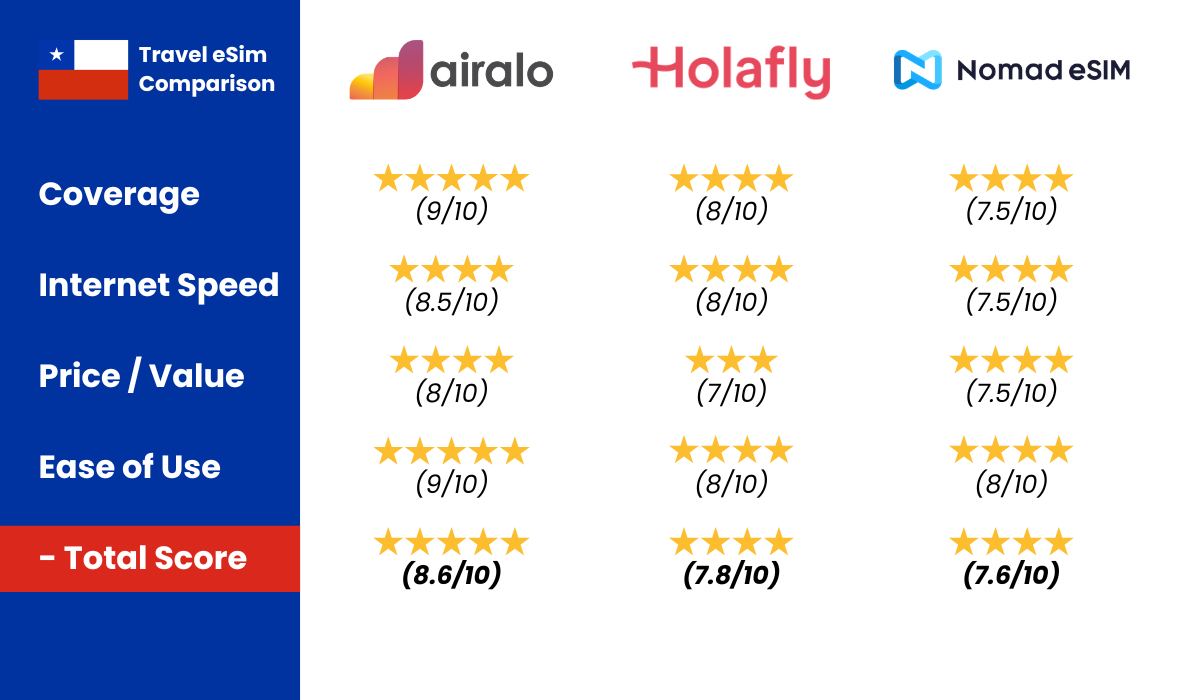
    Coverage: 9/10 ⭐⭐⭐⭐⭐
    Speed: 8.5/10 ⭐⭐⭐⭐
    Price/value: 8/10 ⭐⭐⭐⭐
    Ease of installation: 9/10 ⭐⭐⭐⭐⭐

    If you are heading to places like:

    • San Pedro de Atacama
    • Valle de la Luna
    • El Tatio Geysers
    • Laguna Cejar
    • Atacama salt flats
    • Desert viewpoints and remote tours

    You will need something that actually works when it matters.

    🏆 Winner: Airalo
    Let’s get into why.

    Why you absolutely need an eSIM in the Atacama Desert

    The Atacama Desert is not Santiago.

    This is one of the driest and most remote places on Earth. Infrastructure is limited, distances are large, and once you leave the main town, you are often completely off-grid.

    You will deal with:

    • Long desert roads with nothing around
    • Early morning tours (like geysers at sunrise)
    • Remote landscapes with zero infrastructure
    • Limited WiFi options outside hotels
    • Harsh conditions that affect connectivity

    If you search online, especially on forums, you will see the same concerns over and over:

    “Will I have signal in San Pedro de Atacama?”
    “Does eSIM work in the Atacama Desert?”
    “Should I buy a SIM card locally?”
    “Is there coverage during tours?”

    The honest answer is simple.

    You will not have signal everywhere. That is normal in the Atacama Desert.

    However, you do want reliable internet in key moments such as:

    • In San Pedro town
    • At your hotel or hostel
    • Booking tours or transport
    • Checking maps before heading out
    • Staying connected in case of emergencies

    This is exactly where Airalo performs well.

    Airalo: the best Atacama Desert eSIM right now

    Airalo connects to major local networks in Chile, which makes a big difference compared to smaller eSIM providers that rely on weaker partnerships.

    In real travel situations, this translates into stable and reliable coverage in the places where you actually need it.

    In San Pedro de Atacama, for example, the connection is generally strong enough for navigation, bookings, messaging, and even light browsing or social media.

    Once you head deep into the desert, such as Valle de la Luna or remote lagoons, the signal will fade or disappear. This is not a limitation of Airalo specifically. It is simply the reality of traveling in such a remote environment.

    There is no provider that offers full coverage across the Atacama Desert.

    Atacama Desert eSIM coverage

    Let’s set realistic expectations.

    San Pedro de Atacama

    This is your main base, and coverage here is generally solid. You can use maps, book tours, send messages, and manage your travel plans without issues.

    Valle de la Luna

    Limited signal. You may have some connectivity near the entrance, but once inside the valley, expect little to no service.

    El Tatio Geysers

    Very limited coverage. These are located at high altitude and far from infrastructure. Do not rely on mobile data here.

    Laguna Cejar & Altiplanic Lagoons

    Some weak signal in certain areas, but overall unreliable. Best to assume you will be offline during visits.

    Desert tours

    Most tours take you far away from town. During these trips, it is normal to lose signal completely for hours.

    Again, this is not an eSIM issue. It is simply how the Atacama Desert is.

    Atacama Desert eSIM internet speed

    In San Pedro and other connected areas, Airalo performs well.

    • Google Maps loads quickly
    • Booking platforms work smoothly
    • Messaging apps like WhatsApp are reliable
    • Social media works without problems

    In more remote areas, speed will drop before the signal disappears completely.

    This is expected due to the limited infrastructure in the desert.

    Do you need a Chile-only eSIM for Atacama?

    Most travelers visiting the Atacama Desert will stay within Chile, so a Chile-only eSIM is usually enough.

    However, if your trip includes other countries in South America, you might consider a regional eSIM instead.

    Airalo offers both options:

    • Chile-only plans
    • Regional South America plans

    If you are only visiting Atacama and Santiago, a local Chile plan is the simplest and most cost-effective choice.

    Atacama Desert eSIM prices (2026)

    Airalo plans are flexible and suitable for different types of travelers.

    You will find:

    • Smaller data packages for short stays
    • Larger bundles for longer trips or heavier use

    For most people visiting the Atacama Desert, I recommend:

    5GB to 10GB for a 1 to 2 week trip.

    Why this is enough:

    You will spend a lot of time offline during tours and excursions, so your actual data usage is lower than in city travel.

    As of now, prices typically range from around €4.50 for smaller packages up to about €42.50 for larger bundles.

    You can always top up if needed, which is what I did during my trip.

    For the latest pricing, check the Airalo website.

    New to Airalo? Get $3 off this week with code KJ2068. Download the Airalo App now.

    How to install your Atacama Desert eSIM

    The setup process is very straightforward.

    • Download the Airalo app
    • Choose a Chile or regional plan
    • Purchase your data package
    • Follow the installation steps
    • Activate it when you arrive

    I always install my eSIM before leaving home while connected to stable WiFi.

    When I landed in Chile, I simply turned on mobile data and was instantly connected.

    No stress, no searching for SIM cards at the airport.

    Should you buy a local SIM in Atacama instead?

    In most cases, it is not worth it.

    San Pedro de Atacama is a small town, and while SIM cards are available, the process can be inconvenient.

    You might deal with:

    • Limited shop opening hours
    • Language barriers
    • Waiting times
    • Passport registration requirements

    After traveling to a remote destination, the last thing you want is to deal with logistics just to get internet.

    With an eSIM, everything is already set up before you arrive.

    Is unlimited data necessary?

    In my opinion, no.

    Unlimited data sounds appealing, but in the Atacama Desert it does not add much value.

    You will spend large parts of your time exploring, doing tours, and being offline anyway.

    A solid data package is more than enough for:

    • Navigation
    • Communication
    • Booking activities

    When should you buy your Atacama eSIM?

    The best time to buy your eSIM is a few days before departure.

    Install it at home using WiFi so everything is ready.

    Then activate it once you land in Chile.

    This way, you arrive fully connected without any hassle.

    Is Airalo really the best Atacama Desert eSIM?

    Based on my experience, yes.

    It offers:

    • Reliable coverage in San Pedro
    • Stable speeds where infrastructure exists
    • Easy installation
    • Flexible data plans
    • Quick top-ups

    Will it give you signal in the middle of the desert? No.

    But no provider can.

    For actual travel use, it is the most reliable option available right now.

    Final verdict

    If you want:

    ✔ Easy setup
    ✔ Reliable coverage in San Pedro de Atacama
    ✔ No airport SIM hassle
    ✔ Flexible data plans
    ✔ Smooth travel experience

    Airalo is the best Atacama Desert eSIM in 2026.

    New to Airalo? Get $3 off this week with code KJ2068. Download the Airalo App now.

    You can set everything up in minutes, and once you arrive in Chile, you are connected instantly.

    Frequently asked questions

    What should travelers know about Atacama Desert eSIM?

    San Pedro de Atacama has patchy cell service outside town; download offline maps and compare eSIM plans before you arrive.

    Quick pick: For most travelers, Airalo is the easiest Chile eSIM to set up before you fly. Compare all providers in our full eSIM comparison, see cheapest Chile eSIM plans, or read region-specific guides for Atacama Desert eSIM guide.