
Santiago
Budget Restaurants Santiago (2026 Guide)
Santiago has a reputation among some travelers for being expensive. I’d push back on that, at least when it comes to food. If you know where to eat and what to order, you can have some of the best meals of your trip for almost nothing. The problem is that tourists tend to drift toward the obvious places, which are often the most expensive and rarely the most interesting.
Explore more: Chilean food restaurants and luxury restaurants Santiago. Budget stays: best Santiago hostels.
Eating out safely? Read is Santiago Chile safe? for neighborhood context. Hub: Santiago travel guide.
This guide is built around how Chileans actually eat day to day: the set lunch system, the sandwich counters, the market kitchens, and the neighborhood spots that don’t appear in any glossy travel magazine but are packed with locals every single day. Follow this and you’ll eat well, spend little, and come away with a much more honest sense of Santiago’s food culture than you’d get from the tourist circuit.
First, understand the menú del día
Before any specific restaurant, you need to understand this system because it is the single best way to eat cheaply and well in Santiago, and most tourists walk straight past it.
Almost every local restaurant in the city offers a menú del día at lunchtime, typically between 12:30pm and 3pm. For a fixed price that usually sits between 4,000 and 8,000 pesos (roughly 4 to 8 euros), you get a full meal: a starter, a main course, sometimes a drink, and occasionally dessert or coffee. The menu changes every day based on what’s fresh, and the cooking is almost always proper, honest, home-style Chilean food rather than anything designed for tourists.
This is how Chilean office workers, market traders, and professionals eat at midday. It is the backbone of daily eating life in the city, and it is genuinely outstanding value. You could eat a full three-course lunch for less than the price of a cappuccino in Amsterdam.
The key is finding the right places. Look for small, busy restaurants in non-touristy parts of the city where the signage is hand-written and the menu is on a chalkboard near the door. If the place is full of local workers at 1pm, you’re in the right spot. If it’s empty or catering mostly to tourists, move on.
Salvador Cocina y Café
This is the menú del día done with more intention than most. Located in the historic center near the Bellas Artes metro station, Salvador Cocina y Café is run by chef Rolando Ortega and offers a daily changing three-course set lunch at around 9,000 to 10,000 pesos. By any measure that is extraordinary value for the quality.
See the location on Google Maps
The cooking here uses proper Chilean ingredients with a light modern touch: local beans, smoked merkén spice, fresh fish, handmade sausages, and whatever is good at the market that week. Dishes are unpretentious but clearly thought through, the kind of food that makes you realize Chilean cuisine is considerably more interesting than its international reputation suggests.
It gets busy fast. Go early, around noon, or be prepared to wait. Closed on weekends. Located near the historic center, which makes it easy to combine with a morning at the museums or Plaza de Armas.
Fuente Alemana
This place has been serving Santiago since 1954 and it is, without question, the best sandwich in the city. Fuente Alemana is a counter-style diner that operates on the simple premise of doing one thing perfectly: the lomito, a massive sandwich of thinly sliced roasted pork loin on a fresh bun, piled with toppings.
See the location on Google Maps
Order the Lomito Italiano, which comes with mashed avocado, tomato, and a quantity of Chilean mayonnaise that will either delight or alarm you depending on your relationship with mayo. Add chucrut (sauerkraut) to get the full German-Chilean fusion experience that defines this place. The sandwich is absurdly large and always served with a knife and fork, not because it’s formal, but because there is no physical way to eat it by hand.
Sit at the counter, order a schop (draft beer), and watch the kitchen work. The cooks move with the efficiency of people who have made this exact sandwich several thousand times, which they have.
There are five locations across the city. The ones near the Baquedano and Pedro de Valdivia metro stations in Providencia are consistently good. Budget around 6,000 to 8,000 pesos for a sandwich and a beer.
Emporio Zunino
Founded in 1930 by Italian immigrants, Emporio Zunino is the oldest empanadería in Santiago and the best argument for the empanada as a complete meal. The shop sits near Mercado Central in the historic center and sells empanadas baked on-site, fresh, for under 2,000 pesos each.
See the location on Google Maps
The empanada de pino is the one to start with: a large baked pastry filled with seasoned minced beef, onion, a wedge of hard-boiled egg, a black olive, and sometimes a raisin. This is Chile’s national hand pie and Zunino’s version is one of the best in the city. Also excellent are the cheese empanadas and the shrimp-and-cheese variety if you want something from the sea.
Go outside peak lunchtime if you can. The queue between 1pm and 3pm can be long and moves slowly, not because the service is bad but because everyone in the neighborhood has the same idea.
La Piojera
La Piojera is not technically a restaurant. It’s a bar that also happens to serve food, has been doing so since around 1896, and is one of the most vivid and chaotic dining experiences in Santiago.
See the location on Google Maps
Located near the Puente Cal y Canto metro station close to Mercado Central, La Piojera is famous for two things: the terremoto (literally “earthquake”), a lethal mix of fermented white wine, pineapple ice cream, and grenadine served in enormous plastic cups, and the chorrillana, a sharing plate of fries piled high with caramelized onions, sliced beef, and fried eggs that is exactly as good as it sounds after one of those drinks.
The atmosphere is impossible to replicate. Sticky floors, loud conversations, murals covering every wall, folk music from somewhere, and a crowd that mixes locals with adventurous tourists who’ve found their way to one of the few genuinely unreconstructed bars left in the city. Order a beer, split a chorrillana, try one terremoto if you’re curious, and understand that this is Santiago at its most unpretentious.
Food is cheap. The chorrillana for two comes to around 10,000 to 12,000 pesos. The terremoto is around 3,000 pesos. Come hungry and with no particular schedule for the rest of the afternoon.
La Vega Central market kitchens
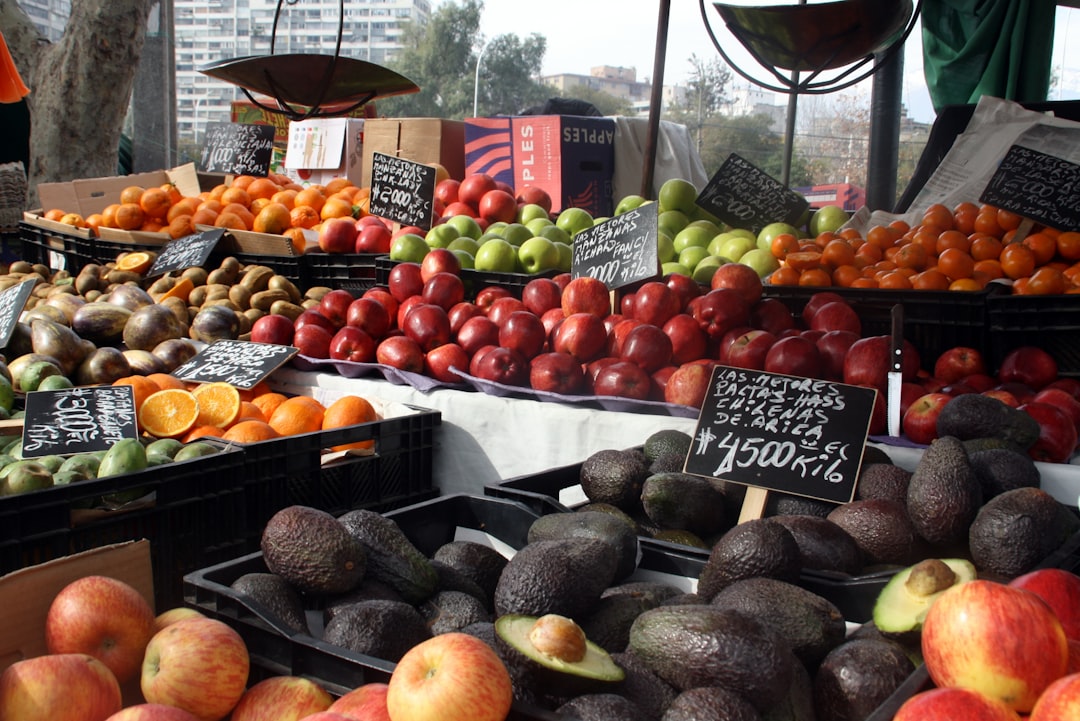
La Vega Central is the large wholesale produce market across the Mapocho River from Mercado Central, and buried inside it are some of the cheapest and most authentic lunch spots in the city. These are not restaurants in any formal sense: small counters, plastic chairs, handwritten menus, and cooks who have been making the same cazuela or fried fish for decades.
See the location on Google Maps
The food here is pure Chilean comfort cooking. Expect cazuela, the slow-cooked broth with a full piece of chicken or beef, corn on the cob, squash, and potato, all in one bowl. Expect fresh empanadas made that morning. Expect porotos granados, a hearty bean and corn stew that is essentially Chile’s answer to minestrone and deeply underrated. Lunch here runs between 3,000 and 5,000 pesos for a full meal.
My wife’s aunts used to come to La Vega every Saturday morning specifically to eat at one of the market kitchens before buying their produce for the week. The concept of combining the freshest possible ingredients with the people who cook them daily is not complicated, but it produces results that are hard to argue with.
Arrive before 12:30pm to beat the queue. Bring small bills. Don’t overthink it: point at what looks good and sit down.
Dominó
Dominó is Chile’s institution for the completo, the Chilean hot dog that is both simpler and more serious than that description implies. The Completo Italiano is the classic: a proper sausage in a soft bun, topped with chopped tomato, mashed avocado, and a generous amount of mayo in the colors of the Italian flag, hence the name.
See the location on Google Maps (multiple locations)
Dominó has multiple locations across central Santiago and Providencia, operates on a counter-seating model, and is fast, cheap, and local in the best possible way. A completo costs around 2,500 to 3,500 pesos. You eat standing at the counter or on a stool, you do not linger, and you leave understanding why Chileans have a national day dedicated to the completo.
It is not a meal in the European sense. It is a brilliant quick lunch or late-night snack that costs almost nothing and tastes considerably better than it has any right to.
Mercado Central: what to know before you go
Mercado Central gets a mention in every Santiago food guide, and for good reason: the 19th-century cast-iron building is beautiful and the seafood inside is genuinely excellent. But for budget eating, you need to know where to sit.
See the location on Google Maps
The restaurants at the center of the market, the ones that aggressively tout for business as you walk past, are significantly more expensive than the stalls around the perimeter. Skip those. The outer stalls and smaller counters toward the edges of the building serve the same fresh seafood for considerably less money. A bowl of paila marina, the rich mixed seafood broth that is one of Chile’s great dishes, can be had for around 6,000 to 8,000 pesos at the right stall. The caldillo de congrio, a classic Chilean fish soup immortalized by Pablo Neruda in a poem, is another one to look for.
If you want to eat seafood in Santiago without paying tourist prices, this is where to do it, as long as you walk past the first row of tables and find the quieter ones at the back.
Barrio Italia for coffee and breakfast
Budget eating in Santiago isn’t only about lunch. Barrio Italia has become the city’s best neighborhood for specialty coffee and affordable breakfast, with a cluster of small roasters and cafés along Avenida Italia and the surrounding streets that charge honest prices for genuinely good coffee.
See the location on Google Maps
For a morning coffee and a pastry before a day of sightseeing, this neighborhood consistently delivers better quality and lower prices than the tourist-facing cafés around Lastarria or the historic center. A flat white and a medialuna (the Chilean croissant, slightly sweet and soft) runs around 3,000 to 4,000 pesos at most places in the area.
A few general rules for eating cheaply in Santiago
Lunch is always better value than dinner. The menú del día system means midday is when the city’s restaurants are working hardest and charging least. Dinner at the same restaurant will cost considerably more for less food.
Avoid eating directly on or immediately around Plaza de Armas. The restaurants within sight of the main tourist drag charge tourist prices. Walk two blocks in any direction and things improve immediately.
Draft beer (schop) is almost always cheaper than bottled beer, and Chilean table wine sold by the glass in local restaurants is often 1,500 to 2,500 pesos for something perfectly drinkable. Wine at these prices in Santiago is not an afterthought.
The travel writers at Trans-Americas Journey make the smart point that you could write a whole book on Chilean sandwiches alone, and they’re right. If you eat nothing else on a budget in Santiago, eat the sandwiches. Fuente Alemana for the lomito, Dominó for the completo, and any local bakery you pass for an empanada on the go. You will not go hungry and you will not spend much.
For where to eat on a bigger budget or what else to do while you’re eating your way through the city, check out the 2-day Santiago itinerary and the full 1-week guide on the site.