
I'll be honest with you. Valparaíso is one of my favourite cities in Chile, and also one that requires the most honest conversation about safety. It's chaotic, colourful, raw, and absolutely unlike anywhere else in the country. My wife grew up hearing stories about Valparaíso, and she has family friends who've lived there for decades. So when people ask me whether it's safe, I don't give a generic answer. I give them the real one.
The short answer: yes, Valparaíso is safe for tourists, but it comes with more caveats than most cities in Chile, and you need to go in with your eyes open.
Valparaíso isn't Santiago. It doesn't have the polished business districts or the bubble of Providencia and Las Condes. It's a port city: gritty, artistic, proud, and economically struggling in a way that most of Chile simply isn't. That contrast between the stunning street art on every wall and the genuine poverty in some of the surrounding areas is part of what makes it so fascinating. It's also what shapes the safety reality on the ground.
Valparaíso was declared a UNESCO World Heritage Site in 2003 for its historic quarter and urban architecture, which tells you something about its cultural significance. But heritage status doesn't come with a safety guarantee, and the city has struggled economically for decades since the opening of the Panama Canal redirected much of the shipping traffic that once made it one of the most important ports on the Pacific coast.
The tourist areas, especially Cerro Alegre and Cerro Concepción, are genuinely beautiful and, during the day, feel relaxed and welcoming. Boutique hotels, excellent restaurants, sweeping views over the bay. You'll love it. But step outside those zones, or stay out after dark without a plan, and the picture changes.
During daylight hours, the main tourist areas of Valparaíso are safe and very enjoyable to explore. The cerros (hills), the funiculars (ascensores), the street art, the seafront. All of this is accessible and fun. I've walked around Cerro Alegre and Cerro Concepción many times and never felt in danger.
That said, petty theft is a genuine issue even during the day. Pickpocketing happens near the port, around Plaza Sotomayor, and at the funicular stations where crowds gather. Keep your phone in your pocket, not in your hand, and wear your bag across your chest. These are simple habits that make a real difference.
One thing my wife always reminds me: don't look like you're lost. Walk with purpose, even if you're consulting the map. Thieves are opportunistic, and a confused tourist standing still staring at their phone is an easy target.
This is where I have to be direct with you: Valparaíso at night requires genuine caution.
The Canadian government travel advisory for Chile specifically warns travellers to avoid walking after dark around Cerro Alegre and the other cerros in Valparaíso. Armed assaults and robberies have increased in recent years, and tourists have been targeted even during daylight hours, which tells you something about the nighttime situation.
This doesn't mean you can't go out in the evening. It means you should not be walking unfamiliar streets alone after dark. Use Uber or Cabify to move between places. Stick to the well-lit, busy restaurant areas. Travel with others if you can.
The nightlife in Valparaíso has a reputation, and there are some genuinely great bars and restaurants worth visiting in the evening. Just get there and back with an app rather than on foot.
The tourist zones are relatively contained. As soon as you move away from the Cerro Alegre and Cerro Concepción area and head toward the lower parts of the city, the risk increases. The port area and surrounding streets, especially after dark, are not places to wander without purpose.
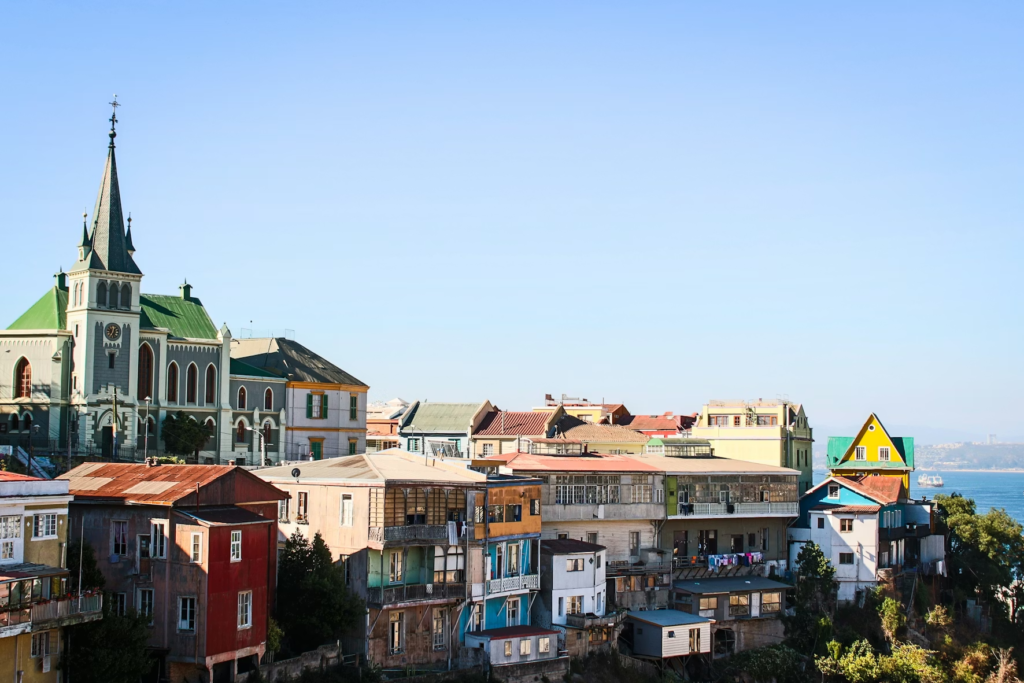
Some of the outer cerros, away from the tourist circuit, have higher crime rates and are best avoided entirely, especially if you don't know the city well. My wife's honest advice, and I'll pass it on to you: if a hill doesn't appear on your tourist map, don't just wander up it to see what's there.
In short, stay on the beaten path in Valparaíso. That's not usually advice I give for travelling Chile, but here it applies.
A few scams pop up regularly in Valparaíso that you should know about:
Fake tour guides: strangers offering to show you around, often leading you to overpriced shops or, worse, unsafe areas. If you want a guided tour, book one through your accommodation or a reputable agency.
Overpriced taxis: always agree on a price before getting in, or better yet, use Uber or Cabify where the price is fixed. Tourists are frequently overcharged by unofficial drivers, particularly around the port and bus terminal.
Pickpocketing at the funiculars: the ascensores of Valparaíso are crowded, slow, and a classic spot for thieves. Keep your bag in front of you and your phone out of sight while waiting in the queue.
The flat tyre scam: if you're driving a rental car, be aware that thieves have been known to puncture tyres and then rob tourists while they deal with the damage. If you get a flat in a quiet area, drive slowly to somewhere busy before stopping. This scam is well-documented and happens in both Valparaíso and Santiago.
The distraction trick: someone bumps into you, spills something on you, or creates a commotion nearby. While you're distracted, an accomplice goes for your bag or pocket. My wife warned me about this before my first visit, and I've since heard it from other travellers too. The solution is simple: if anything unexpected happens physically near you, your first instinct should be to secure your belongings, not to look at what caused the distraction.
This is a question I get often, and the honest answer is that Santiago is generally safer for tourists, mainly because the tourist zones there. Las Condes, Providencia and Vitacura are well-resourced, well-policed, and geographically separated from the higher-risk areas.
In Valparaíso, the tourist areas and the rougher parts of the city are much closer together, and the boundaries are less obvious. That proximity means you can walk from a beautiful viewpoint into a sketchy street within a couple of minutes without realising it.
That said, Valparaíso is absolutely worth visiting. I wouldn't trade my time there for anything. You just need to approach it with a little more awareness than you would Santiago's upmarket neighbourhoods.
Solo travel in Valparaíso is doable, but it demands more awareness than in most other Chilean cities. The backpacker scene is real. There are good hostels on the tourist cerros and plenty of other travellers around during the day. But the advice about not walking alone at night applies especially strongly if you're on your own.
If you're a solo female traveller, I'd encourage you to read some firsthand accounts before you go. Lonely Planet's Valparaíso guide and travel forums like TripAdvisor have recent reports from solo women that give a very honest picture of the experience. The consensus is pretty consistent: the tourist cerros during the day are fine, but nighttime solo walking is not advisable regardless of gender.
The best approach for solo travellers is to base yourself on Cerro Alegre or Cerro Concepción, connect with people at your hostel, and explore as a group when possible. It's not hard to find travel companions in Valparaíso. It's that kind of city.
I want to give you something the safety statistics can't: the actual feeling of being there.
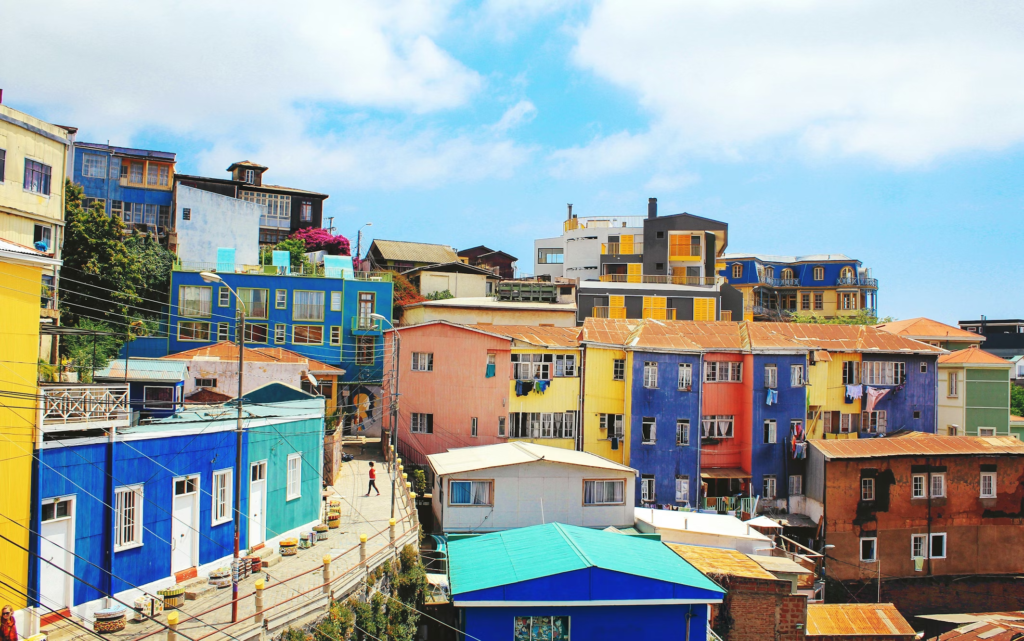
Valparaíso has an energy that's completely its own. The streets climb steeply, the buildings are layered on top of each other in every colour imaginable, and around every corner there's another mural that stops you in your tracks. Street dogs wander freely (a Chilean constant), music drifts out of open doorways, and the smell of the ocean is always somewhere behind it all.
In the tourist areas during the day, it feels bohemian and alive. You'll see other travellers, local artists, café owners setting out chairs, and elderly residents making their way up the hills. There's a warmth to the neighbourhood that's genuine. My wife describes it as a city that wears its soul on its sleeve. Nothing is hidden, nothing is polished, and that rawness is exactly the point.
Where the feeling shifts is when the light starts to go. The streets empty faster than you'd expect. The warmth pulls back indoors. That's your cue to do the same, or at minimum to stop wandering and get an app-based ride to wherever you're going next.
It's not a threatening feeling, exactly. It's more like the city gently reminding you that it has another side, and you'd be smart not to push it.
During the day:
At night:
In general:
Absolutely, yes. This is the part where I want to be clear: I am not telling you to skip Valparaíso. I'm telling you to visit it intelligently.
The city is extraordinary. The street art alone is worth the trip. It's not graffiti. It's a genuinely world-class open-air gallery that covers entire hillsides. The food is excellent, the views over the Pacific are breathtaking, and there's an energy to the place that you won't find anywhere else in Chile. My wife lights up every time we talk about going back.
Go during the day. Explore the cerros. Take the funiculars. Eat seafood by the water. Then get an Uber back to your hotel or head to nearby Viña del Mar for the evening if you want a more relaxed base. That combination gives you the best of Valparaíso without the unnecessary risks.
Getting there from Santiago: The bus is easy, comfortable, and affordable. Companies like Turbus and Pullman Bus run regular services and the journey takes about an hour and a half from the Alameda terminal. It's genuinely one of the easier intercity trips in Chile.
Emergency numbers in Chile:
The Carabineros de Chile are the national police force and are generally accessible and responsive in tourist areas. If you have an incident, report it, for insurance purposes if nothing else.
Valparaíso has a reputation, and some of it is deserved. Crime has risen over the past few years, and it's not a city where you can switch off completely. But it's also one of the most visually stunning and culturally rich places in South America, and I'd hate for safety concerns to stop people from experiencing it.
Go informed. Go prepared. And go with the right mindset: aware but not anxious. That's the sweet spot for Valparaíso, and if you hit it, you'll leave absolutely in love with the place.
Just like I did.